Short answer
There’s no bracket that fits every racing seat on every aluminum profile rig. What hardware you need comes down to two things: your seat type (recline seat versus fixed bucket seat) and the profile system your rig uses. Recline seats and office-chair-style models usually mount with universal brackets that bolt into the mounting points under the seat base. A bucket seat without a recline mechanism gets side-mount brackets bolted to the sides of the shell, usually on a pair of seat sliders, and that assembly goes into your rig’s profile with T-nuts. So figure out your seat type first. Then find a bracket set that matches both the seat and the profile.
This is a researched overview based on manufacturer documentation, not a hands-on test of specific bracket combinations. If you’re unsure about a particular combination, check with your rig manufacturer before ordering a seat.
The two main seat types
Recline seats and office-chair-style models have an adjustable backrest and mounting points under the seat base. Trak Racer sells universal seat brackets for recline seats and office chairs for exactly this job: steel brackets that fit seats with mounting points between 138 and 350 mm at the bottom, and sliders or a rig frame with mounting points between 131 and 291 mm at the top. They use the mounting points the seat already has. Drilling into your seat? Not needed.
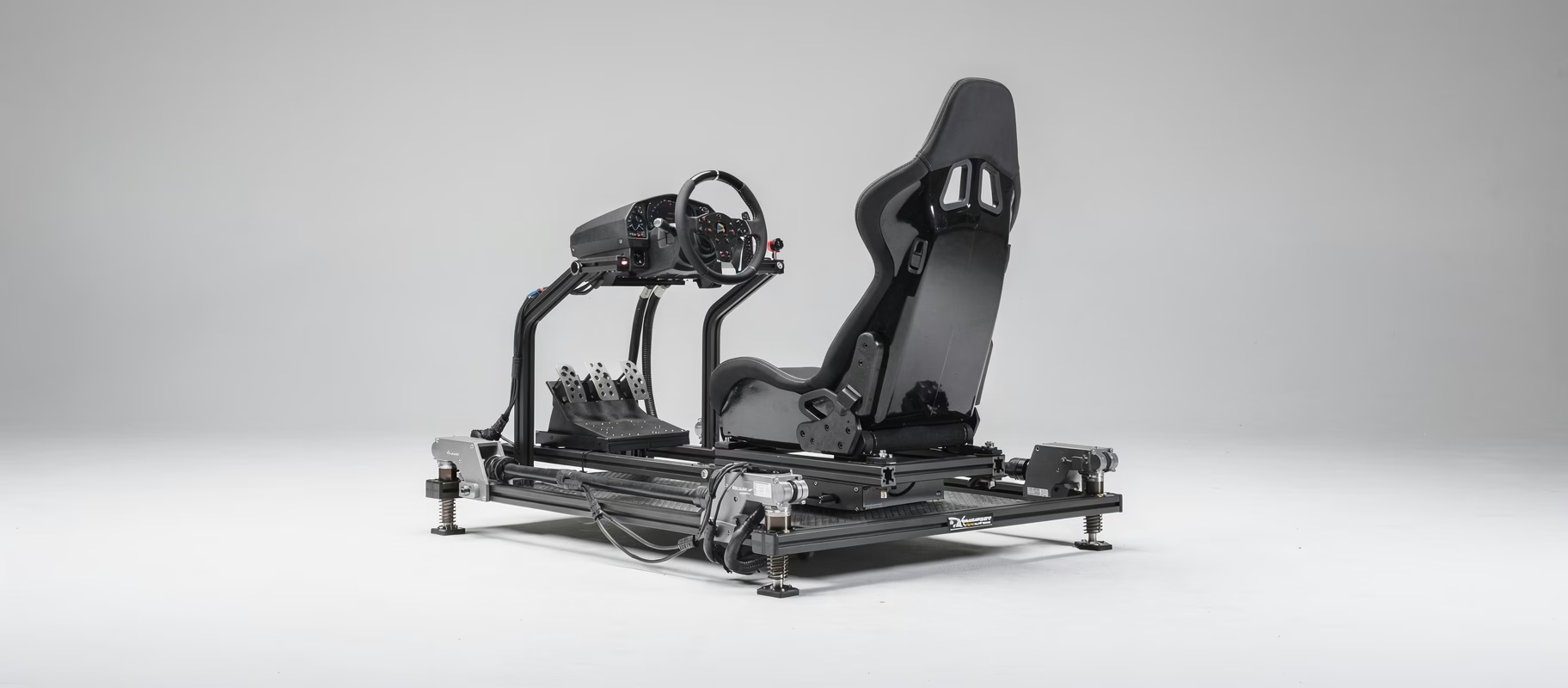
Bucket seats (FIA-style automotive buckets from brands like Sparco, OMP or Cobra) skip the recline mechanism entirely. Most of them mount through holes in the sides of the shell, the same way they would in a real car. For these you use side-mount brackets that bolt to the sides of the shell and then down onto sliders or straight onto the frame. Fanatec’s guide to the CSL Cockpit seat and seat sliders explains why sliders are handy: you can shove the seat forward or back quickly when several drivers share the rig, or when you swap between wheels of different lengths. And if you run load cell pedals, that seat has to be rock solid, because you’ll be putting real force through it.
A common mistake is assuming one bracket can mount both seat types. It usually can’t. Recline brackets bolt under the seat base, bucket seat brackets grab the holes in the sides of the shell.
How mounting works on an aluminum profile rig
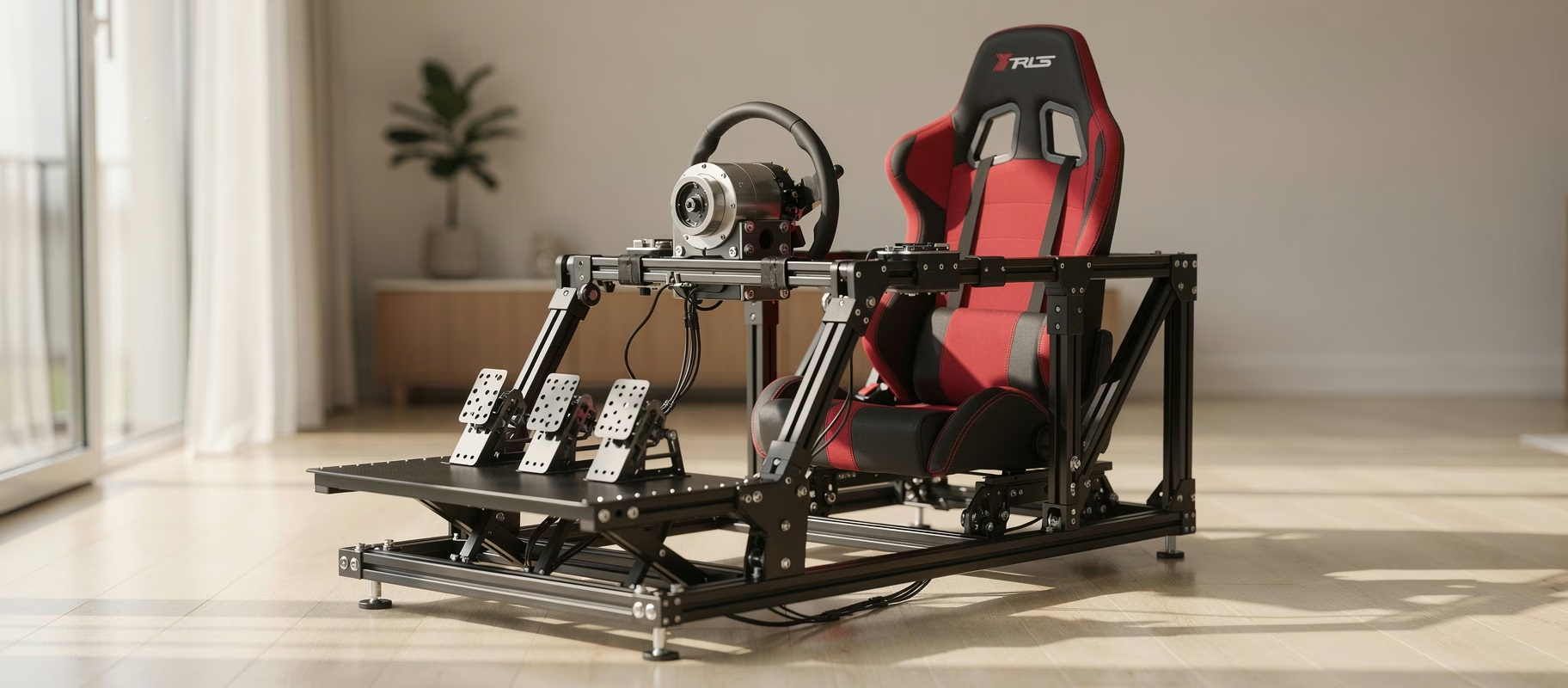
Rigs from brands like Sim-Lab, Trak Racer and Next Level Racing (the Elite series) are built from extruded aluminum profile: beams with lengthwise slots that accept T-nuts (sliding nuts). A bracket bolts into those slots, so you can slide the seat along the profile and lock it in place. In their guide to choosing a racing simulator, Next Level Racing names seat sliders and mounting brackets as a reason to pick a modular profile frame in the first place.
Good news: most sim rigs run on the same basic profile. Sim-Lab and Trak Racer both use 40 mm profile with an 8 mm slot and M8 bolts. That makes brackets less brand-specific than you might think. Sim-Lab’s own Sim-Lab Bucket Seat Bracket Set, for example, is specified for 40 mm, 45 mm and 1.5-inch profile, so it fits their own P1X Pro Sim Racing Cockpit too. Where it does go wrong: T-nuts that don’t fit your slot, bolts of the wrong size or length, and hole spacing on the bracket, slider and seat that doesn’t line up. Not sure about slot sizes? Read our piece on 8mm vs 10mm T-slot profile first.
What else you’ll need besides the bracket
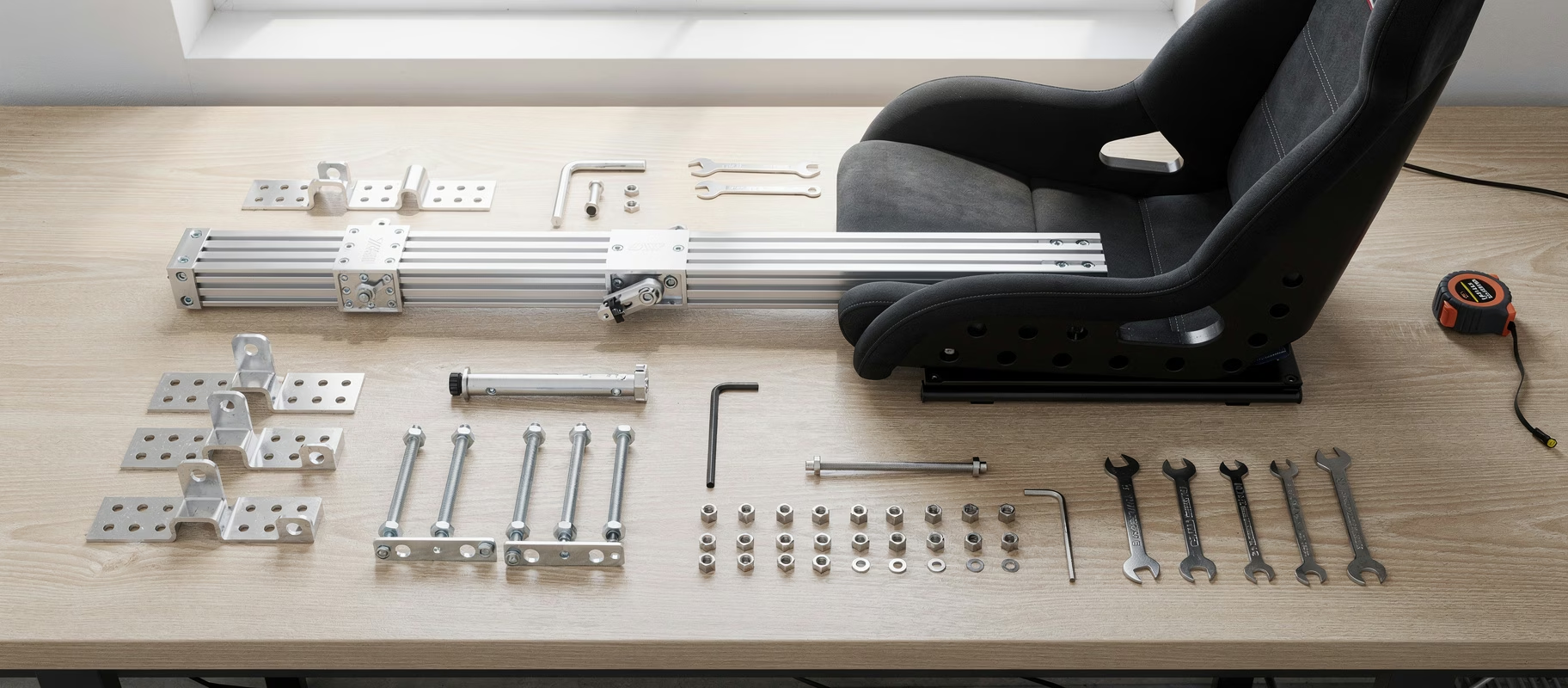
- T-nuts or profile nuts matching your frame’s slot size (often sold separately if not included with the bracket)
- Bolts and spacers to bridge height differences between the bracket and the seat base
- Slider rails, purchased separately if your bucket seat has no built-in fore-aft adjustment
- Adapter plates between seat and slider, since not every slider bolts directly to every seat base
The Sim-Lab set is a left and a right bracket in 4 mm aluminum, with M8 bolts and nuts to mount the seat and sliders. Sliders aren’t included. And as with almost any bracket set, check that your seat’s hole spacing falls within the brackets’ adjustment range.
Checking compatibility: the questions to ask
Before ordering a separate seat or bracket, run through these:
- What profile and slot size does my rig use? (Ask the manufacturer directly if you’re not sure.)
- What type of seat is it: recline/office-chair-style, or a fixed bucket seat with no recline mechanism?
- Does the seat already have mounting holes or rails, or do I need to add sliders myself?
- Is the bracket built specifically for my profile brand, or is it a universal solution that might need extra hardware?
- What’s the combined weight of seat plus driver, and does that fall within the load rating of both the bracket and the frame?
That last one gets underestimated a lot. A frame with a high maximum load rating tells you nothing about what the bracket itself can handle. Check both specs separately.
Step by step: choosing and mounting a seat
- Identify your current or future rig’s profile system first (which profile, which slot size).
- Choose the seat based on driving position and budget, not just looks. A GT bucket keeps you fairly upright, a Formula seat has you almost lying down.
- Check whether your rig manufacturer sells a matching bracket set. Many brands offer this as an accessory built specifically for their own profile.
- Order any missing hardware at the same time: T-nuts, sliders, bolts. Factor this into your total budget, since a bracket alone is often not enough.
- Mount the bracket to the profile loosely first, check the position for legroom and pedal distance, then attach the seat to the bracket.
- Re-torque all bolts after a short test session. Seats paired with load cell pedals see more force at the mounting points than those used with spring-return pedals.
Common misconceptions
“Aluminum profile is aluminum profile, so anything fits.” Almost. Most sim rigs use 40 mm profile with an 8 mm slot, but 20 mm profile has a narrower slot and 45 mm profile a wider one. And even within slot 8, the groove shape differs between manufacturers just enough to make another supplier’s T-nuts bind.
“A bucket seat always comes with sliders.” Often it doesn’t. Standalone bucket seats are frequently sold without sliders. Fanatec is no exception: the CSL Cockpit Seat supports sliders, but you buy them separately. Budget for them.
“A recline bracket also works for a bucket seat.” The mounting points sit in different places: recline seats mount under the seat base, most bucket seats through the sides of the shell. Don’t mix these without checking with the manufacturer first.
Practical examples
Want to skip the compatibility puzzle entirely? A complete cockpit with a built-in seat mount is worth a look. The Playseat® Sensation Pro is an integrated frame-plus-seat system. No separate bracket to buy, since the seat and frame are designed as one unit. Keep Playseat’s stated maximum driver weight of 120 kg in mind, though. The footprint is 150 x 63 cm.
Already own an aluminum profile rig from Sim-Lab, like the P1X Pro, and want to add a separate bucket seat? The Sim-Lab Bucket Seat Bracket Set is the obvious pick. Sim-Lab also sells the P1X Pro in sets with, for example, a Sim-Lab Speed 1 or a Sparco Circuit II bucket seat, with brackets and slider as options. Buying just the brackets? Order the sliders separately.
Prefer a steel rig where most of the seat mounting is already sorted? Look at the TR8 PRO Racing Simulator from Trak Racer. It’s a 2-inch (51 mm) steel tube frame, and Trak Racer includes seat sliders and brackets that fit most fiberglass bucket seats. The seat itself you buy separately. It’s not an aluminum profile rig, but it does skip most of the bracket puzzle.
Who should skip this
If figuring out brackets, sliders and bolt sizes sounds like a headache, buy a bundle where the seat and frame are already matched. Fanatec’s CSL Cockpit V1.5 + Seat Bundle or a complete Playseat or Trak Racer cockpit does the job. You’ll give up some long-term flexibility, but you skip the puzzle of buying parts separately.
What I’d do
Buying a racing seat separately for an aluminum profile rig is doable. It does take homework. Figure out your seat type first, find a bracket that matches both the seat and your profile’s slot, and budget for sliders, T-nuts and bolts as part of the purchase. Still unsure? Then I’d just buy the bracket set from your own rig manufacturer. Boring, but it fits.