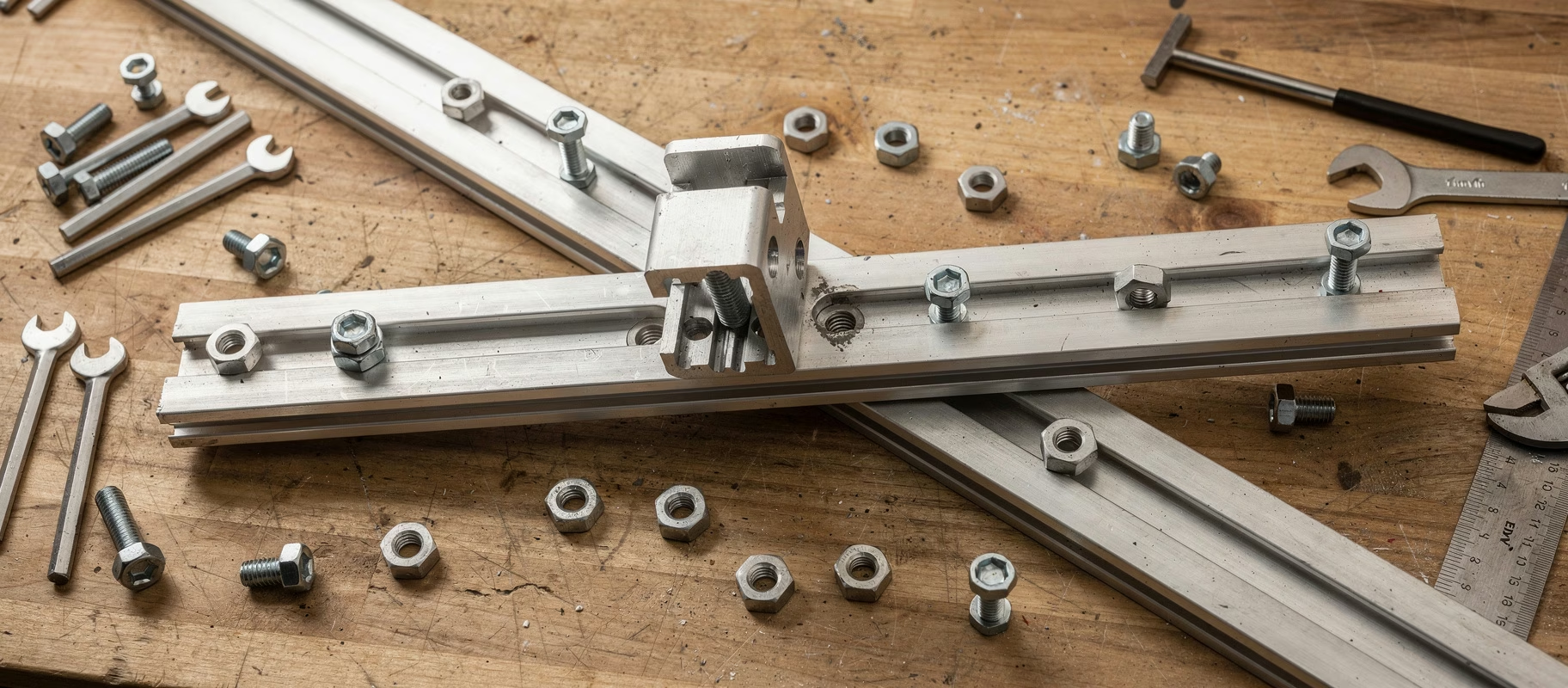
The classic DIY scene: a bag of thirty T-nuts, rattling loose inside the slot of the profile that just arrived. Wrong size ordered. And no, that’s not going to fit, no matter how hard you push.
That’s exactly the problem with this question. Everyone talks about 2020, 4040, or 4080 profile, the outer dimensions, but almost nobody explains what 8mm or 10mm actually means. Meanwhile, that number decides whether your order fits together at all. Or doesn’t.
Let’s untangle this. No fluff.
What Do “8mm” and “10mm” Actually Mean?
This isn’t the width of the profile. That’s a mistake I see constantly. 40x40, 40x80, 2020, those numbers describe the outer size of the aluminium bar. The 8mm or 10mm people ask about in forums refers to the slot: the opening of the groove your T-nut slides into. “Slot 8” is an 8 millimetre wide slot, “slot 10” a 10 millimetre one.
And the slot width comes with the profile series:
- 20 series (2020, 2040): 6mm slot, for M4 or M5 hardware. This is 3D printer profile. Fine for a monitor bracket, not for a frame you sit in.
- 40 series (4040, 4080, 40160): 8mm slot, with M6 or M8 T-nuts. This is what nearly every sim rig runs on. Sim-Lab, for example, builds the Sim-Lab P1-X on Item 40mm profile with slot 8.
- 45 and 50 series: 10mm slot. Industrial stuff from Bosch and Item, made for machine building. You rarely see it in sim racing.
So when someone recommends “10mm profile” for your rig, ask which series they mean first. Chances are the answer is “40x80”. And that’s slot 8.
So Is 10mm Stronger?
On paper, yes. A wider slot, thicker bolts, more clamping surface. But that’s not the question. The question is whether you need it. And the answer is: no.
Your rig’s stiffness doesn’t come from slot width. It comes from the profile section (40x80 or 40x160 instead of 40x40), from the number of corner brackets, and from how tight you’ve torqued them. A P1-X on slot 8 carries wheelbases of 25 newton-metres and more without wobbling. A Fanatec Gran Turismo DD Pro (8 Nm), a Logitech G PRO bundle at 11 Nm, or a Thrustmaster T598 at 5 Nm constant and 10 Nm peak? None of them will notice the difference between slot 8 and slot 10. What they will notice: a 40x40 wheel deck fixed on one side only. That will flex.
So buy 40x80 for your wheel deck and uprights, put a corner bracket on both sides, and you’re done. Slot 8, like everyone else.
The Real Trap: 6mm Next To 8mm
Where it actually goes wrong in practice isn’t 8 versus 10. It’s 6 versus 8.
Budget builders buy 2020 profile for the cross braces because it’s cheap, and 4040 for the rest. Two series. Two slot sizes. Two bags of T-nuts that aren’t interchangeable, and corner brackets that only fit one of the two. Before you know it there’s a box of hardware on the table and half of it fits nothing.
Standardise on the 40 series. Seriously. If you want to save weight or money, use 40x40 for the cross braces and 40x80 for the load-bearing parts. Same slot, same T-nuts, same brackets. That kind of mixing is fine.
The T-Nut Trap: Why Orders Go Wrong
Even within slot 8 things can go sideways. You buy profile from supplier A. You order T-nuts from supplier B because they’re slightly cheaper. Then it turns out B’s “8mm T-nut” was made for a profile with a marginally different groove shape. Tolerances between European and Asian manufacturers sometimes differ just enough to be the difference between “clamps perfectly” and “slides out under the first braking zone”.
Then there’s the difference between drop-in T-nuts and roll-in T-nuts. Drop-in nuts get dropped in from above. Convenient, even when the profile is already assembled. Roll-in nuts slide in from the end, so that end still needs to be open. Two completely different installation methods. Order the wrong one for your situation and you’re stuck with a bag of hardware you can’t use.
My advice, short and blunt: order your T-nuts and bolts from the same supplier as your profile. Always. Yes, it might cost a few extra euros. That’s cheaper than waiting on a second shipment while your rig sits half-built in the living room.
The Ordering Mistakes That Wreck Your Patience
A few things I’d tell everyone before they hit “order”:
- Not matching bolt length to what sits in between. That bolt goes through your bracket or mounting plate and still has to grab thread in the T-nut. Order too short and it doesn’t bite. Too long and it bottoms out in the slot before it clamps.
- Mixing profile brands without checking the groove shape. “Slot 8” from manufacturer X isn’t always identical to “slot 8” from manufacturer Y.
- Ordering too few T-nuts. Add ten extra, minimum. You’ll lose some and change your plan mid-build.
- Buying brackets before confirming your series. A 40 series bracket doesn’t fit 2020.
- Underestimating a heavy seat. A bucket seat like the Sim-Lab Speed 1 hangs on four M8 bolts that take serious shear force under hard braking. You want proper brackets there, not thin plates.
None of these mistakes are catastrophic on their own. Stack them together and you’ve got a build that takes three times longer than planned.
What I’d Do If I Were Ordering Right Now
Pick the 40 series, slot 8. Not because 10mm is bad, but because the entire sim racing world runs on 8: profile, brackets, wheel deck plates, pedal plates, seat brackets. Everything fits everything. Pick slot 10 and you’ll be hunting for every adapter yourself.
Use 40x80 for your wheel deck and uprights, 40x40 is fine for the rest. Order profile, T-nuts, and bolts from one supplier. Test one joint before you commit to a full order.
Those two millimetres this whole article is about? You only notice them when you’ve ordered wrong. Tiny difference on paper. Massive difference on your kitchen table.