What is a motion system, really?
A motion system is hardware that physically moves your seat or your entire cockpit based on what happens in the game: braking, accelerating, cornering, bumps on track. That’s not the same as force feedback. Force feedback comes from your wheelbase and you only feel it through the wheel, for example a rim like the Moza Racing GS V2P GT. Force feedback lives in your hands. A motion system moves your body.
“Motion” is a stretchy term. Retailers like Trak Racer put D-BOX motion systems and haptic kits in the same collection (Trak Racer, motion systems). Next Level Racing’s own buying guide suggests comparing motion options on degrees of freedom (DOF), compatibility and budget (Next Level Racing guide). That’s the split I’ll follow here: from vibration to six axes, and when each level makes sense.
Shaking isn’t moving
The misconception I run into most: a strong force feedback base or a bass shaker under your seat already counts as “motion.” Not really:
- Force feedback (direct drive or belt-driven base) simulates forces in the steering wheel only.
- Tactile transducers (bass shakers, buttkickers) make your seat or rig vibrate based on audio or telemetry, but don’t move the seat.
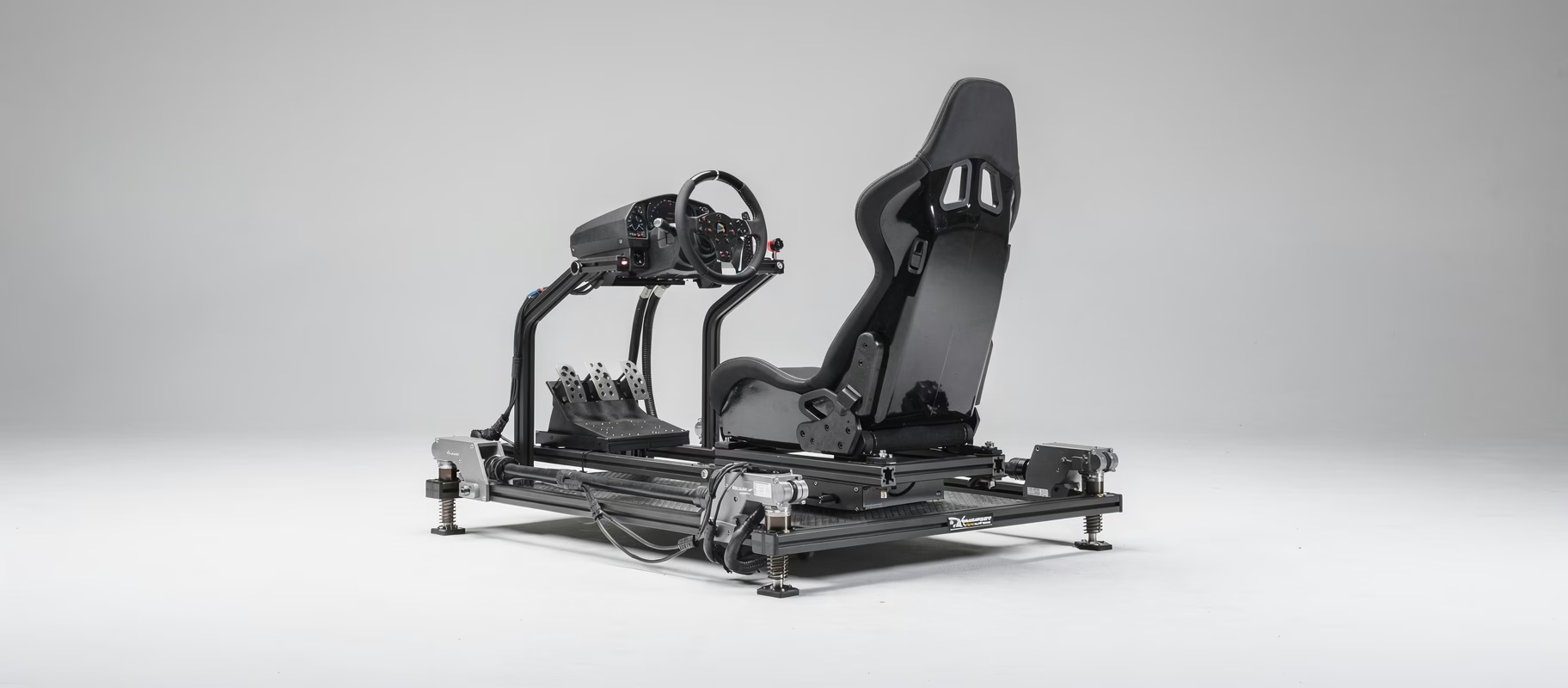
- Motion platforms physically move the seat or the whole cockpit in one or more directions.
So when someone on a forum says “motion,” they could mean any of the three. This guide is about systems that actually move you.
From vibration to six axes
Tactile transducers: feel it, don’t move
The cheapest step is a set of bass shakers under your seat or chassis, driven by software like SimHub. A ready-made example is the Trak Racer Haptic Bass Shaker Kit. You feel engine revs, wheel slip and impacts, but the seat doesn’t tilt. For a lot of beginners this is the first upgrade in this direction, simply because price and installation are easy to swallow. Want to go further down that budget path? Read our guide to haptic feedback on a budget.
2DOF: pitch and roll
Next up are platforms with two axes of movement: pitch (tilting forward and back under braking and acceleration) and roll (tilting sideways in corners). A lot of entry-level and mid-range platforms sit here. The Next Level Racing Motion Platform V3 is a 2DOF seat mover: only your seat moves, while your wheel and pedals stay put. The same brand’s Motion Plus, as a single unit, moves the whole cockpit in pitch and roll instead.
That difference between a seat mover and a platform that carries the whole cockpit matters more than the axis count. It decides how your cockpit gets mounted and how much weight the platform has to lift.
3DOF: the third axis
3DOF adds a third axis, and which one depends on the brand. Usually it’s heave (up and down, for bumps and vertical G-forces) or yaw (the rear stepping out under oversteer and traction loss). Qubic System’s QS-220 and two linked Next Level Racing Motion Plus units add heave, while DOF Reality’s 3-axis platforms add yaw. In complexity, weight and price, this sits between 2DOF and full 6DOF.
6DOF: the top end
Full 6DOF platforms move in all six directions: pitch, roll, yaw, heave, surge and sway. It doesn’t get more realistic than this. But you’ll also need a stiff cockpit frame, a lot more space, a floor that can take the load, and a far bigger budget than for 2DOF.
| Category | Movement | Space/weight | Typical user |
|---|---|---|---|
| Tactile transducer | Vibration, no displacement | Minimal | Beginners, budget builds |
| 2DOF | Pitch + roll | Moderate | Enthusiasts with a fixed cockpit |
| 3DOF | Pitch + roll + heave or yaw | Larger, heavier | Serious sim racers |
| 6DOF | All six directions | Large, heavy, dedicated space | High-end enthusiasts, teams |
Check this before you buy
Does it fit your cockpit?
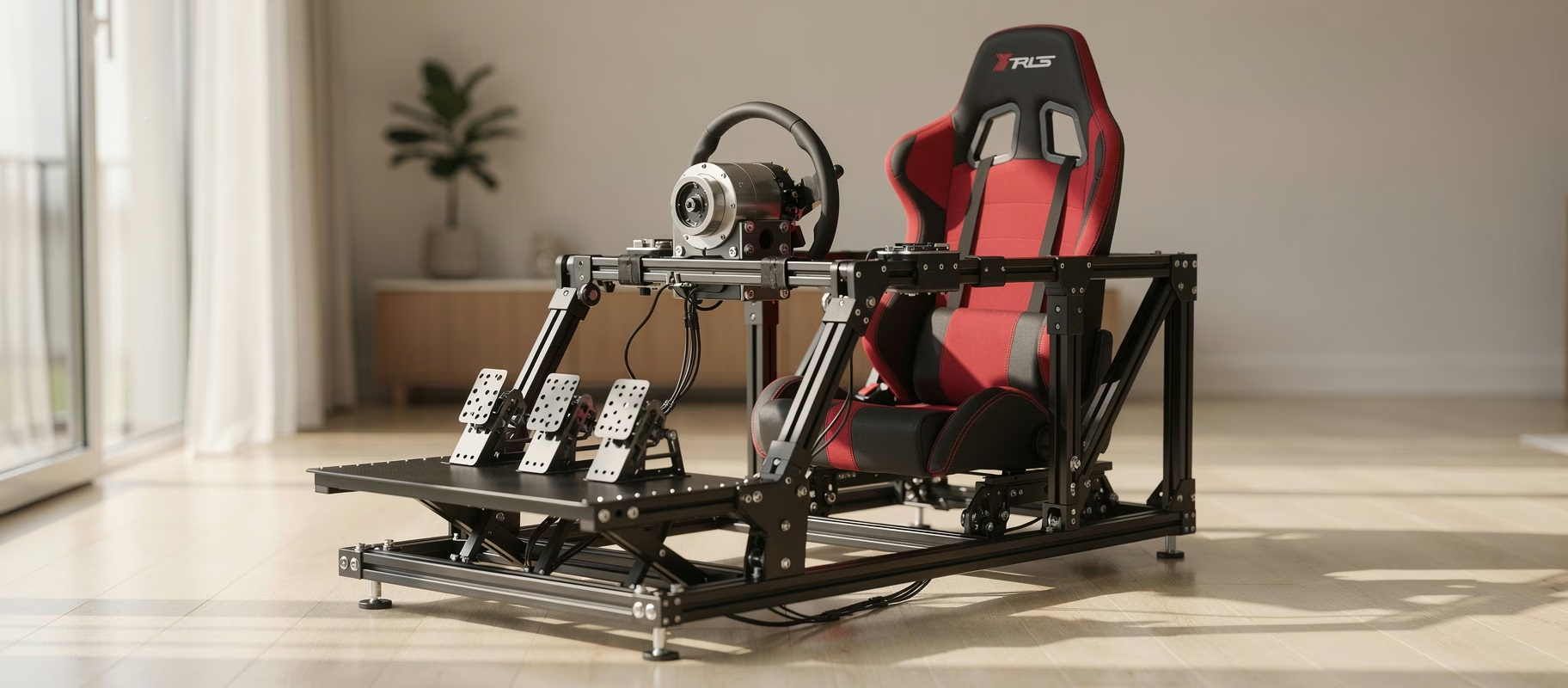
This is the most underrated factor. A platform that moves the whole cockpit also lifts everything on it: wheel, pedals, shifter. A seat mover, on the other hand, only fits cockpits with the right mounting points. The Next Level Racing V3 is officially meant for Next Level Racing’s own cockpits.
The Playseat Sensation Pro is a complete 38 kg steel cockpit that Playseat sells as a standalone product, not as a base for a separate motion platform. Modular aluminium rigs like the Sim-Lab P1X Pro or the Sim-Lab GT1 Evo make more sense to me as a base: individual parts (pedal plate, wheelbase mount, seat rails) can be reinforced or swapped separately. Not sure? Check the motion manufacturer’s specs: mounting pattern, max load, and whether your exact rig is explicitly listed as compatible.
Weight and load capacity
Every motion platform has a max load. With a platform under the whole cockpit, cockpit, seat and driver all count. For the V3 the limit is 130 kg of user weight. A sturdy bucket seat like the Sim-Lab Speed 1 holds you in place with its side bolsters better than an open, less supportive seat while things are moving. On long sessions, you’ll notice.
Software and game support
A motion platform needs telemetry from the game to know when to move. Check whether it supports the titles you actually drive (iRacing, ACC, rFactor 2 and so on), and whether that runs through the manufacturer’s own software, like Next Level Racing’s Platform Manager, or through a tool like SimHub.
Space, noise and power
More axes means a bigger footprint and usually louder actuators. In a small room or an apartment, 6DOF is often impractical. A 2DOF system or a set of bass shakers is the more realistic option there.
Getting started: what to expect
If you want to try motion for the first time, start with tactile transducers. They’re easy to mount under an existing seat or rig and work with almost any cockpit, including a complete cockpit like the Playseat Sensation Pro. Want actual physical tilt? A 2DOF platform is the next step. But that does need a compatible, sturdy cockpit to go with it.
Motion platform prices vary a lot by brand, actuator type and country, and they change regularly. So I’m not quoting figures. Check current price and availability with the manufacturer or an authorised retailer before you decide.
The top end: when is it worth it?
6DOF gives you the most convincing sense of G-forces. But that investment only makes sense if you:
- Already have a stable, expandable cockpit (like a modular Sim-Lab rig)
- Have enough dedicated space for the platform plus clearance around it
- Race seriously and often, so the extra immersion is worth the price gap
For occasional racing or a shared living room, going from 2DOF to 6DOF is usually overkill.
Which cockpit makes a good base?
No motion manufacturer guarantees its platform fits every seat or rig out there, so this is always product-specific. Rule of thumb: modular aluminium-profile rigs with separate mounting points (like Sim-Lab’s P1X Pro or GT1 Evo) are generally easier to pair with a platform than complete cockpits designed as one piece. A sturdy bucket seat like the Speed 1 helps keep your body in place. And check every platform’s mounting requirements before you order anything.
Should you consider motion?
Yes, if you: already have a stable cockpit, race seriously and regularly, and want noticeably more immersion than force feedback alone can give.
Not yet, if you: are short on space, race occasionally, or don’t yet have budget for a platform you know will fit. Start with tactile transducers instead, or put your money into a sturdy, modular cockpit first. You can always build on it later.
Where I’d start
Motion runs from a simple bass shaker to a full 6DOF platform, and the right level for you mostly comes down to your cockpit, your space and how seriously you race. So take an honest look at your cockpit first. A modular rig like the Sim-Lab P1X Pro or GT1 Evo gives you more room to grow than a fixed cockpit. And always read the motion manufacturer’s own compatibility and load specs before you spend anything.