Last week I stumbled on a forum thread that opened with one simple claim: rFactor 2 has “objectively” the best force feedback. 104 comments later, nobody had changed their mind. Not about politics. Not about football. About FFB. That’s when it clicked: this topic hits a nerve.
And fair enough. Because “which sim has the most realistic FFB” is actually two questions people mash into one: which sim feels the best, and which sim simulates the physics most accurately. Those aren’t the same thing. Spoiler: there’s no single winner. There’s only a winner for what you personally care about.
Why Everyone’s Having This Argument Wrong
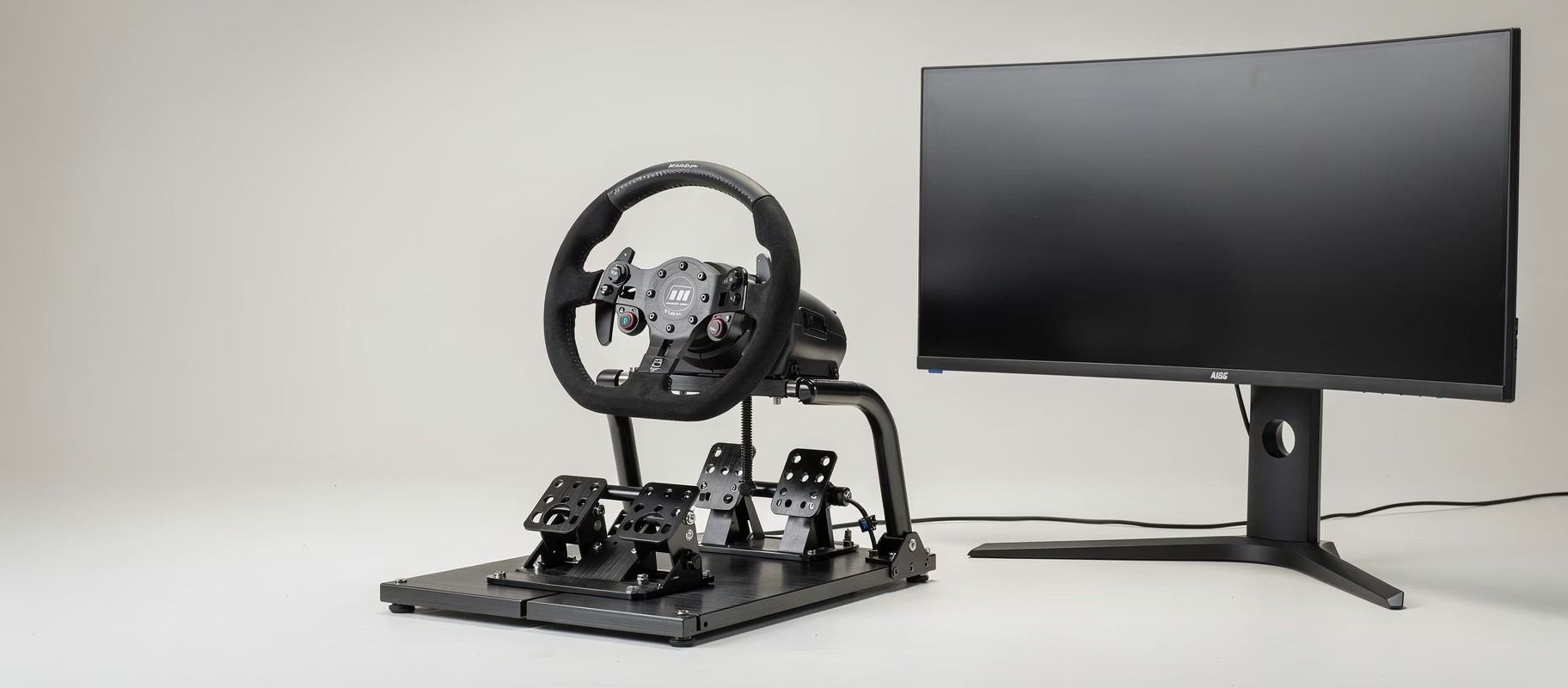
People compare FFB like it’s a simple ranking. Number one, number two, done. Doesn’t work that way. FFB is the sum of the physics engine, your wheelbase, your wheel settings, and (this part gets forgotten constantly) the rest of your rig. A loose wheel bolted onto a wobbly setup feels bad in every sim. Full stop.
Sound familiar? You spend hours on an old, unreinforced cockpit and conclude rFactor 2 just feels “vague.” Odds are your wheel shaft has a millimeter of play from flex in the frame. Switching sims does nothing. Stiffening the rig does. Remember that before you drop money on some fancy new FFB app.
ACC: King of GT3 Feel
Assetto Corsa Competizione nails one thing brilliantly: GT3 cars. The way you feel the rear end sliding on cold tires, how the car behaves under trail braking. That’s class. Is it “artificial” in the sense that it runs on Kunos’ own tire model rather than a claimed fully physical simulation like rFactor 2? Sure. But who cares when it drives this well?
The downside: outside GT3 and GT4, ACC feels pretty thin. Other classes barely exist, and the FFB outside that one segment never got the same attention. So if you only race GT3, great. If you want variety, look elsewhere.
iRacing: Consistent, But Clinical
iRacing’s updated tire model has made a massive jump over the past couple of years. Old iRacing felt like driving through a thick blanket. Not anymore. You feel load transfer, you feel tires building toward their grip limit in a way that actually tells you something.
But (here’s my hot take) iRacing still feels clinical. Like an engineer perfected the feel on a spreadsheet instead of a test track. It’s precise. It’s predictable. It’s not always fun. For competitive racers who want reliable feedback to make split-second decisions, that’s exactly what you want, by the way. For people chasing that “wow, this feels like a real car” moment? Less so.
rFactor 2: Messy Brilliance
rFactor 2 is the sim its fans defend like their own kid. And honestly? Partly justified. The physics engine (gMotor2, heavily developed since launch) calculates tire behavior with a depth the competition just doesn’t match. You feel understeer and oversteer building subtly. You feel curbs, surface changes, and weight transfer with detail other sims can’t touch.
The catch? The UI still looks stuck in 2013, content quality is inconsistent, and the learning curve to properly tune your FFB settings is steep. Out of the box, rFactor 2 often feels worse than ACC or iRacing to most people. Until you spend a few hours dialing in your FFB file. Then, suddenly: the lightbulb moment.
Automobilista 2: The Underrated Underdog
Nearly nobody brings up AMS2 in this debate, and that’s a mistake. Reiza’s own take on the Madness Engine feels surprisingly organic. Less razor-sharp than rFactor 2, less clinical than iRacing. A kind of golden middle ground. Not the best in one specific category, but the one that feels least fatiguing after a few hours of racing. Genuinely underrated.
The Honest Answer (Nobody Wants to Hear)
There is no “best.” That’s not a cop-out, that’s reality. rFactor 2 wins on raw physics detail. ACC wins on GT3-specific immersion. iRacing wins on consistency and competitive integrity. AMS2 wins on overall enjoyment.
What is true: your FFB experience is at least half determined by hardware that has nothing to do with your wheelbase. And that’s the part every Reddit thread conveniently skips.
The Rig That’s Ruining Your FFB
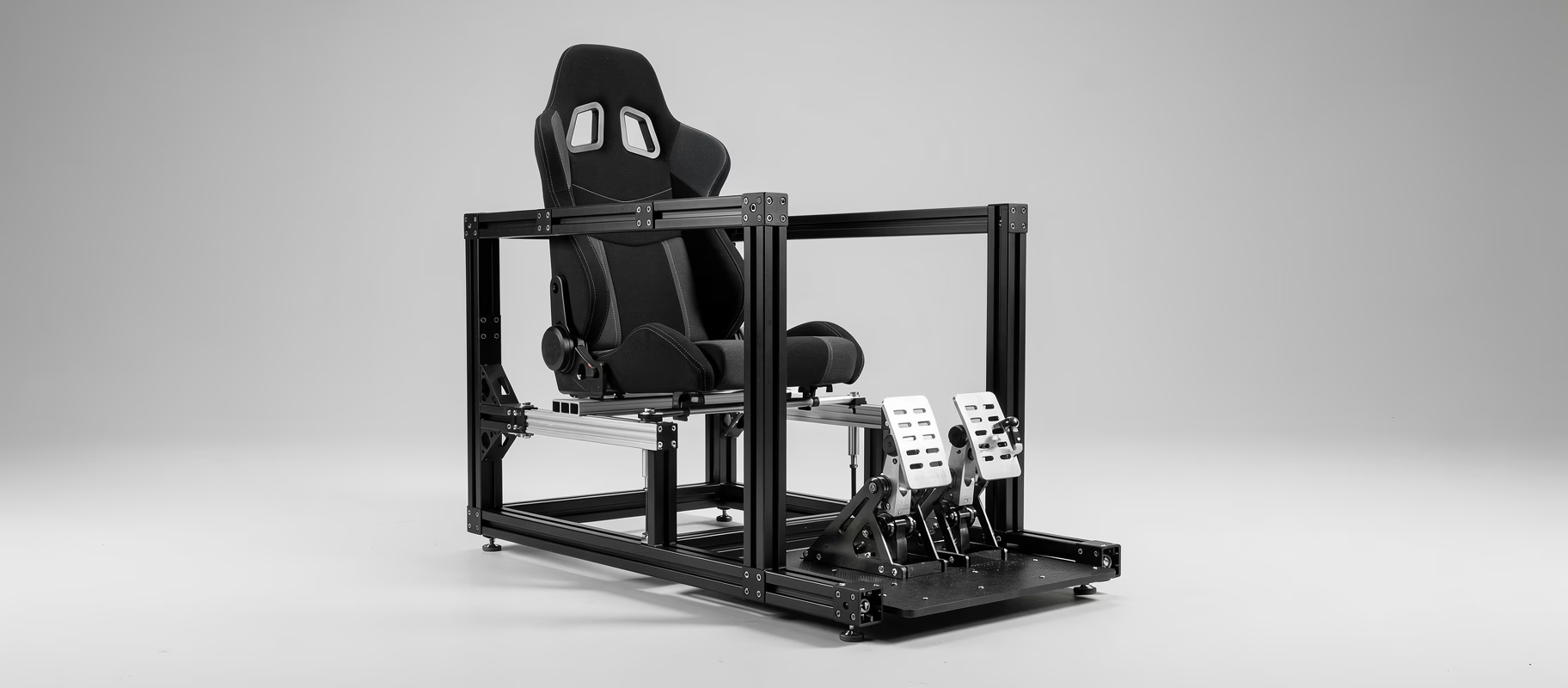
If your cockpit flexes under load, you lose information. Simple as that. Every newton-meter your wheelbase produces has to travel through the frame to your body without flex, play, or vibration getting in the way. On a cheap, lightweight rig, part of that information literally gets swallowed by the material.
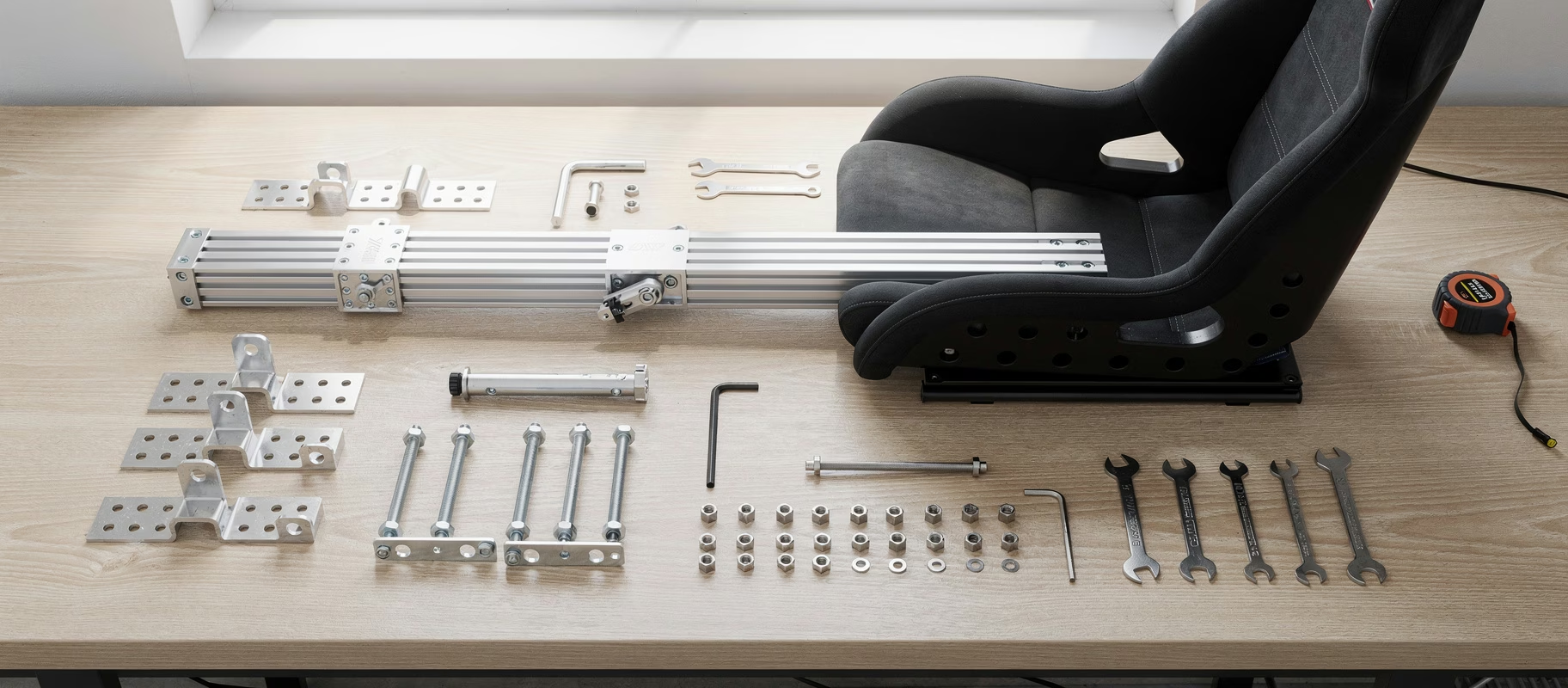
That’s why a stiff cockpit like the P1X Pro Sim Racing Cockpit isn’t just a vanity purchase. Its modular aluminum frame resists torsion, meaning the FFB your wheelbase generates actually reaches you instead of getting half-absorbed by a flexing frame. Yes, the entry price stings. But if you just spent hundreds on a direct drive wheelbase, why sabotage that investment with a wobbly frame?
For those who want to scale up over time, the GT1 Evo Sim Racing Cockpit offers comparable rigidity with more configuration flexibility. Handy if you’re not sure yet whether you’ll want triple monitors down the line.
Why Your Seat Matters Too (Yes, Really)
Sounds weird, but bounce and movement in your seating position changes how you interpret FFB signals. If you’re wobbling around in a cheap office-chair substitute, your body loses the reference points needed to catch subtle road feel. A tightly positioned bucket seat, like the Sim-Lab Speed 1 Sim Racing Bucket Seat, keeps your torso stable enough for small vibrations to flow through your arms instead of getting absorbed by a shifting body.
Sound exaggerated? Test it yourself. One session in a loose chair, one in a tight bucket seat. Same sim, same wheelbase, same settings. The difference in how “readable” the FFB feels is bigger than you’d expect.
The Pedals Nobody Associates With FFB (But Should)
FFB isn’t only about your hands. Brake feel is the other half of the story, and it’s chronically underrated in these debates. A load cell that responds properly to pressure instead of travel gives you an information channel just as important as your wheel.
The Heusinkveld Sim Pedals Ultimate+, with their hydraulic dampers and 200 kg load cell brake, are overkill for the average hobbyist, I’ll admit that. But for anyone genuinely chasing realistic feel across the board (not just in your hands but under your feet), these pedals make a bigger difference than a pricier wheelbase ever would. Braking is where races get won and lost. Why cheap out there?
Comfort Isn’t a Luxury, It’s FFB Preservation
Last point, boring but true: fatigue distorts how you perceive FFB. After two hours racing with your feet at an awkward angle, you simply stop feeling subtle signals as well. A Universal Sim Racing Footrest from Trak Racer fixes this for a reasonable price. Not glamorous. Still works.
So, Which Sim Should You Pick?
If you only race GT3 and want tight, spectacular racing: ACC. If you want competitive racing with fair, predictable physics: iRacing. If you want the deepest, most technical physics simulation and you’re willing to tune: rFactor 2. If you just want to enjoy driving without frustration: AMS2.
But before you spend a cent on a new sim license, look at your rig first. A flexing frame, a wobbly seat, and sore feet sabotage even the best FFB engine on the planet. Sims improve their physics every year. Your setup doesn’t improve on its own.