The Wishlist That Doesn’t Fit the Budget
Say you’ve got €1,500 and you want a complete Formula cockpit: direct drive, load cell pedals, a shifter, a dashboard display, AND a good seat. Reasonable wish. Except the wishlist is towering over the budget attached to it.
And this is exactly where almost everyone screws up when starting out. You watch YouTube videos of €8,000 rigs, copy-paste the parts list, then panic when the numbers don’t add up. Good news: building a genuinely usable Formula setup for €1,500 is doable. Bad news: you have to make choices. Hard ones. You can’t have it all.
This is the honest guide. No dreams, no “nice to haves.” Just what actually works on this budget.
Why Formula Is Different From GT3 (And Why That Saves You Money)
Here’s a misconception I run into constantly: people assume a Formula setup costs more than a GT3 one. Wrong. It’s often cheaper, if you skip the right things.
A Formula car doesn’t have a manual gearbox. No H-pattern. No clutch pedal you need to learn to time. You shift with paddles on the wheel. Done. That means a shifter, however beautiful, is money you don’t need to spend if you’re purely doing Formula. More on that below.
What actually matters for Formula: a low seating position, sharp force feedback that transmits small grip changes, and a wheel that doesn’t feel mushy through fast direction changes. That’s where your money should go. Not flair.
The Honest Budget Split
No exact prices here, they shift constantly and vary by retailer. But here’s a rule-of-thumb breakdown for €1,500:
- Frame/cockpit: roughly a fifth of your budget
- Direct drive wheelbase + wheel: the biggest chunk, over a third
- Pedals: around a fifth
- Seat: about 15%
- Mounting hardware, cables, the small stuff you always forget: the rest
Yes, that last one. Everyone forgets there’s always another €50-100 needed for mounts, bolts, or an extension cable that wasn’t mentioned anywhere on the box. Every time.
The Frame: Build the Base, Dream Later
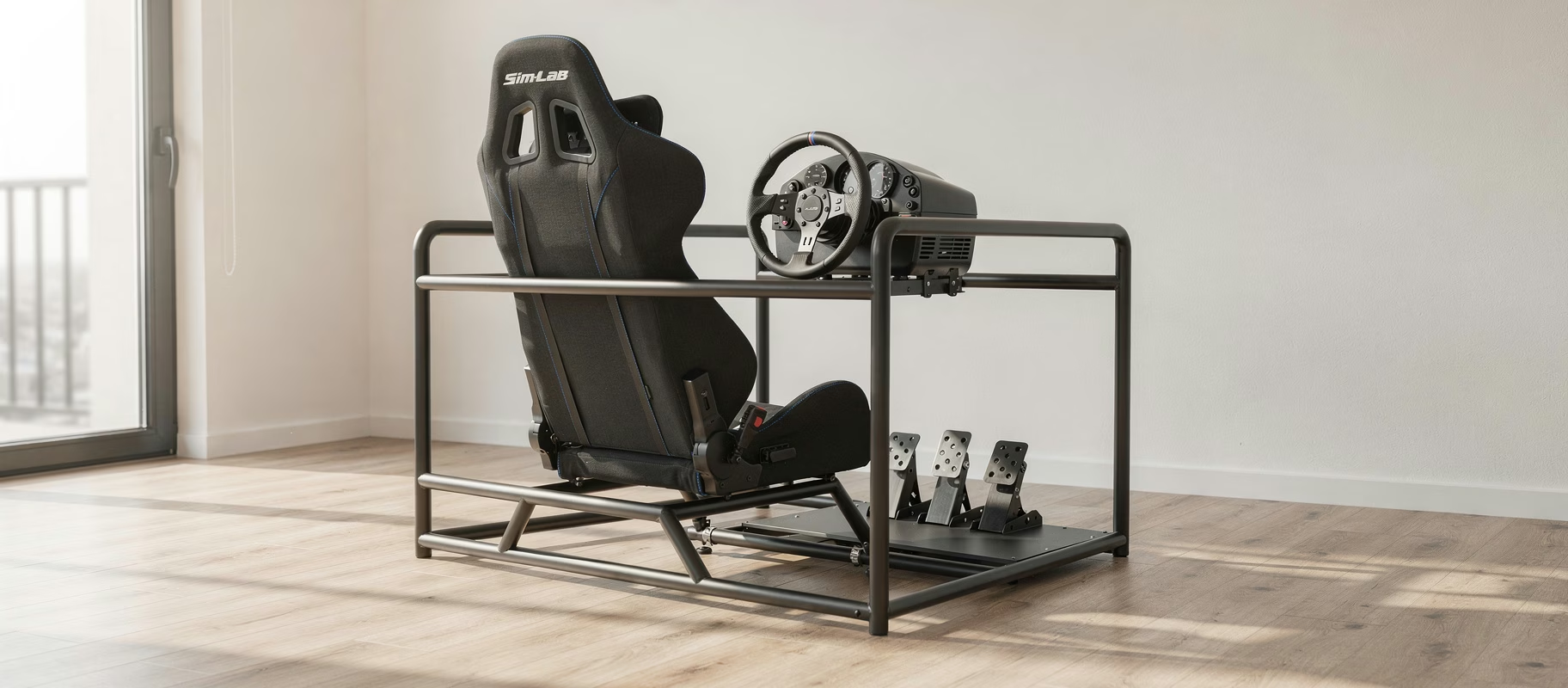
This is where most people trip up. They see a modular system like the P1X Pro Sim Racing Cockpit from Sim-Lab and want it immediately. I get it. The thing is gorgeous: modular, compatible with almost any wheelbase, and you can even bolt a premium Sparco seat onto it.
But be honest with yourself: the base price alone eats a serious chunk of your total budget. And you haven’t spent a cent yet on wheelbase, pedals, or seat. For €1,500, this simply isn’t step one. It’s the step you take after this build, once you realize you’re hooked. And you will. Trust me.
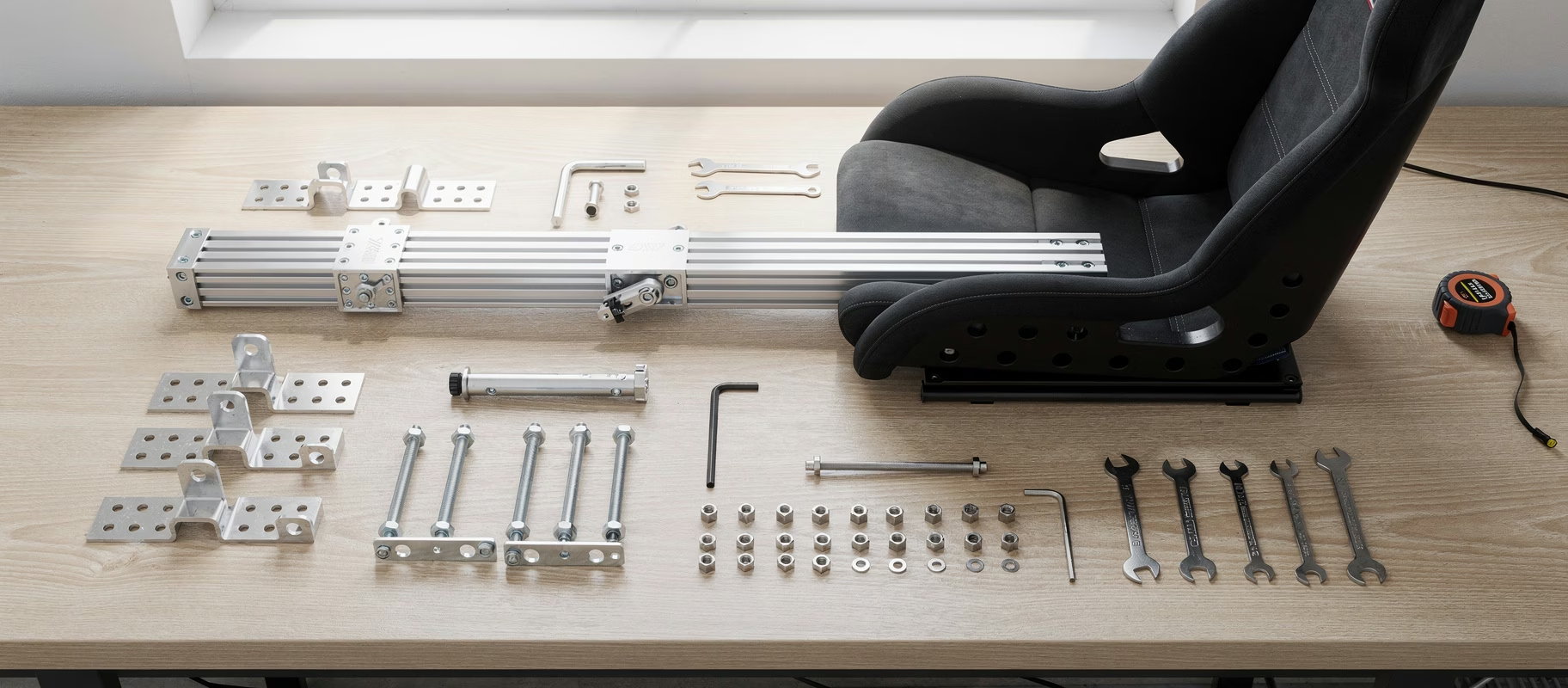
Start with a simple, sturdy aluminum profile frame. No glamour, no extras, just something that won’t flex when you brake hard into a chicane. Save the modular cockpit dreams for your upgrade path.
The Heart of Your Setup: Direct Drive Doesn’t Have to Be Expensive
This is probably the most important decision you’ll make. And the good news? Direct drive is now within reach of a budget build.
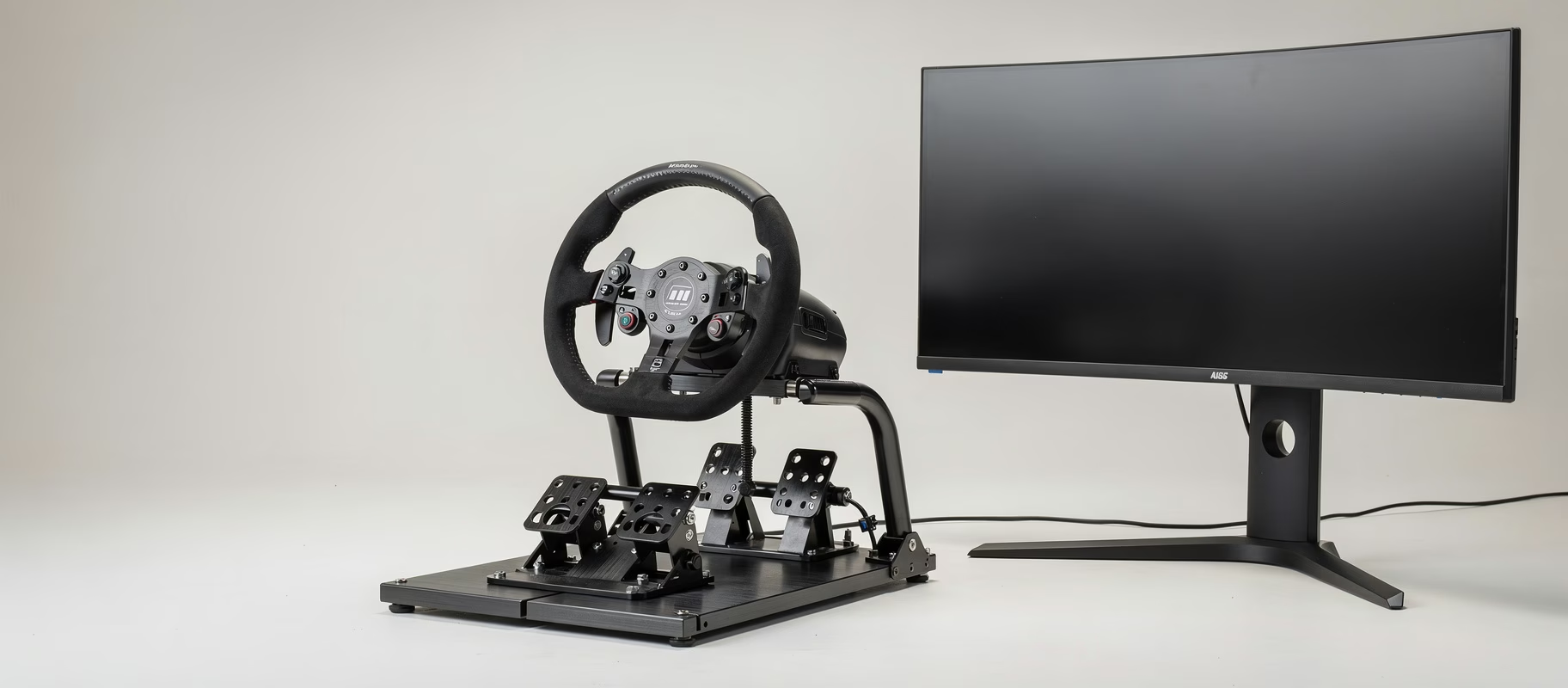
The Fanatec CSL DD (5 Nm) is a great example of why. Five newton-meters of torque might not sound impressive after watching YouTube videos about 20 Nm monsters, but for budget-conscious Formula racing? It’s plenty. It’s quiet, too (important if you live in an apartment and don’t want every neighbor knowing you’re racing at 11pm) and it feels smooth instead of jittery.
What I also appreciate: it’s modular. You start with the 5 Nm version and upgrade later without tossing your entire setup. Compatible with PC and Xbox (with an Xbox-licensed Fanatec steering wheel). It doesn’t work on PlayStation, and no upgrade fixes that; for PlayStation, Fanatec has the GT DD Pro. One caveat: for heavy GT3 simulation, 5 Nm can feel light, and the included QR Lite (plastic) coupler can flex slightly under hard input. For Formula, where you’re making smaller, quicker steering movements, this rarely matters.
Keep in mind the wheel rim and pedals are sold separately; that’s not baked into the base price.
Seat Comfort: Where People Quietly Save Too Much
This is a mistake I see constantly. People drop serious money on a wheelbase and then bolt it to an IKEA office chair. That doesn’t work. Your seating position is the foundation of every good racing experience. If you’re sitting crooked or sinking into soft cushions, you won’t feel what that wheelbase is actually doing.
The Sim-Lab Speed 1 Sim Racing Bucket Seat is exactly the kind of seat you want: a real bucket design, built for racing, not office work. Available in L and XXL, so there’s a decent chance there’s a size that fits you. The black shell with black or blue upholstery also looks the part. Not that looks are everything, but hey, it helps.
The website is a bit thin on warranty and support details, so check that before buying. But build quality-wise? This comes from Sim-Lab, a name you’ll see everywhere in this hobby. Not without reason.
Pedals: Where I’d Actually Compromise
This might sound contradictory after everything I just said about not cutting corners in the wrong places. But pedals are where you can most easily flex on a €1,500 budget, if you’re smart about it.
Load cell pedals (where brake pressure is measured instead of pedal travel) are fantastic, but pricey. For your first setup, a solid entry-level pedal set without load cell tech works just fine. Is it perfect? No. Will you feel the difference compared to a €400 pedal set? Absolutely. But right now you’re learning to race, not chasing perfection, and at this stage you learn more from hours behind the wheel than from brake precision.
Save the load cell upgrade for later. It’s one of the cheaper, easier upgrades to bolt on afterward without rebuilding your whole rig.
What You Should Just Leave Off (For Now)
Here comes the hard truth nobody wants to hear.
The ClubSport Shifter SQ V1.5 is a beautiful piece of engineering: full metal construction, both H-pattern and sequential shifting, swappable buttons, adjustable resistance. I get the appeal completely. But for pure Formula racing? This is money you don’t need right now. You shift with paddles. Full stop. Save this purchase for when you also want to try GT3 or old-school rally, and that moment probably comes sooner than you think. Just not now.
Same goes for the GRID Display DDU-5. A dashboard display with real-time info is genuinely cool to have. It feels professional. It looks great in photos. But it changes nothing about how your car handles or how well you drive. For €1,500, this is a luxury you add later, not something you burn budget on now.
Swallow it. It feels unfair to cut the fun stuff. But this is exactly how you build a setup that actually feels good on a budget, instead of one that’s spread thin across everything and excellent at nothing.
Tricks to Save Money Without It Feeling Like a Downgrade
A few things that can save you anywhere from tens to hundreds of euros:
- Look at secondhand frames. People upgrade constantly and dump their old frame for a fraction of retail.
- Wait for sales. Black Friday and January clearance sales are real in this hobby, so time your purchase around them.
- Skip the RGB nonsense. Glowing buttons and colored cables do nothing for your lap times.
- Build a simple frame yourself instead of buying a full kit, if you’re even slightly handy with a drill.
Is €1,500 Enough? The Honest Answer
Yes. With a catch.
You won’t get a shifter. No dashboard display. No load cell pedals right out of the gate. But you will get a real direct drive wheelbase, a sturdy frame, a seat that actually supports you while racing, and pedals good enough to learn braking like a maniac into every chicane.
That’s more than enough to feel the difference between a gamepad and an actual Formula experience. The rest (the shifter, the display, the fancy modular cockpit) comes later. Once you notice you’re racing every single weekend instead of occasionally.
And trust me: that happens faster than you think.