The short answer: there is no best set
Same question on Tweakers every week: “which steering wheel and pedal set should I buy?” And every week the same honest answer: it depends. Not because I don’t have an opinion (that’s coming), but because the market splits into three completely different worlds. Complete entry-level bundles with the wheel and pedals in one box. Mid-range setups where you pair a stronger wheelbase with separate pedals. And high-end direct drive systems where almost everything is sold separately. Which world fits you decides more than your budget. It decides whether you can upgrade later without replacing everything.
I’ll go through the options per level, explain where separate components do and don’t fit together, and clear up a few stubborn misconceptions about what a “set” actually is.
Entry level: everything in one box
For beginners, a bundle where the steering wheel and pedals come together is usually the logical starting point. Brands like Logitech G and Thrustmaster have sold this type of complete set for years, often with gear- or belt-driven force feedback rather than direct drive.
Thrustmaster itself calls the Thrustmaster T150/TMX Force Feedback the “absolute gold standard” for anyone looking to get into virtual motorsport, citing a realistic size and force feedback meant to help beginners get used to the feel of a real car (Thrustmaster, TMX Force Feedback). Marketing talk, obviously. But it does tell you what this type of wheel is for: accessibility and a low entry budget, not the strongest feedback on the market.
Logitech G runs a comparable lineup of complete racing wheels and pedals, aimed at both PC and console (Logitech G, Racing Wheels & Pedals). Thrustmaster’s own overview also points out that choosing a wheel depends on your experience level and desired immersion, and recommends different models for different audiences rather than one wheel for everyone (Thrustmaster, “The best racing wheels to get started in simracing”).
Best for: players moving on from a controller for the first time who want to test whether sim racing is for them, without immediately investing in a modular system.
Watch out for: these bundles are often brand-locked. The pedals that come with an entry-level wheel usually can’t be swapped for another brand’s set without adapters. And a load cell on the brake? Typically not included.
Mid-range: everything separate, and that’s the point
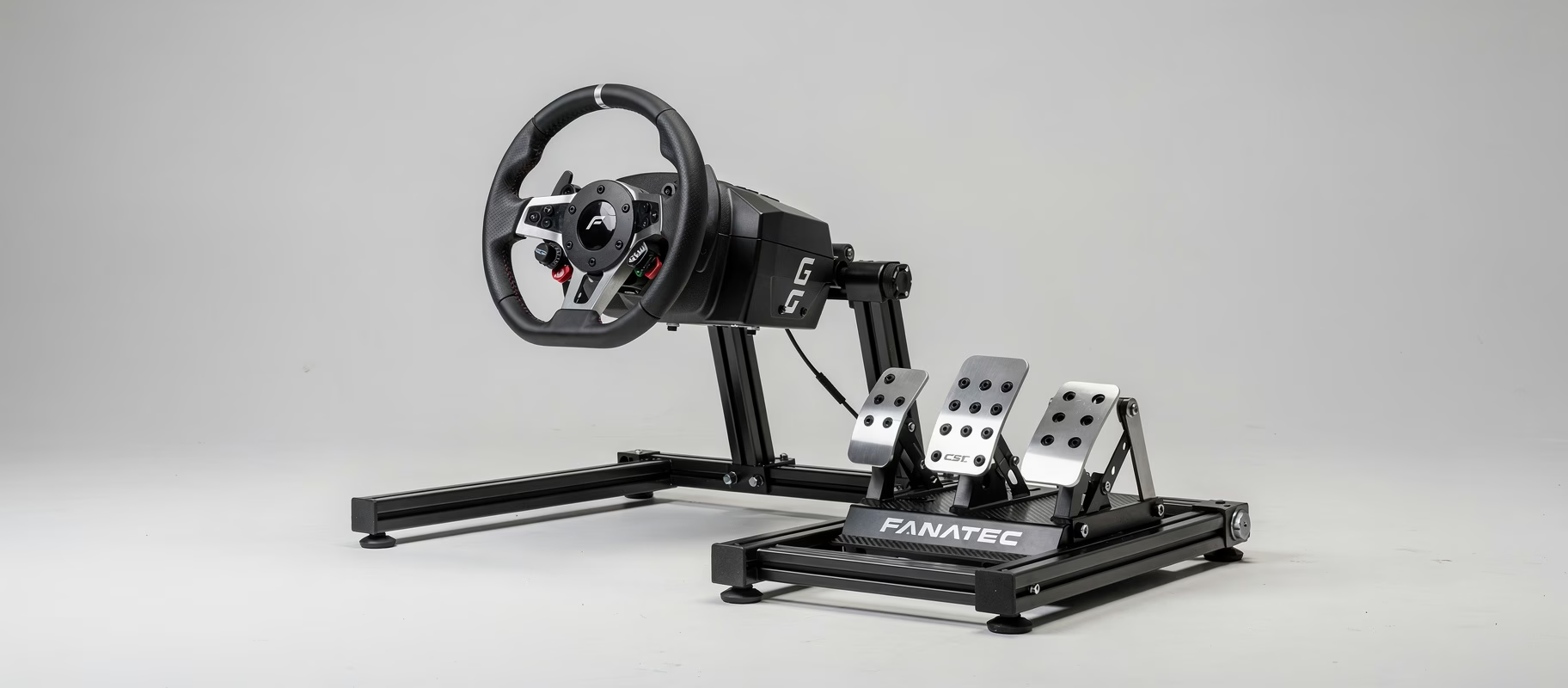
Once you want more than an entry bundle, the buying process changes. From the mid-range up, the wheelbase, the steering wheel itself (the “rim”) and the pedals are usually sold separately. That’s exactly the space brands like Moza Racing, Fanatec, and the relatively new Asetek SimSports operate in.
Asetek, originally known for PC liquid cooling, has entered the sim racing hardware market under the name Asetek SimSports and offers its own wheelbases and accessories (Asetek SimSports). Thrustmaster’s own “Racing” catalogue also lists 78 products, ranging from entry-level wheels to licensed flagship models such as the Ferrari 499P Centenary Winner Edition. That’s how wide the gap between entry-level and high-end has become (Thrustmaster, Racing overview).
In this category, you typically buy:
- A wheelbase (the motor unit that generates force feedback)
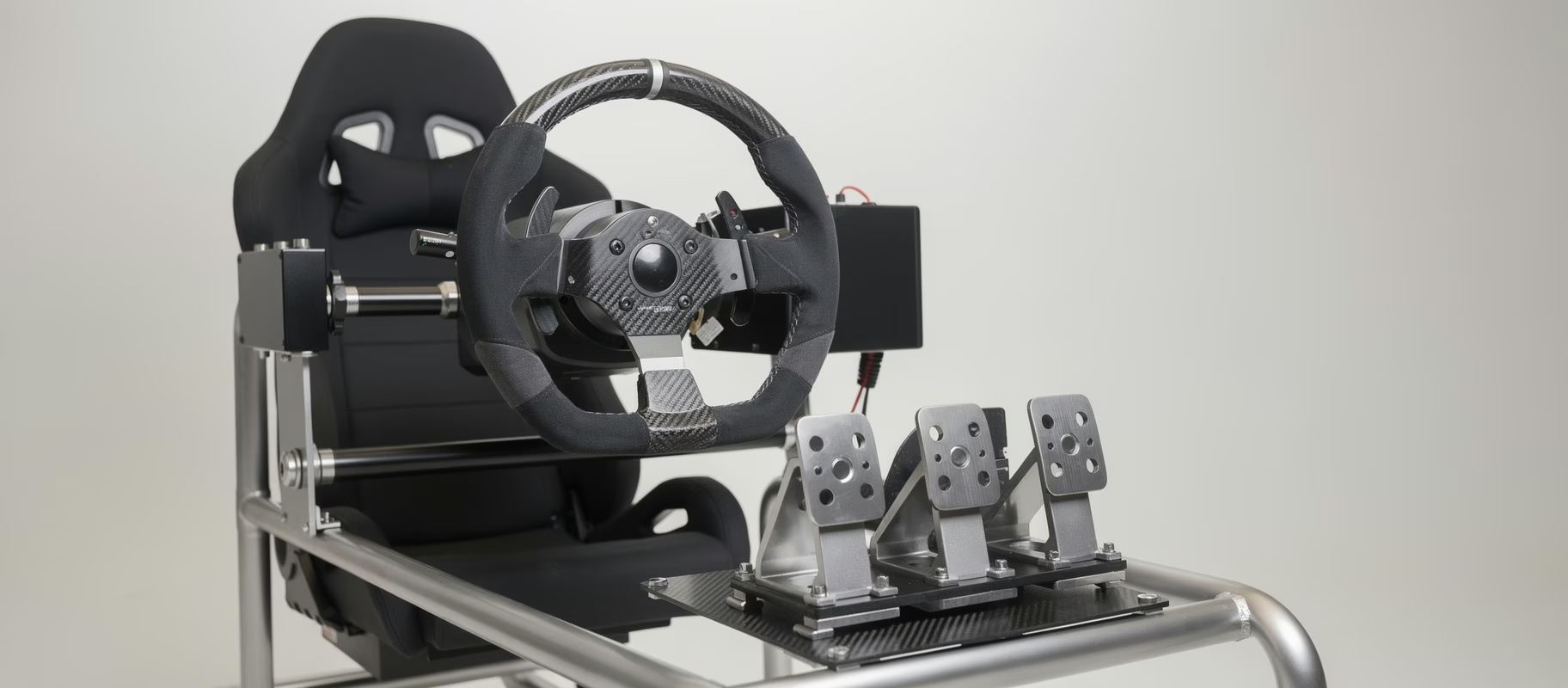
- A separate steering wheel (rim) that attaches to the wheelbase via a quick release
- A separate pedal set, often with a load cell on the brake
This makes upgrading easier: buy a stronger wheelbase and keep your pedals. Or the other way round.
Buying a separate steering wheel: when do you need one?
One example of a separate wheel is the Moza Racing GS V2P GT Steering Wheel, a 300 mm GT wheel with a forged carbon fiber housing. It uses magnetic and photoelectric sensors for its buttons and shifters, has programmable mechanical buttons with RGB lighting, and has a perforated microfiber leather grip. It works both wired and wirelessly, though wireless mode needs a battery you’ll have to charge or replace.
Important: this is a separate wheel (rim), not a complete wheelbase. You’ll need a compatible Moza wheelbase with the matching quick-release system before this wheel does anything for you. Already in the Moza ecosystem and want a premium GT rim with dual clutch paddles? Then this is a logical upgrade. No wheelbase yet? Then this isn’t your first purchase.
I couldn’t confirm the price of this wheel with certainty at the time of writing. Check the current price with the retailer before you order.
Pedals: the part everyone underrates
Pedals get treated as an afterthought, but they matter at least as much as the steering wheel for your lap times. The two biggest differences between entry-level and enthusiast pedals:
- Load cell versus spring/potentiometer. Entry-level sets often use a simple potentiometer with a spring, giving a linear brake pedal. Enthusiast pedals use a load cell that reacts to pressure rather than travel, which feels closer to a real car.
- Separately available versus brand-locked. Entry-level wheels come with pedals you can rarely swap for another brand’s parts without an adapter. Mid-range and high-end pedals are almost always sold separately, but “separate” doesn’t mean “fits anything”. Many sets plug straight into a PC over USB. Fanatec pedals like the Fanatec CSL Elite V2, on the other hand, connect to a Fanatec wheelbase through a proprietary RJ12 port, and only work over USB as a standalone device on a PC (sometimes with an extra adapter). So always check the connection before you order.
Pedal sets have their own accessories too. The Logitech G Driving Force Shifter is a good example: a separately available H-pattern shifter with six gears that only works with the Logitech G29 or G920 and the Logitech G923. Its strong clamps keep the shifter from moving during aggressive shifting, and each gear gives a solid, tactile click. Not a universal shifter, then, and you’ll need to free up desk space and sort out a mounting solution for it separately.
Mounting: why a pedal set without a rig is worth little
A common misconception: a good wheel and good pedals are all you need. In practice, you also need a stable mounting solution. Otherwise your pedals slide during hard braking and the wheel’s force feedback feels weaker thanks to vibrations in a loose desk setup.
Want a complete setup? There are a few routes:
- A modular cockpit like the Sim-Lab P1X Pro, compatible with multiple wheelbases and able to integrate advanced pedals. The base price is a serious investment, and mounting takes some preparation.
- A complete seat cockpit like the Playseat Sensation Pro, which according to Playseat is used by professional WRC and FIA drivers. Note the 120 kg weight limit (per Playseat’s official specifications) and the sizable 150x63x94cm footprint. You’ll need real space for this in your sim racing corner.
- A standalone bucket seat like the Sim-Lab Speed 1, which comes in a standard size (retailers describe it as made for M and L drivers) and a separate XXL version, for anyone wanting to pair a seat with their own frame or rig.
Not a wheel or a pedal set, none of the three. But a necessary piece of the puzzle if you’re serious about running a separate wheel-and-pedal combination.
Three things people get wrong
“A more expensive wheel automatically makes me faster.” No. A stronger wheelbase or pricier pedals give you more information and comfort during long sessions, but driving technique and practice matter at least as much for your lap time.
“All pedals fit all wheelbases.” Rarely with entry-level bundles. Often with mid-range and high-end systems, but not always: many pedals go straight to the PC over USB, while Fanatec pedals belong on a Fanatec wheelbase via RJ12. Check the mounting holes of your rig or seat as well.
“A separate steering wheel works on any wheelbase.” Also no. A separate wheel like the Moza GS V2P GT needs a specific quick-release system matching the wheelbase from the same brand or ecosystem.
Which set fits you?
- Just starting out, want to test if sim racing is for you: pick a complete bundle from Logitech G or Thrustmaster with wheel and pedals in one box.
- Been racing a while and want more feedback: consider a separate wheelbase with a separate wheel and pedals with a load cell, so you can upgrade later without replacing everything.
- Already in a brand ecosystem (say, Moza) and want a premium GT rim: a separate wheel like the Moza GS V2P GT is a logical next step, provided your wheelbase is already compatible.
- Building a permanent setup: besides the wheel and pedals, invest in a stable cockpit or racing seat, such as the Sim-Lab P1X Pro, Playseat Sensation Pro or Sim-Lab Speed 1, depending on your space and budget.
What I’d do
Just starting out? Buy a complete, affordable bundle from Logitech G or Thrustmaster and drive it for a few months. Only once you notice you want more do you move on to separate components: a wheelbase, a separate steering wheel and pedals with a load cell, rounded out with a shifter and a stable cockpit or racing seat. And before every separate purchase, you check whether wheelbase, wheel, pedals and mounting actually fit together. Prices change often, so you check those too. With the retailer, not in an article.