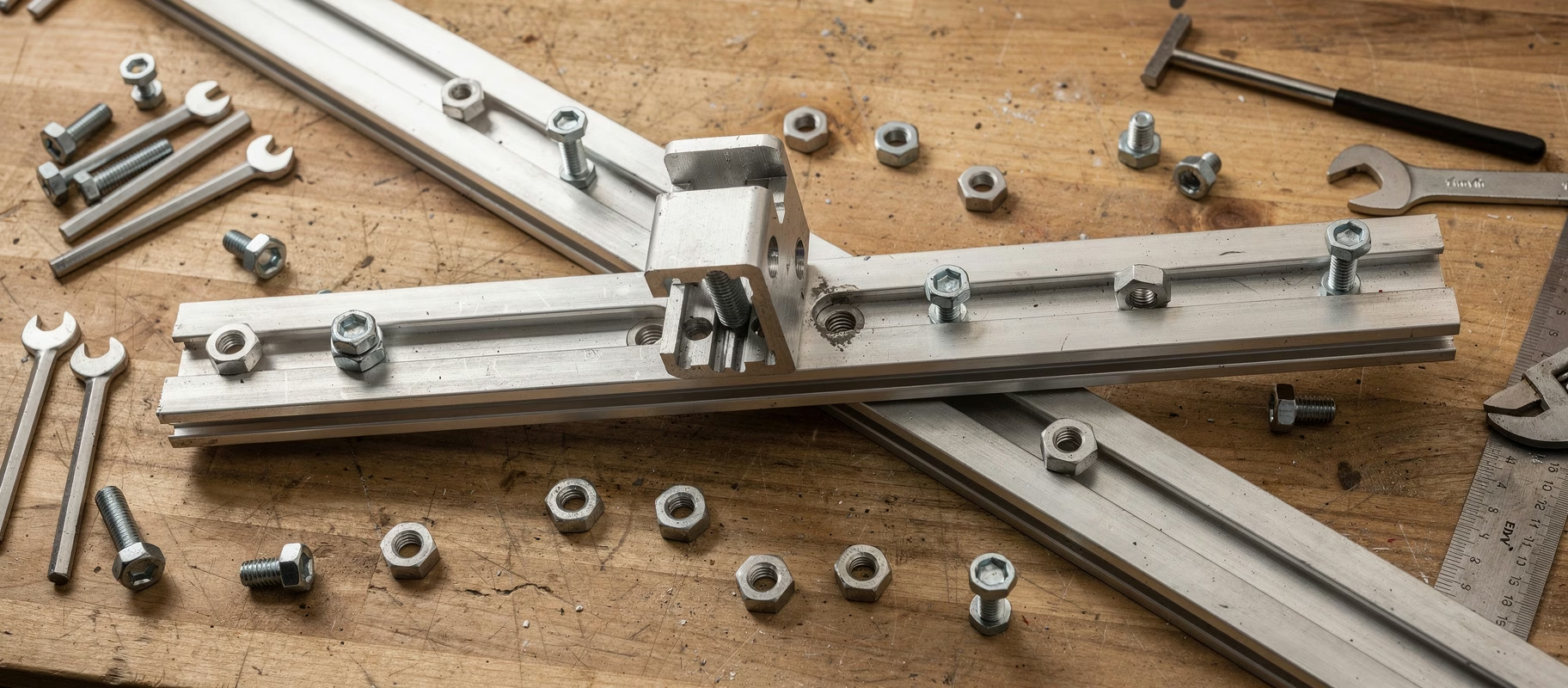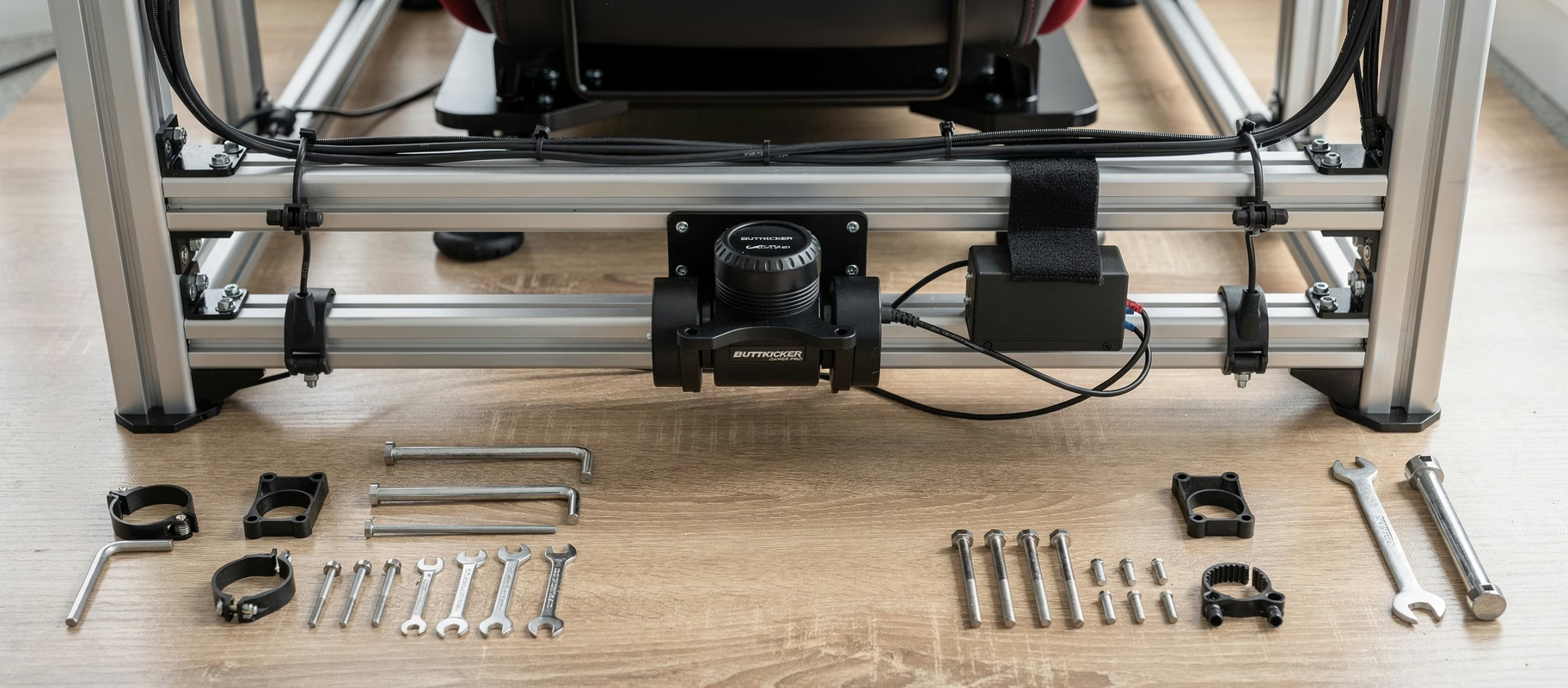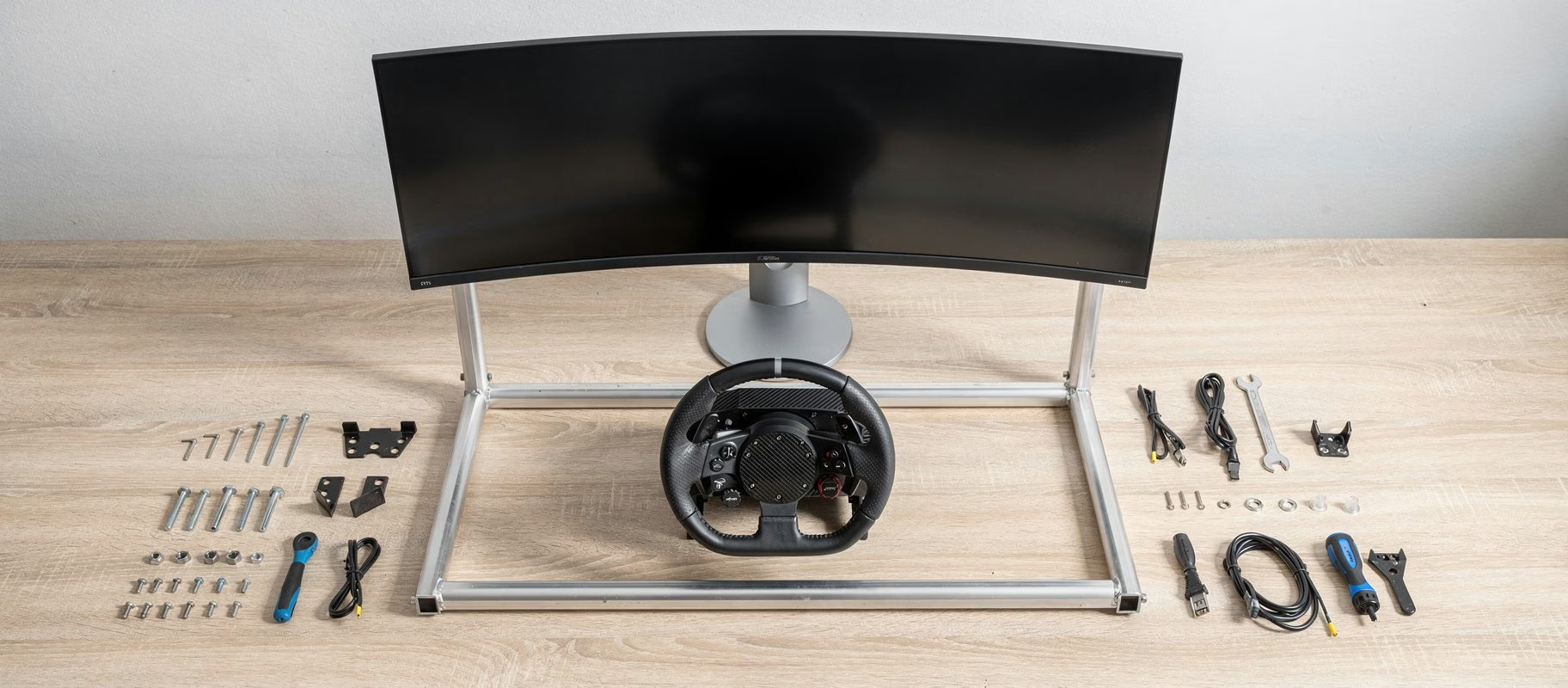
I assembled my first profile rig with the wrong Allen key. Seriously. For an hour, I tightened a bolt that was already tight. It was a painful, sweat-dripping lesson in patience. And in the importance of good instructions.
Why am I telling you this? Because choosing your first (or next) aluminium profile cockpit feels exactly the same. You’re about to invest a chunk of money and time. You don’t want to pick the wrong ‘Allen key’. In the EU, the debate often circles three names: the Sim Lab GT1 Evo, the Treq One, and the Trak Racer TR80S. At first glance, they look suspiciously similar. Square tube, black anodization, a mountain of t-nuts.
But the devil (and your future frustration) is in the details. The lead time. The shipping costs from Poland or Australia. The quality of that one, critical pedal plate reinforcement gusset. Let’s look at that.
The hidden bill: shipping, lead times, and headaches
You open three browser tabs. You compare the base price. The Treq One looks a tad cheaper. Decision made?
No. Absolutely not.
This is where you screw up. The real cost (and headache) is hidden in the delivery and the ‘completeness’ of the kit. Sim Lab (Netherlands) and Treq (Poland) are around the corner. That matters. Significantly. Trak Racer ships from an EU warehouse, but that’s often still farther away. Expect €50-€150 in shipping, depending on your location and order size. Those numbers change the whole game. Sometimes the ‘more expensive’ rig suddenly wins because shipping is dirt cheap.
And then there’s lead time. Sim Lab often has stock. Treq often builds to order. Trak Racer’s EU stock fluctuates. Best case, you have your rig in a week. Worst case, you’re staring at an empty corner for a month. Ask yourself: how patient are you?
The three under the microscope: bolts, beams, and bruises
Let’s take them apart. Figuratively. I’m out of angle grinders.
Sim Lab GT1 Evo: the known quantity
The GT1 Evo is the Honda Civic of sim racing. Reliable. Parts everywhere. Everyone’s had one. The design is old, and it shows. The joints are solid, but not always the most elegant. The included pedal plate? It’s fine. Not great, but fine. For a basic DD wheelbase and pedals, it’s more than enough.
The huge advantage? The community. Every problem, every upgrade, every possible mistake has been filmed on YouTube ten times over. That’s gold if you’re, like me, not technically gifted.
Downside? It can feel a bit ‘finished’. Like the design hasn’t been touched since 2018. And the accessories can get pricey.
Treq One: the quiet challenger
Treq. A Polish manufacturer that’s been gaining serious ground. For a reason. The One is their answer to the GT1 Evo, but with a few smart tweaks. The profile connections are cleaner. They often use thicker walls on critical points. The whole thing feels (on paper at least) a bit more rigid.
Their pedal plate is a step better. More holes, better bracing. Little things. But they matter when you’re mounting a set of Heusinkvelds or VRS pedals that can handle up to 140kg of brake force (with VRS having a 200kg load cell but 140kg max force at pedal face).
The catch? Less known. Less community support. And while their website is good, communication can sometimes be slower. You’re buying from a smaller player. That has charm, but also risk.
Trak Racer TR80S: the do-it-all (maybe)
Trak Racer takes a different approach. The TR80S is often a bit pricier at base, but sometimes comes as a more complete kit. Think a better seat bracket or more nuts and bolts in the box by default.
Their big play is the ecosystem. Want to add motion later, a monitor stand, a side-mount for your shifter? Trak Racer has an accessory for everything. It’s all plug-and-play. That’s tempting.
But. The finish quality can be inconsistent. Sometimes the profiles arrive with scratches. Sometimes a bolt isn’t quite right. Their EU warehouse has improved this, but it’s not Sim Lab-level consistency. You’re paying for versatility, not perfect finish.
The heart of the matter: pedal plates and future-proofing
This is where we cut through the noise. The pedal plate is the heart of your rig. Everything starts there.
- Sim Lab: DIYers often replace this. It’s fine, but for high-end pedals you want more stability. Budget an extra €100-€150 for an upgrade later.
- Treq: Figured this out a bit. Their standard plate is thicker, better braced. You can live with this one longer.
- Trak Racer: Often pushes more advanced plates as upgrades. The base is okay, but they want you to buy more.
And expandability? Sim Lab and Treq use mostly standard 40-series profile. Everything fits everything. Trak Racer sometimes uses proprietary sizes for accessories. Handy if you stay with them, annoying if you want a monitor arm from another brand.
So, what should you buy?
My take? It’s not one-size-fits-all.
Buy the Sim Lab GT1 Evo if: You want no fuss. You want a rig that works, that you know will fit, and that can be delivered tomorrow. You accept that some parts might need an upgrade. It’s the safe, logical choice.
Buy the Treq One if: You want something stiffer for your money and are willing to wait a bit longer. You care about the small, technical details like wall thickness and bracing. You appreciate innovation from a smaller shop.
Buy the Trak Racer TR80S if: You have a complete ecosystem in mind. You know you want to add motion in a year, and you don’t want to drill or adapt. You accept potential inconsistency in exchange for ultimate expandability.
Always check the total price including shipping to your door. Ask for the lead time. Read the fine print.
And buy a good set of Allen keys. Trust me.