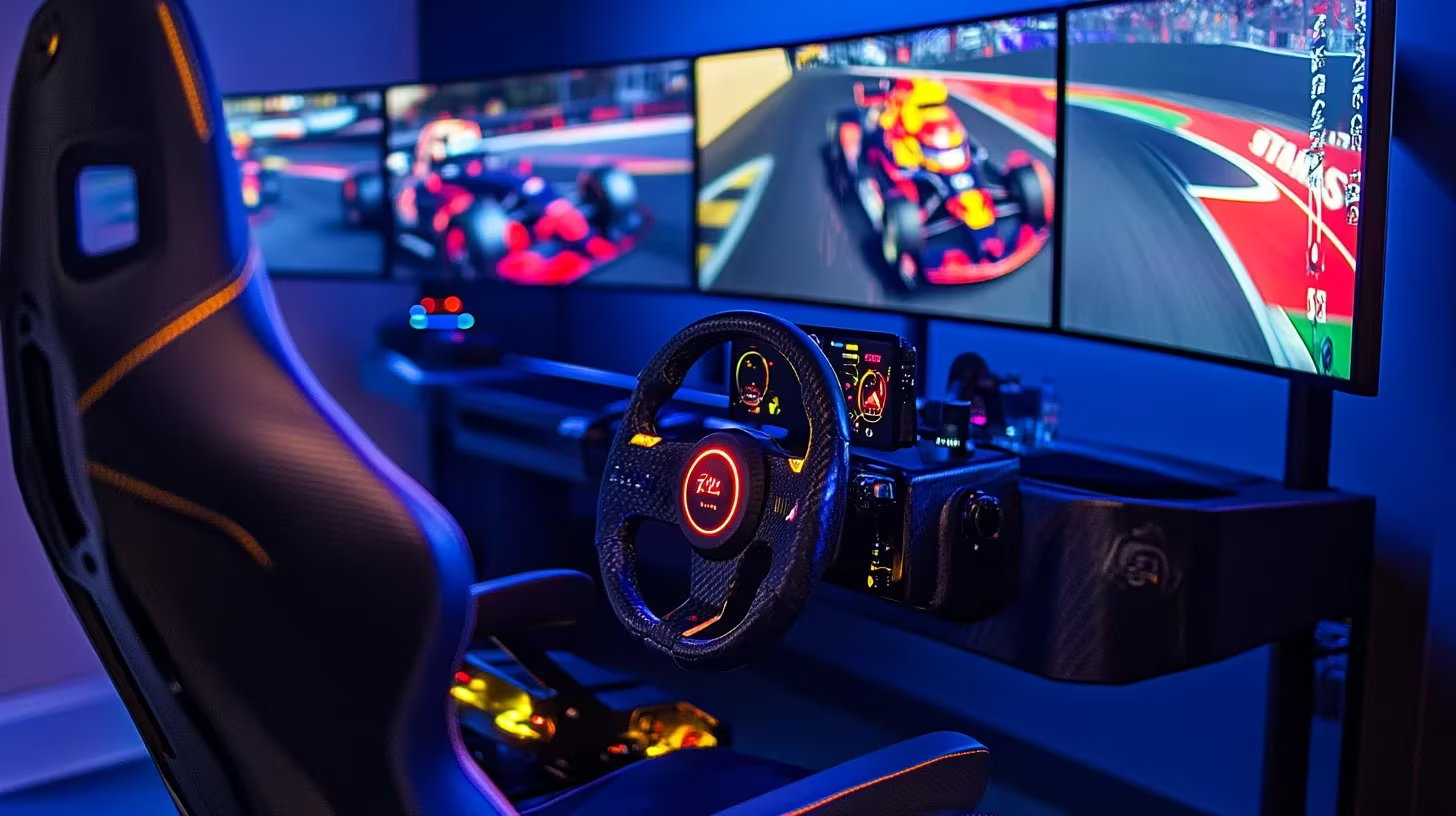
Max Verstappen is a four-time world champion, but also a hardcore sim racer. His home rig and the mobile setup he takes to F1 weekends with Team Redline are packed with hardware that most sim racers can only dream of. In this breakdown we look at the core components of both rigs, how they work together and what lessons you can learn from them.
Hub: See the full cluster: Complete F1 Driver Sim Racing Setups (2025).
Quick specs: Max’s two rigs at a glance
| Setup | Cockpit | Wheelbase & rims | Pedals | Extras |
|---|---|---|---|---|
| Home base | Playseat F1 Ultimate | Leo Bodnar / Simucube 2 Pro with Precision Sim Engineering LM-X | Heusinkveld Sim Pedals Ultimate+ | Custom pedal riser, Heusinkveld Mag-Shift & handbrake |
| Team Redline (on tour) | Sim-Lab P1-X | Simucube 2 Pro + endurance rims | Simucube ActivePedal + Heusinkveld Sprint | Sparco bucket seat, triple 32” screens, VRS telemetry |
Home base: Playseat F1 Ultimate as foundation
At Max’s home stands a Playseat F1 Ultimate. This cockpit is designed together with F1 teams and lets you assume exactly the low-slung seating position you also have in a real single-seater. Max has Playseat mount a raised pedal tray, so his knees are higher than his hips – just like in the RB20.
Why it works for Max
- The carbon-look shell and steel reinforcement keep even 25+ Nm wheelbases rock solid.
- Pedals and wheel deck are separately adjustable, ideal for switching between F1 and LMP prototypes.
- The seat fully supports the back during long endurance stints.
What you can take away: stability is more important than gimmicks. A rig that doesn’t shift a millimeter lets you steer and brake consistently.
Wheelbase & rims: direct drive without compromise
For open-wheel and endurance races, Max uses a combination of the Leo Bodnar SimSteering2 and the Simucube 2 Pro. The latter is now standard in the Team Redline rigs. With 25 Nm peak torque and TrueDrive software, Max can literally load the same force-feedback profiles that the Team Redline engineering team tunes.
The favorite endurance wheel: the Precision Sim Engineering LM-X. Carbon monocoque, 5” display, dual clutch paddles and enough encoders to adjust brake bias and hybrid maps on-the-fly. For GT sessions, Max switches to Ascher Racing rims with a slightly larger diameter – especially handy in iRacing endurance events.
Why it works for Max
- 25 Nm gives headroom: TrueDrive can scale the output back without loss of detail.
- Magnetic shifters + dual clutches allow perfect Le Mans starts.
- Quick releases make switching between formula and GT rims easy for different championships.
What you can take away: focus on quality of force-feedback, not just on Nm. A stable 10–15 Nm base with good filters delivers more detail than a rattling 20 Nm.
Pedals & controls: Heusinkveld + ActivePedal
Max’s home pedals are the Heusinkveld Sim Pedals Ultimate+. These modules use hydraulic damping and a 200 kg load cell brake. The brake curve is tuned via SmartControl so the first centimeters are progressive and then feel rock hard – ideal for trail-braking in F1 and hypercars.
Since 2024, Team Redline drives with the Simucube ActivePedal as brake. That pedal has its own actuator and can literally give back ABS pulsations or lockups via force feedback in your foot. Combine that with a Heusinkveld Mag-Shift and electronic handbrake and you have complete control for GT, rally and oval events.
Why it works for Max
- Load cell brakes teach him to brake on pressure, not on pedal travel.
- ActivePedal profiles switch between rain, qualifying and race within seconds.
- Hydraulic damping keeps everything constant, even during 24-hour rFactor 2 stints.
What you can take away: if you choose one upgrade, make it the pedals. A consistent brake gives faster confidence than a heavier wheelbase.
Team Redline on tour: Sim-Lab P1-X
During race weekends, Team Redline builds a mobile rig in Max’s motorhome. The base is the Sim-Lab P1-X – a Dutch 8020 cockpit that you can transport module by module. It is combined with a Sparco bucket seat, three 32” 144 Hz screens and the same Simucube 2 Pro + ActivePedal combo.
Why it works for Max
- The P1-X is stiff enough for 25 Nm and ActivePedal without flex.
- Aluminum profile is demountable and literally fits between flower boxes in the Red Bull truck.
- The rig can be built in 45 minutes by the Team Redline crew.
What you can take away: aluminum profiles offer the best mix of rigidity and modularity. You can switch from GT to F1 to rally with one frame without a new cockpit.
Software & analysis: the other half of the rig
Hardware is only half the story. Max’s routine also runs on software:
- iRacing for competitive endurance and oval practice.
- rFactor 2 for custom physics and F1-comparable tire models.
- Assetto Corsa Competizione for GT3/GT4 training.
- Crew Chief as virtual race engineer (“Fuel after this lap, Max”).
- SimHub dashboards on a fourth screen for live temps, laps and deltas.
- MoTeC i2 Pro and VRS telemetry to analyze brake traces, throttle curves and steering angles.
What you can take away: the data analysis tools are free or cheap. Even with entry hardware you learn faster by comparing your telemetry with faster drivers. Start with Crew Chief and build from there.
The lessons from Max’s setup
- Stability first. A rig that doesn’t move is more valuable than a motion platform.
- Pedals before wheelbase. Braking on pressure is the biggest performance upgrade.
- Consistency > spectacle. No motion, no haptics – but a reliable rig that feels exactly the same every day.
- Software closes the circle. You get fast because you have training session plans and review data.
Want to know how to translate these insights into a setup that fits within your budget? Read part two of this series: Build Your Own Verstappen-Inspired Sim Rig.
Sources & further reading
- Simucube x Team Redline Partnership
- Goodwood: How Max Won Two Races Simultaneously
- BoxThisLap: Max Verstappen Sim Setup
Some links on MySimRig are affiliate links. You pay nothing extra and we can continue to invest in independent sim racing content.