How to Isolate & Reduce Sim Rig Vibration & Noise for Apartments: The Complete Guide
So you live in an apartment, condo, or shared house. And you dream of sim racing without starting a neighborhood war. Sound familiar? You’re not alone. Isolating vibration and noise is basically a rite of passage in this hobby. The good news? With the right approach, you can actually pull it off. This guide covers everything,from cheap mats and damping pads to smart rig placement and DIY solutions that actually work.
Why Your Neighbors Probably Hate You
Your rig produces two types of disturbance. Airborne noise is the direct sound from your wheelbase and pedals. Then there’s structure-borne noise,the real villain. Those low, rumbling vibrations from your direct drive wheel? The thumping from your load cell pedals? They travel through concrete and wooden joists like they own the place. And that’s exactly the noise that drives people up the wall.
Step One: Where You Put the Damn Thing
Before you spend a dime on gear, look at where your rig sits. This matters more than you think.
Pick Your Room Wisely
- Stay Away From Bedroom Walls: Seriously. Don’t set up against a wall you share with a neighbor’s bedroom. Especially if you race at night. Just don’t.
- Center of the Room: If you can, put your rig in the middle of the room, away from exterior walls. Vibrations have a harder time traveling from there.
- Find Solid Ground: A concrete subfloor is your best friend. Is your rig on a wooden floor with a crawl space underneath? Yeah, that’ll amplify everything. Try to place it above a load-bearing wall or beam if possible.
Get a Vibration-Damping Mat. Now.
This is your first, and cheapest, line of defense. A good under-mat soaks up a ton of vibration before it ever hits the floor.
- Exercise Mats: Those thick rubber mats from Decathlon? They work. They’re soft, they dampen, and they won’t break the bank. For a purpose-built option, the Playseat Floor Mat XL offers extra thickness and coverage.
- Professional Isolation Pads: Stuff like Auralex Acoustics Platfoam or the Gramma series are built for low frequencies. More expensive, but they’re the real deal.
- The DIY Sandwich: Want to get clever? Try this: lay down a sturdy MDF board, top it with a layer of exercise mat or cork, and plop your rig on top. It breaks that direct connection with the floor. Simple. Effective.
Go After Each Component
1. Shut Up Your Wheelbase
The direct drive motor is usually the loudest offender. Good news,it’s also easy to fix.
- Wheelbase Damping Pads: Stick some rubber or neoprene pads between your wheelbase and the rig profile. They eat those high-frequency vibrations and the annoying hum. Just make sure you still tighten the bolts down.
- Use Silent Mode: Most modern wheelbases from Fanatec, Simagic, and Moza have a ‘Silent’ or ‘Night Mode’. It cuts force output (and noise) way down. You lose a tiny bit of detail, but it’s perfect for late nights.
- Dampen the Metal: Wrap the vertical profiles that hold your wheelbase with self-adhesive car damping material (Dynamat or a cheaper butyl rubber works). It stops the metal from ringing like a bell.
2. Quieting Your Pedals
Load cell pedals mean you’re pushing hard. That means thumping. If noise is a priority, consider hydraulic or active pedals like the MOZA mBooster,they’re remarkably quiet at just 44dB.
- Isolate the Platform: Same idea as the wheelbase. Slap some rubber damping pads or a layer of neoprene under your pedal tray.
- Kill the Flex: Make sure your pedal platform is rock-solid. Any play or flex just creates more rattle. Add corner brackets if you have to.
- Add a Rug: A small, thick piece of carpet or a car floor mat under your pedals cushions the impact. It’s a stupidly simple fix that works.
3. Taming Bass Shakers (Buttkickers)
Bass shakers are amazing. They’re also a fantastic way to get an angry note on your door if you don’t isolate them.
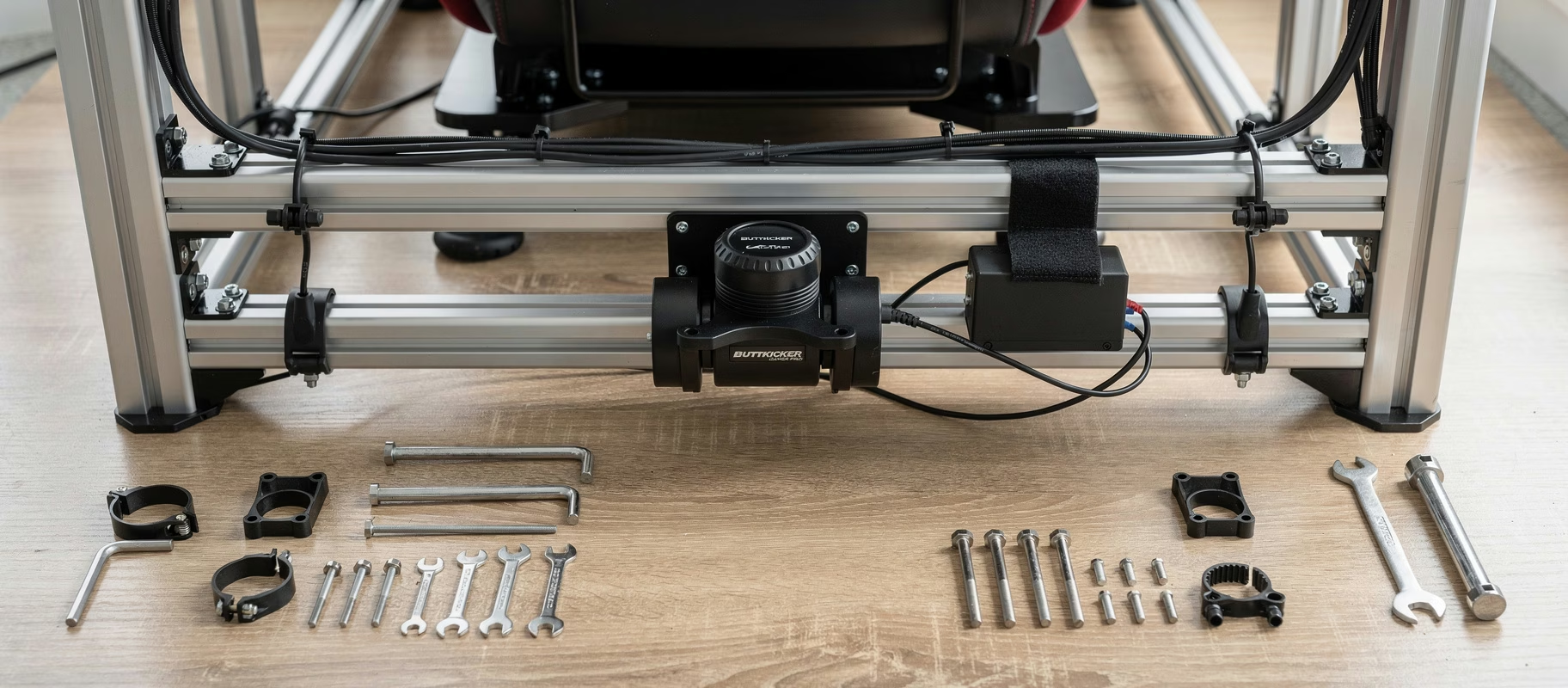
- Isolation is Non-Negotiable: Never, ever mount a shaker directly to your rig frame or seat. Always use an isolator.
- Get Proper Isolators: Buy the rubber isolators made for this, like the Dayton Audio BST-1 bass shaker (with separate isolators) or the Trak Racer Haptic Bass Shaker Kit which comes with mounting hardware. Screw them between the shaker and the frame. You feel the vibe, your floor doesn’t.
- Separate Plate Method: Mount the shaker on its own isolated plate under your seat, then connect that to the main frame with damping.
Going Nuclear: Advanced & DIY Fixes
Build a ‘Floating Floor’
This is the most effective solution. It’s also the most involved. You’re putting your entire rig on a platform that’s decoupled from the floor.
- Build a sturdy frame from wood or aluminum profile, a bit bigger than your rig.
- Attach tennis balls cut in half or special rubber vibration dampers to the bottom at each corner (and in the middle).
- Place this frame on the floor. The dampers create an air gap, breaking the contact.
- Put your rig on the frame, preferably on an isolation mat too.
This thing isolates almost all structure-borne noise. It looks weird. It works phenomenally well.
Soak Up the Sound in the Room
For airborne noise,the humming and clicking:
- Stick acoustic foam panels or some thick fabric hangings on the wall behind your rig.
- Lay down a big, thick rug.
- Hang curtains instead of blinds. They help.
Real-World Tips for Keeping the Peace
- Talk to Your Neighbors: I know, it’s awkward. But do it. Explain the hobby. Agree on some reasonable times for racing (maybe nothing after 10 PM). It prevents 90% of the problems.
- Shoes vs. Socks: Racing barefoot or in socks is often quieter. You feel the pedals more, so you don’t stomp as hard.
- Check Your Bolts: Go around and tighten every bolt on your rig every so often. Loose bolts rattle. Use nylock nuts or a dab of blue Loctite to keep them put.
- Know When to Dial It Back: Sometimes, the best solution is to just turn down your wheelbase force or pedal stiffness late at night. The immersion takes a small hit. But peace with your neighbors? That’s worth way more.
A quiet sim rig in an apartment is doable. It starts with where you put it and a decent mat. Then you attack each noisy component. Get creative if you have to. With these tips, you can keep the people around you happy and still get your laps in. Good luck out there.