Test your knowledge! Before reading on, why not test your flag knowledge with our Racing Flags Quiz.
Whether you’re virtually tearing through Circuit de Spa-Francorchamps in your simulator or watching real races: racing flags are the universal language of motorsport. These simple colored banners communicate crucial messages to drivers racing past at hundreds of kilometers per hour. But how did this system actually come about? And where is it heading?
The Origins: From Tablecloth to Tradition
The exact origin of racing flags remains somewhat mysterious. According to a popular American legend, checkered tablecloths were waved at rural horse races when dinner was ready – a signal for riders to finish up. Whether true or not, it might explain why a black-and-white checkered pattern was chosen: the contrast is highly visible through dust and chaos.
The first documented photograph of a checkered finish flag dates from 1906, when official Fred Wagner used it to signal the end of the Vanderbilt Cup on Long Island. From that moment on, the checkered flag rapidly grew into the universal symbol of the finish.
Interestingly, early flag signals were far from standardized. At a race in 1911 at the New York State Fairgrounds, a red flag meant “course clear,” yellow meant “stop instantly,” and green – which now means ‘go’ – indicated one more lap to go. Almost the opposite of what we know today!
The Flags and Their Meanings
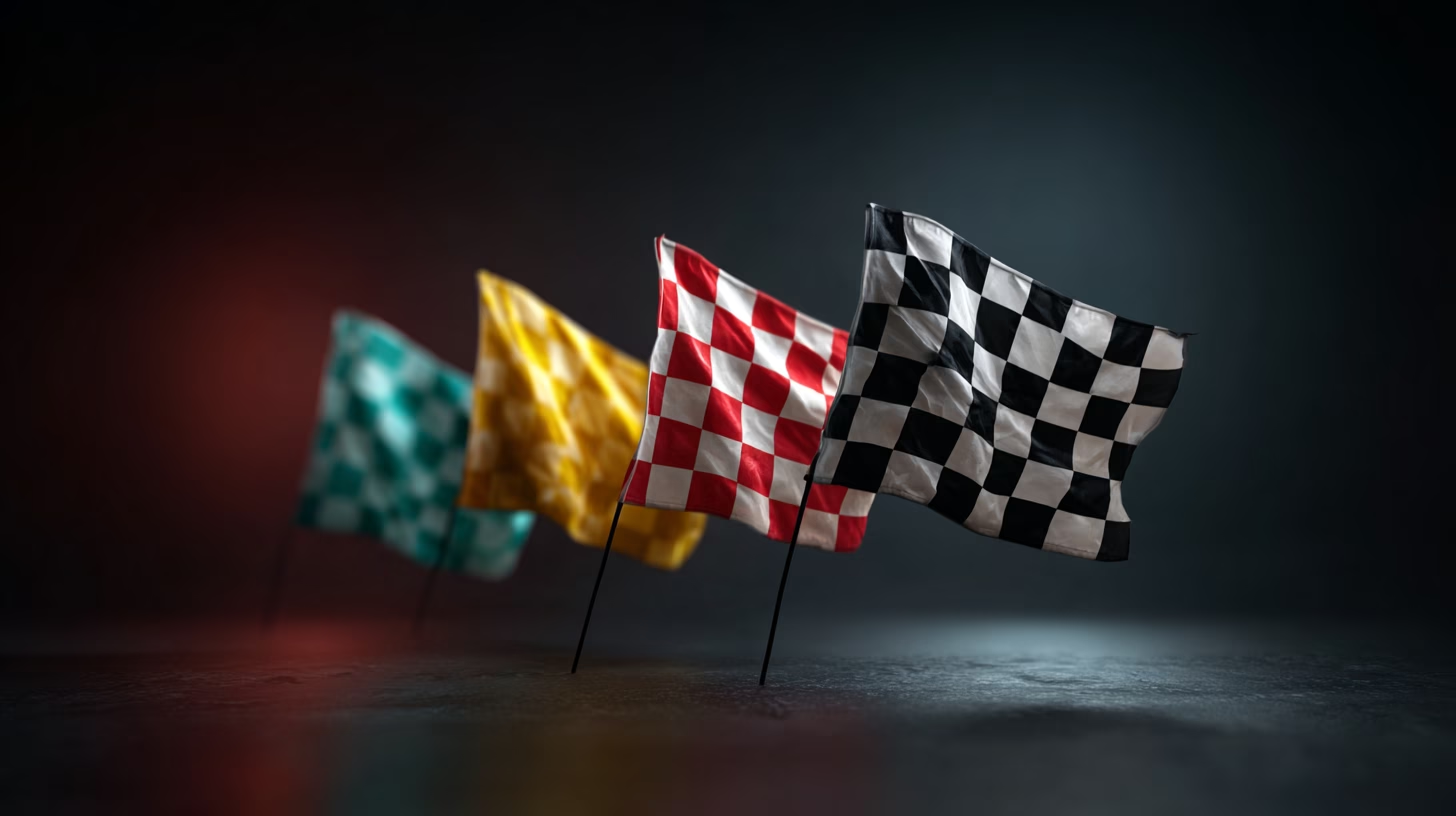
Modern motorsport employs a complete rainbow of flags, each with a precise meaning:
Green flag – Go! The race begins or resumes after a neutralization. When the track is “green,” drivers can proceed at full speed.
Yellow flag – Caution! The universal signal for a dangerous situation on or near the track. Drivers must slow down and overtaking is forbidden. In F1, a single yellow flag means caution in that sector; double waved yellows indicate a serious incident.
Red flag – Stop! The session is being halted due to unsafe conditions. This could be a serious crash, extreme weather, or a blocked track.
Blue flag – Faster car approaching. A signal to drivers that they’re about to be lapped. Strictly enforced in F1 with possible penalties; more of a courtesy signal in other series.
Black flag – Penalty or disqualification. Directed at a specific car with the number displayed. The driver must pit immediately.
Black flag with orange circle (“Meatball”) – Mechanical problem. Your car has an issue that needs to be fixed.
Black-and-white diagonal flag – Warning for unsportsmanlike conduct. The “yellow card” of racing.
White flag – Pay attention, this differs by region! In American racing (NASCAR, IndyCar), this means the final lap. In F1 and other FIA series, it warns of a slow-moving vehicle on track. A crucial difference to know!
Red-and-yellow striped flag – Slippery surface. Warns of oil, coolant, or rain on the track.
Checkered flag – Race over. The most iconic symbol in motorsport. Winning drivers often keep this flag as a memento of their victory.
Differences by Racing Class
 flags had completely different meanings in America vs. Europe
Formula 1
F1 follows the FIA International Sporting Code with some unique elements. Blue flags are strictly enforced – ignore three and you’ll receive a penalty. Since 2019, a digital checkered flag panel has been added after a prematurely waved flag caused confusion.
NASCAR
Stock car racing has typically American twists. The white flag means “final lap” and there’s the famous “green-white-checkered” finish: when a caution comes out near the end, the race is extended with a two-lap shootout to ensure a racing finish.
NASCAR also uses two types of blue flags: one with a yellow diagonal stripe for “move over” and a solid blue specifically for road courses.
MotoGP
Motorcycle races have additional flags for weather conditions. A white flag at start/finish means riders may change bikes (to rain tires) during a “flag-to-flag” race. A white flag with a red cross at marshal posts indicates rain in that sector.
Endurance Racing
Long-distance races like Le Mans use innovations such as “Slow Zones” and Code 60 – purple flags or boards requiring all cars to slow to 60 km/h in a specific sector, without a safety car.
Legendary Flag Moments
The history of motorsport is full of memorable moments where flags played a central role:
Canada 2018 – Model Winnie Harlow waved the checkered flag one lap too early due to miscommunication. Sebastian Vettel fortunately had a comfortable lead, but the FIA subsequently changed the rules to include a digital end signal as the official finish.
Daytona 500 1959 – The very first Daytona 500 ended in chaos. Johnny Beauchamp was declared the winner and posed with the finish flag, but after days of analyzing photos and footage, Lee Petty turned out to be the real winner.
Schumacher 1994 – Michael Schumacher ignored a black flag during the British GP after a stop-go penalty and was disqualified. A rare and dramatic moment in F1.
Verstappen vs. Ocon 2019 – At the Brazilian GP, backmarker Esteban Ocon tried to unlap himself from leader Max Verstappen, leading to a collision. Verstappen lost the lead and physically confronted Ocon afterward. An example of how blue flag etiquette can cause tensions.
The Future: Digital and Intelligent
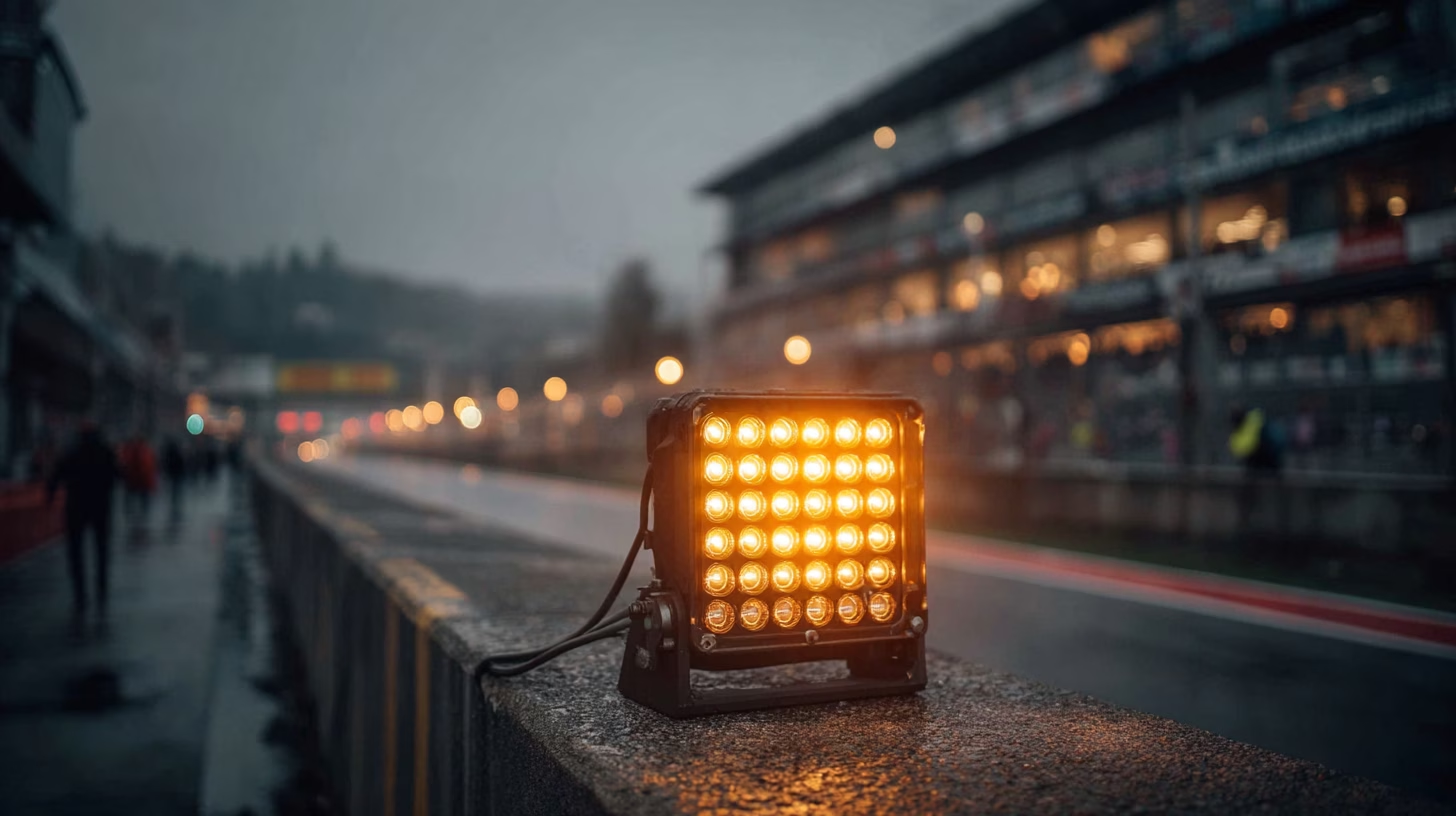 FIA-approved LED panels along a modern circuit
Signaling is evolving rapidly:
Digital LED panels – Modern circuits have bright LED boards displaying flag colors, especially useful in poor visibility. At Grade 1 circuits, the FIA requires these boards at every marshal post.
In-car displays – F1 cars receive marshaling data directly on the dashboard. The steering wheel lights up yellow or blue depending on the situation. MotoGP bikes have similar systems.
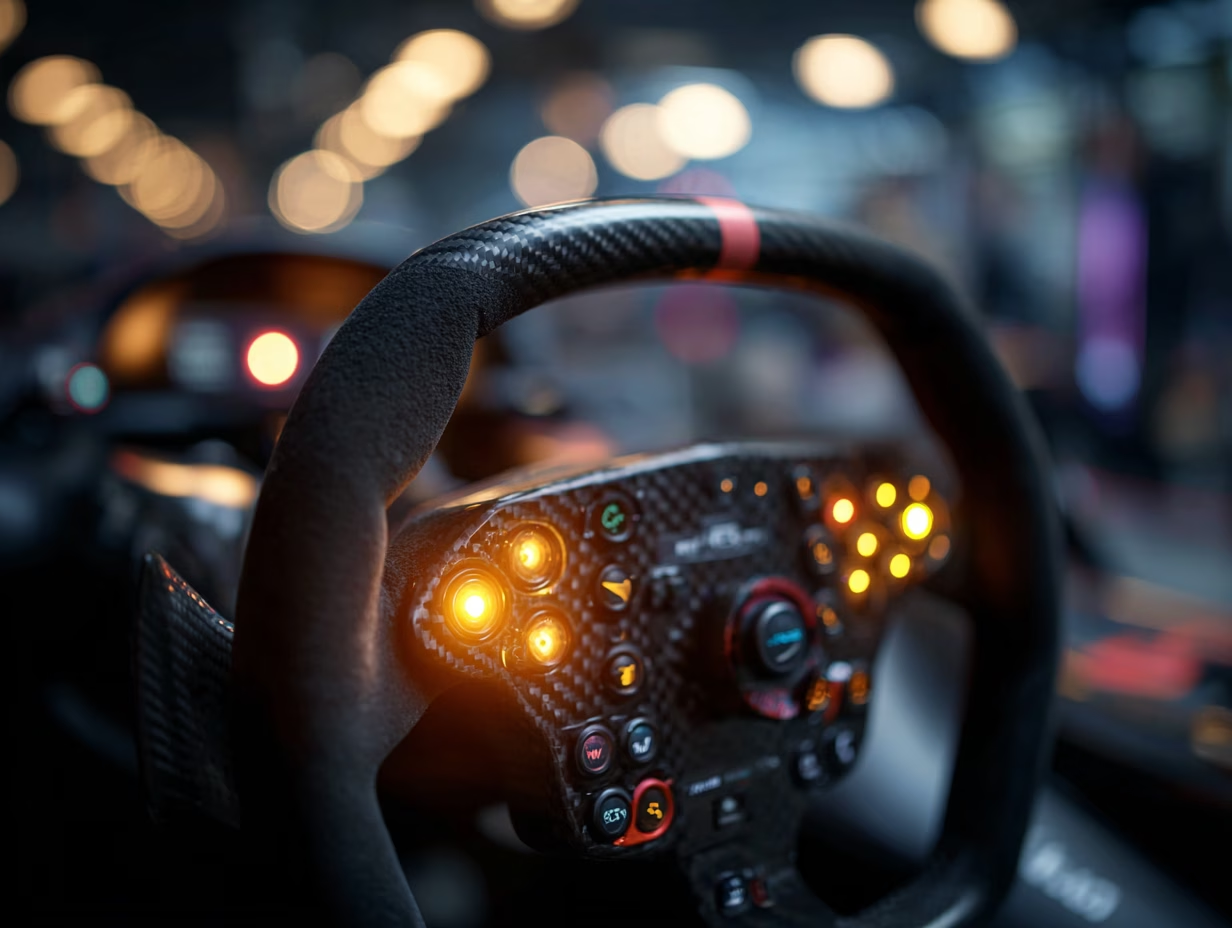 An F1 steering wheel with yellow flag indicator
The Flagger system – For club racing, there’s now a wireless system with LED screens in each car showing real-time flag colors. It even has an accelerometer that detects crashes and automatically alerts race control.
AI-powered detection – The Nürburgring Nordschleife, notoriously difficult to monitor with its 21-kilometer length, is implementing a €12 million AI camera system in 2025. Artificial intelligence recognizes incidents and activates warning signs within seconds – faster than human marshals could ever react.
Vehicle-to-Everything communication – Formula E can already send full-course neutralizations directly to each car’s dashboard. In the future, an automatic signal during a crash could activate a speed limiter in all following cars.
Conclusion: Tradition Meets Technology
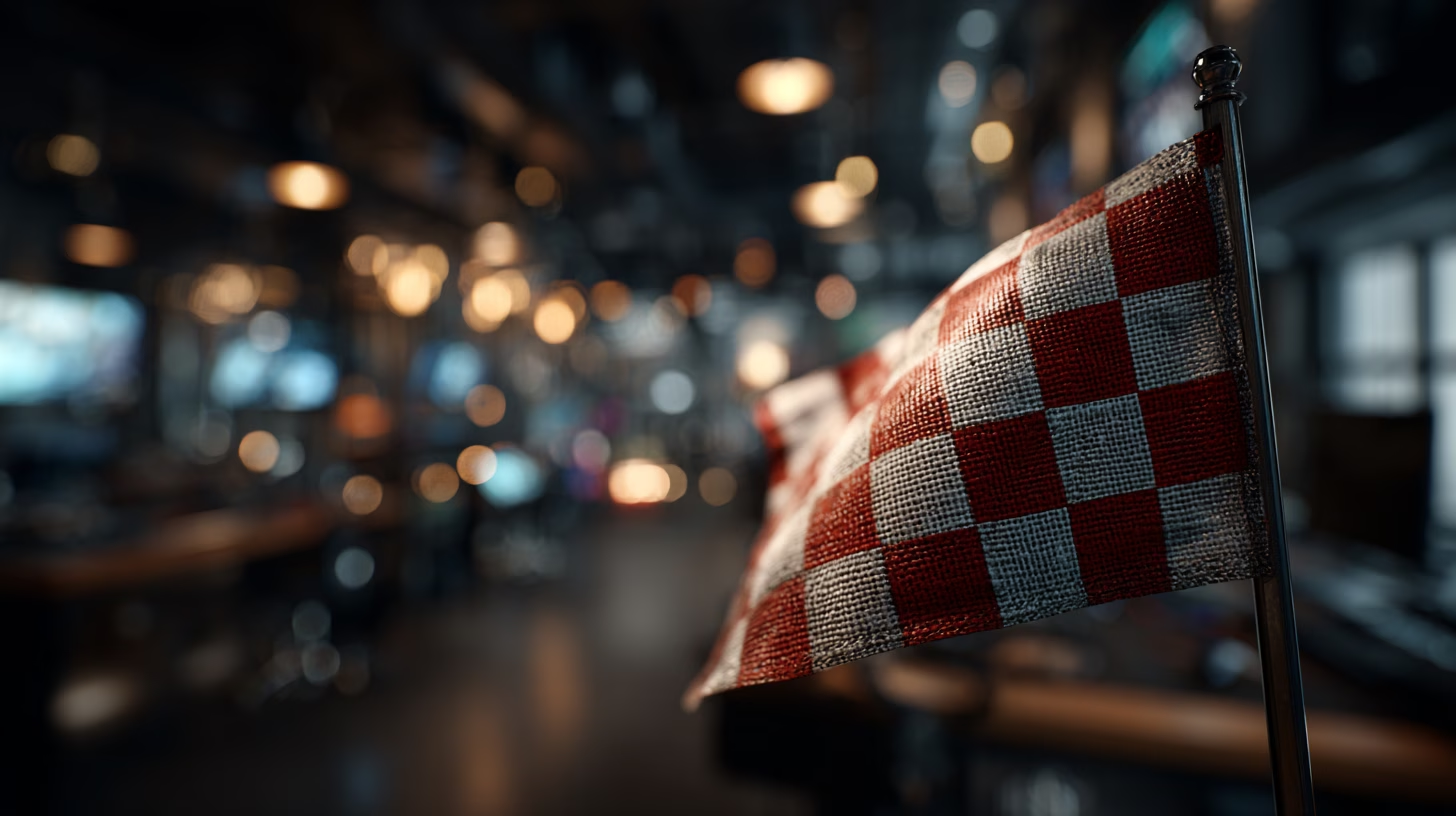
Despite all the high-tech aids, the physical flag will probably never completely disappear. Fans love the moment when the flagman waves the checkered flag as the winner crosses the finish line. Drivers cherish that flag as a trophy. And as a backup when electronics fail, a marshal can still wave a piece of cloth.
The future of racing flags is hybrid: digital panels and in-car alerts make communication faster and foolproof, while AI may soon spot trouble and activate “virtual flags” in milliseconds. But even decades from now, someone will probably still wave the checkered flag for the winner – because that moment is purely ceremonial, a tradition that transcends the sport.
From the dusty roads of the early 1900s to today’s hypermodern circuits: racing flags have remained the faithful guardians of safety and order in motorsport. A simple language that every driver in the world understands, regardless of what language they speak or what vehicle they drive.
Ready to test your knowledge? Take our Racing Flags Quiz and discover how many flags you can recognize!