I almost sent my Fanatec CSL DD back. Not because it was broken, but because it felt broken. Mushy force feedback, zero detail in the corners, the whole thing wobbling like a drunk giraffe. Turns out the problem wasn’t the wheelbase. It was the cheap wheel stand it was sitting on.
Here’s the thing nobody tells you when you upgrade to direct drive: your rig matters more than your wheelbase. A €400 DD on a solid stand will feel better than an €800 DD on a noodle. I’ve tested a bunch of portable options over the past year. Some held up. Some didn’t. Let me save you the headache.
Why Your Stand Needs To Be Stiff (No, Really)
A DD wheelbase generates way more torque than your old belt-driven unit. All that force goes into the structure. If the structure flexes, you lose information. Simple as that.
What flex actually feels like:
- FFB turns mushy, like driving through treacle
- You lose curb detail and road texture
- Everything feels ‘spongy’ and imprecise
Same goes for load cell pedals. You’re pushing hard against that brake. If the pedal plate bends, your braking point shifts every session. Inconsistency is the enemy.
The Three Things That Break Cheap Stands
The hinge. Most foldable stands have a single pivot point. Under the sideways forces of correcting oversteer, that pivot becomes a weak spot. Good DD-rated stands use wider, reinforced hinge systems.
The pedal connection. A thin bar connecting pedals to the main frame? Not enough. You want a wide, braced connection with a crossbar or extra support legs.
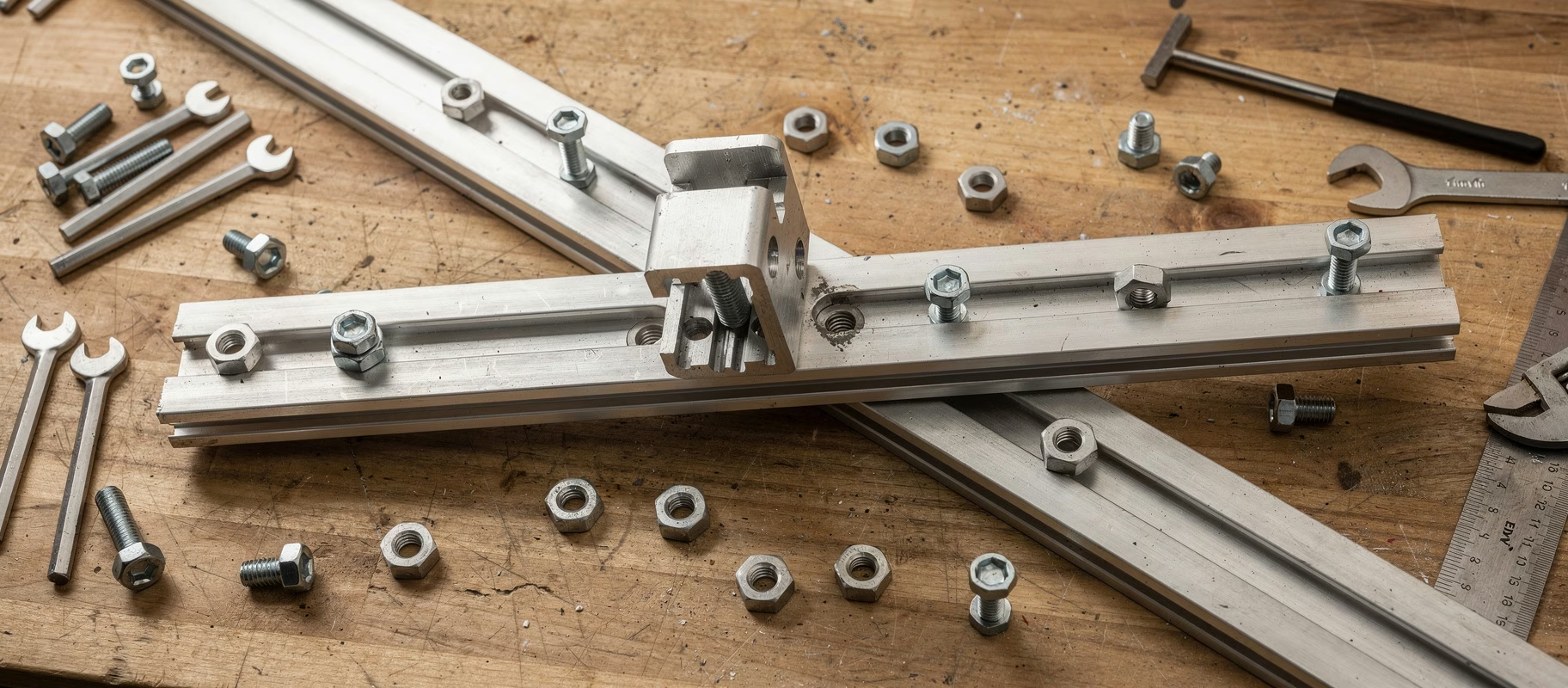
The material. Aluminium profile (80/20 or 40-series) is the stiffest option but heavy. Thick steel works too. Thin tubular steel? That’s where things get wobbly.
The Actual Stands Worth Buying
Prices are approximate and shift around. But here’s what I’ve found.
Premium Wheel Stands (€250 - €450)
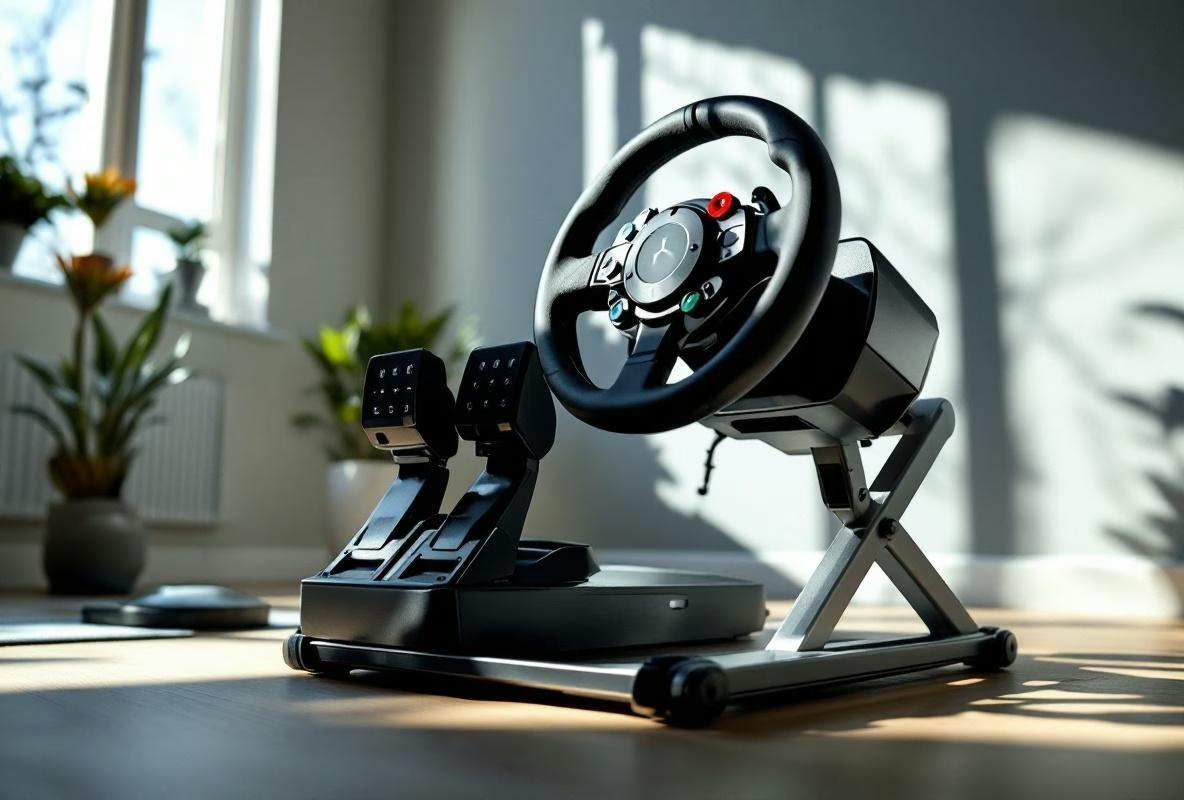
Next Level Racing Wheel Stand 2.0 (DD Edition) Around €299. Handles 15-18 Nm. The reinforced column and ‘V-groove’ hinge system are no joke. This thing barely moves. Works great with a Fanatec CSL DD, Moza R9, or similar mid-range DDs. Can be expanded into a full cockpit later with the GT Track add-on. If you’re buying one wheel stand for DD, this is it.
GT Omega Apex Wheel Stand Around €229. Handles up to ~12 Nm. Robust steel frame with a welded pedal plate (no wobbly connection). The hinge isn’t as fancy as the NLR, but it’s sturdy enough. Great value for mid-range DD setups. Push past 15Nm and you’ll start to feel some give, though.
Foldable Aluminium Profile Rigs (€500 - €800)
Trak Racer TR80 Lite Foldable Around €599. Handles everything, including 25Nm+ monsters. Built from 80/40 aluminium profiles with lockable hinges. Nearly as stiff as a permanent cockpit. The catch? It’s heavy. ‘Foldable’ is generous. You’re not casually tucking this behind a door. But for stiffness in a non-permanent setup, nothing touches it.
Playseat Trophy Around €549. Handles up to ~15 Nm. Lightweight tubular aluminium, looks great, folds up easily. Surprisingly stiff for its weight. But push a Heusinkveld Sprint to max brake stiffness and the pedal plate starts to flex vertically. Fine for mid-range, a bit short for the heaviest hardware.
What To Avoid
Old single-pivot stands. The original NLR Wheel Stand DD and most budget options have a narrow central hinge. These shimmy under DD torque. Don’t bother.
Anything that feels light. If you can easily pick up a wheel stand with one hand, it’s not DD-ready. Thin tubing equals flex.
Setup Tips That Actually Matter
- Use proper mounting hardware. The bolts that came in the box. Nylock nuts or blue Loctite to stop vibration loosening.
- Don’t run 100% FFB. A stand rated for 15Nm feels great at 12Nm. Dial back the gain and you’ll get detail without punishing the structure.
- Kill the wobble. Flat floor. Adjustable feet tweaked until nothing rocks. A thick anti-slip mat underneath helps a lot.
- Check your bolt pattern. Not all wheelbases match all stands. You might need an adapter plate from your wheelbase manufacturer.
The Questions Everyone Asks
“Can my old Wheel Stand Pro handle a CSL DD?” Probably not. It was designed for belt-driven wheels. The flex will be bad and the mounting holes likely won’t line up.
“Is a foldable rig as good as a fixed cockpit?” The TR80 Lite gets close. The NLR 2.0 DD is solid for mid-range setups. But a proper fixed 80/20 cockpit is still king for serious hardware.
“Are load cell pedals too heavy for a wheel stand?” No. The issue isn’t weight, it’s force. When you’re pressing 80kg into the brake, the pedal plate and its connection can bend. That’s what kills your consistency.
The Short Version
- DD up to ~12 Nm + load cells: GT Omega Apex. Best bang for the buck.
- DD up to ~18 Nm + maximum stand stability: Next Level Racing Wheel Stand 2.0 DD. Clear winner.
- DD 20Nm+ and you need it foldable: Trak Racer TR80 Lite. Nothing else comes close.
- Lightweight, good-looking, mid-range: Playseat Trophy. Just know its limits.
Get a stand that matches your hardware. There’s no point buying a direct drive wheelbase if the thing it’s bolted to can’t keep up.