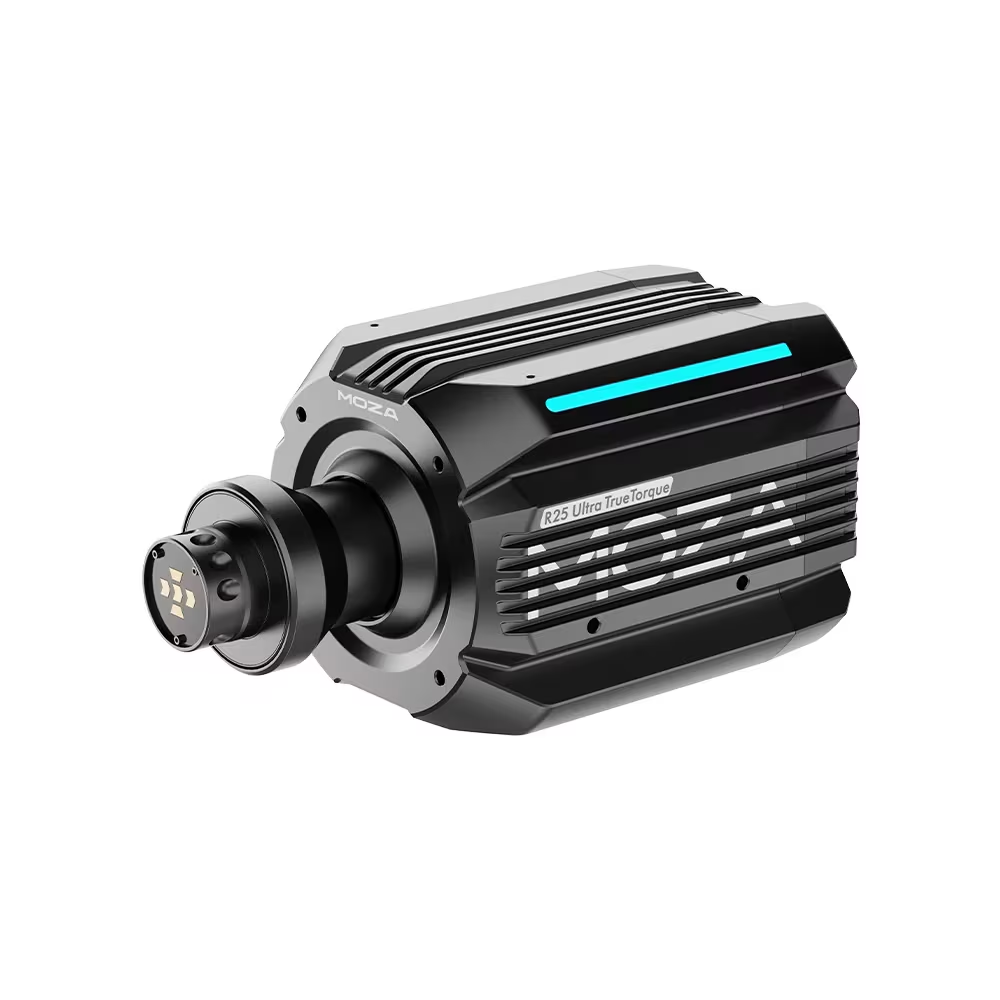
The MOZA R25 is the direct-drive base everyone is talking about. With 25 Nm continuous torque and a sharp price, it pressures the high-end segment. The R21 Ultra shares the same DNA but targets 21 Nm. We tested the R25, explained how it differs from the R21, and added setup tips so you can go quicker on day one.
What you get with the R25 (and R21)
- Torque: 25 Nm (R25) or 21 Nm (R21) continuous - plenty for GT3, prototypes, and rally.
- Encoder: 21-bit magnetic, about 0.00017 degrees resolution per step.
- True Torque sensor: realtime force measurement at 2000 Hz (R25 only) for linear feedback.
- Flat-wire direct-drive motor: cogging-free and quiet.
- Chassis: CNC aluminum, dual RGB strip for telemetry cues.
- CPU: 600 MHz with MOZA’s NexGen force-feedback algorithms.
Note: both are PC-only. If you need console support, look at a Fanatec Podium DD2 or Gran Turismo DD Pro.
Force feedback in practice
Coming from belt or gear drives, kerbs, compressions, and slip feel dramatically clearer. Because the base has excess power, you can run 8-12 Nm without heat fade, even in long endurance stints. The R25’s True Torque sensor sharpens detail and predictability versus the R21, but both are big steps above midrange bases like the Moza R9.
Price versus rivals
- R25 Ultra: about EUR 999
- R21 Ultra: about EUR 799
- Fanatec Podium DD2 (25 Nm): about EUR 1500
- Simucube 2 Pro (25 Nm): about EUR 1300-1400
- Asetek Invicta 27 Nm: about EUR 1350
MOZA undercuts comparable power by roughly EUR 300-600. Price per Nm is tough to beat.
R25 vs R21: which should you buy?
- Pick R25 if you race competitively (GT3 or open wheel) and want maximum linearity and detail.
- Pick R21 if you want to save and still get high-end torque and resolution. The main differences are the True Torque sensor and 4 Nm headroom.
If your rig cannot handle 25 Nm, consider a Moza R5 Bundle or Fanatec CSL DD; flex will spoil feedback.
Setup and tuning tips
- Mounting: use a stiff cockpit; 21-25 Nm on a desk is a no-go. 70 mm bolt pattern fits most rigs.
- Software: start with Pit House presets per sim, lower FFB to around 70% of what you think you need, then build up.
- Filters: keep damping and friction light; heavy filters mask detail.
- Pedals and shifter: pair with load cell pedals like Moza SR-P or Heusinkveld Ultimate+ and a solid shifter such as the Fanatec ClubSport SQ.
What the community says
Most common feedback: “premium feel for less money” and “force feedback stays identical after hours.” Downsides: presets need per-sim tuning and the ecosystem is smaller than Fanatec’s, though MOZA is growing fast.
Who these bases are for
- Experienced sim racers or eSports drivers leaving midrange gear.
- PC simmers who do not need console support.
- Rigs stiff enough to manage 21-25 Nm.
New to sim racing or running a desk? Start with the R3 Bundle or Logitech G923 and upgrade later.
Bottom line
MOZA makes high-end direct-drive feel affordable. The R25 is the precision pick; the R21 delivers nearly the same feel for less. Whatever you choose, bring a solid cockpit, a good load cell pedal set, and spend an hour tuning FFB profiles. You will not want to go back.
Ready to upgrade? Check the R25 Ultra or R21 Ultra in our catalog and prep your rig for the next stint.