How to Build Your Own Stable and Budget-Friendly Aluminum Profile Sim Rig
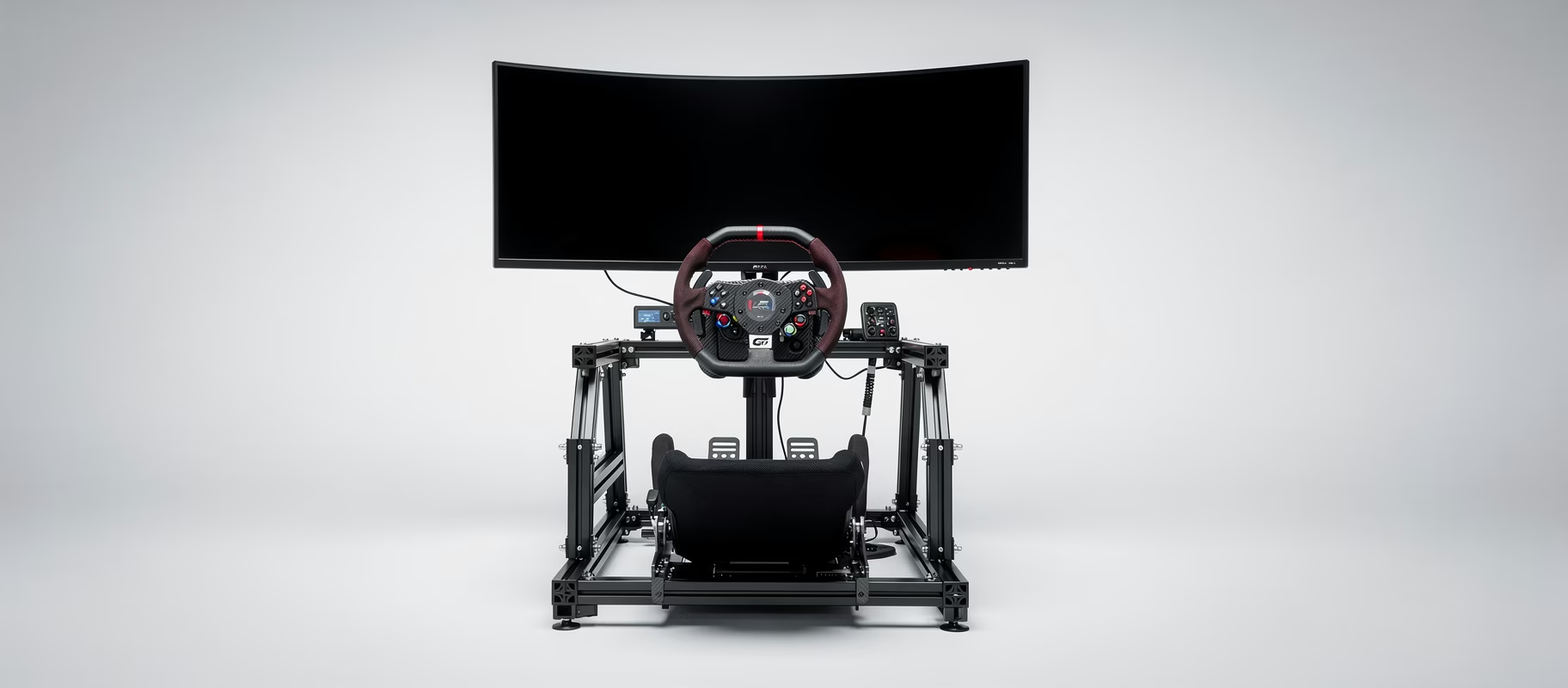
Building your own aluminum profile sim rig is, for many sim racers, the ultimate way to create a rock-solid setup without paying a premium. Contrary to popular belief, you don’t need to be an expert or spend a fortune. With the right knowledge and suppliers, you can build a rig that rivals expensive branded ones in stability. This comprehensive guide will walk you through the process step-by-step, with special focus on budget-friendly options and suppliers in the Netherlands and the EU.
Why Choose a DIY Aluminum Profile Rig?
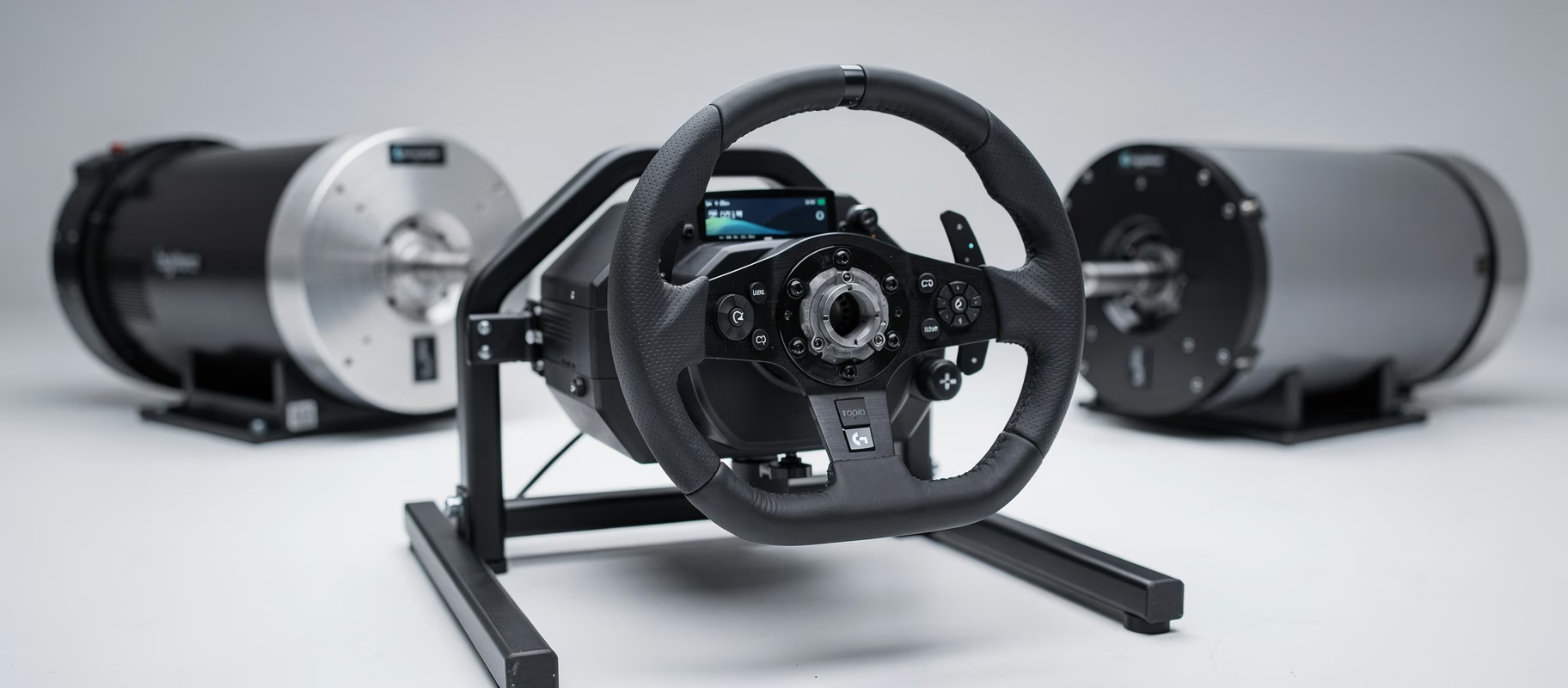
Before we open the toolbox, it’s good to understand why a self-built profile rig is so popular. The biggest advantage is undoubtedly infinite adjustability. Whether you have a 15Nm or a 25Nm direct drive wheelbase, or pedals with a 100kg load cell, a well-designed profile rig absorbs all forces without flexing. Furthermore, you can position every component exactly as you want it – no more compromises. The third major advantage is cost-efficiency. You pay for the basic material and connectors, not for a brand name and extensive marketing.
A common misconception is that building yourself is automatically cheaper than buying a pre-built rig. This isn’t always true, but with a smart design and the right suppliers, you can easily save 20% to 40% compared to similar commercial models.
The Core Components: What Do You Need?
Let’s first list the building blocks of your rig. A complete setup consists of more than just profiles.
1. Aluminum Profiles (The Frame)
This is the skeleton of your rig. The most commonly used size is 40x40mm or 40x80mm for the main structure. For the stiffness required by a direct drive wheelbase, 40x80mm is recommended for the uprights (the vertical beams your wheelbase mounts to). For the rest of the frame, 40x40mm is sufficient. You’ll need various lengths. A good starting point is:
- 2x ~130cm (for the side beams)
- 2x ~60cm (for the front and rear beams)
- 4x ~50cm (for the steering wheel uprights)
- 2x ~40cm (for the pedal plate support)
- Various shorter pieces for mounts and bracing.
2. Connectors and Bolts
Without the right connections, it all falls apart quickly. You will need:
- 90-Degree Corner Brackets: For all right angles in the frame.
- T-Slot Nuts (M8): The standard size for 40-series profiles. Buy plenty! Count on at least 100-150 pieces for a complete rig.
- Feet: To lift the rig off the floor and prevent damage.
3. Seat and Mounting Elements
This is where personal preference and budget come into play.
- Seat: An old car seat from a scrapyard is a legendary budget option (often €20-€50). Check the mounting points! Alternative: an affordable racing bucket seat from a brand like NRG, or for serious drivers a Sparco Circuit II QRT.
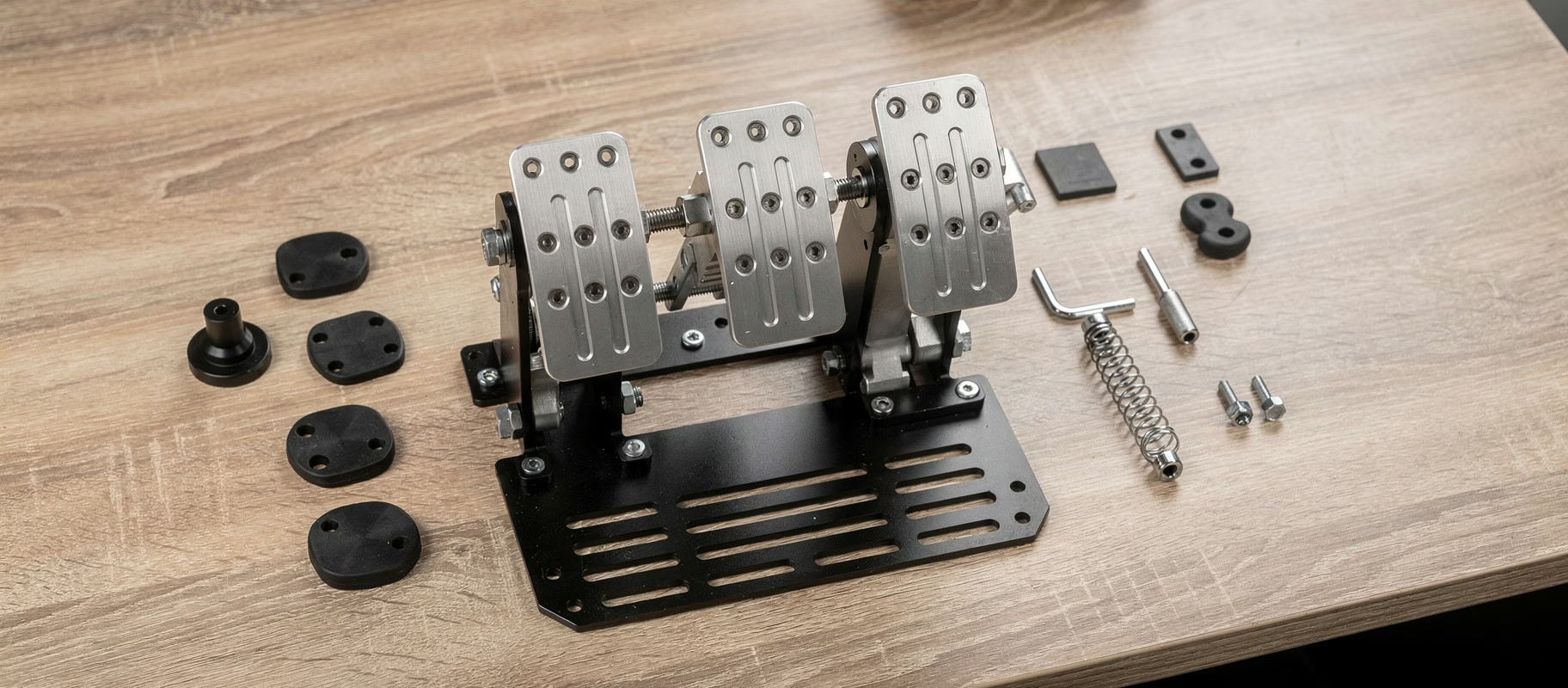
- Pedal Plate: A thick piece of perforated aluminum or steel plate to mount your pedals on. Thickness: minimum 5-8mm.
- Wheelbase Plate: Similar to the pedal plate, but specific for your wheelbase. Some bases require a special adapter plate.
- Shifter/Handbrake Mount: Optional, but essential if you use them. A Fanatec ClubSport Shifter is a popular choice.
Step-by-Step Build Plan
Step 1: Planning and Design
Don’t just click the order button. Use free software like MayCAD or even pen and paper to sketch your rig. Determine dimensions based on your body size and your hardware measurements. Search online for ‘8020 rig plans’ or ‘sim rig blueprint’ for inspiration. A good design saves you a lot of hassle and extra orders later.
Step 2: Sourcing – The Best Suppliers in NL/EU
This is the heart of the budget-friendly approach. You have roughly three options, from most to least user-friendly:
Option A: Specialized Sim Racing Suppliers (Recommended for Beginners) These often sell complete kits or all parts separately. It’s slightly more expensive than purely industrial suppliers, but the service and guarantee that everything fits is worth its weight in gold.
- SimXPro (NL): One of the most well-known in the Netherlands. Sells complete kits (from ~€350), but also all individual parts. Perfect if you want certainty.
- Treq Sim (NL): Like SimXPro, an excellent choice with high-quality products and good service. Their ‘Treq One’ kit is a great starting point.
- Motedis (DE): German supplier with a huge catalog of profiles and connectors. Very competitive prices and fast EU shipping.
Option B: Industrial Aluminum Profile Suppliers (For the True DIYer) This is where you can achieve the biggest savings, but it requires more research.
- Item (International, with EU warehouses): The ‘Rolls Royce’ of profiles. Very high quality, but also pricey. Often used in professional settings.
- Bosch Rexroth: Comparable to Item. Their online configurator is powerful.
- Aluxprofiel.nl (NL): Dutch web shop with complete sim racing rigs and individual profiles. Prices are reasonable and you support local business.
Option C: Alibaba / Temu / Wish (At Your Own Risk) Here lie the lowest prices, but also the biggest challenges.
- Advantages: Unit cost can be 30-50% lower than EU suppliers.
- Disadvantages: Long lead times (weeks to months), uncertain alloy quality (can be softer/more brittle), high shipping costs, and complicated returns if there are issues. Warning: The connectors are often the weak point. If you choose this route, at least source the bolts and T-slot nuts locally (from a hardware store or online) from a known quality (e.g., class 8.8 or higher).
Our Recommendation: For your first rig, Option A (SimXPro or Treq) is the safest and least stressful choice. If you want to save and have patience, mix Option B (for profiles) with a connector kit from a sim specialist.
Step 3: Assembly
- Start with the base frame: Lay the two long side beams and the front/rear beams on the floor. Connect them with corner brackets. Use a spirit level to check everything is square.
- Mount the steering wheel uprights: Attach the vertical beams to the front of the frame. This is the time to add extra bracing with diagonal beams or a horizontal crossbar at the top.
- Attach the pedal plate supports: Two horizontal beams at the front to rest the pedal plate on.
- Place the seat: Typically, you mount two horizontal beams for the seat rails to slide over, secured with bolts through the existing holes in the rails.
- Mount all plates: Drill, if necessary, holes in the pedal and wheelbase plates and attach them with bolts to the frame.
- Tighten everything down: Go around the entire frame with the hex key and tighten all bolts firmly. Don’t strip them, but make them good and tight.
Step 4: Finishing and Cable Management
Use cable ties or special profile cable ducts to tidy up all the wires. It not only looks professional but also prevents you from snagging on anything. Also consider using damping feet if you live in an apartment, to minimize vibration transfer.
Common Mistakes and How to Avoid Them
- Using profiles that are too light: 20x20mm profile is NOT suitable for a direct drive rig. Stick to 40x40mm as a minimum.
- Forgetting future upgrades: Leave room in your design for a heavier wheelbase, a motion platform, or a VR sensor. Drilling extra holes is free; taking your rig apart and extending it is not.
- Not tightening bolts properly: Vibration can cause bolts to loosen. Consider using blue Loctite (medium strength) on the threads for critical connections.
- Ignoring ergonomics: Your rig must be comfortable for sessions of 2+ hours. Ensure sufficient adjustability in your design.
Conclusion: Is a DIY Profile Rig Worth It?
Absolutely. Building your own aluminum profile sim rig is one of the most rewarding projects in the sim racing hobby. You not only get a setup perfectly tailored to your body and hardware for a budget-friendly price, but also the knowledge and confidence that you can adjust and repair anything. For reference: a comparable commercial rig like the Sim-Lab P1-X easily costs €600+ without accessories. By sourcing smartly from Dutch or European specialized suppliers like SimXPro or Treq, you keep the process manageable while also supporting the local sim racing community. Grab that hex key, fire up your favorite racing sim, and build the foundation for your ultimate racing experience.