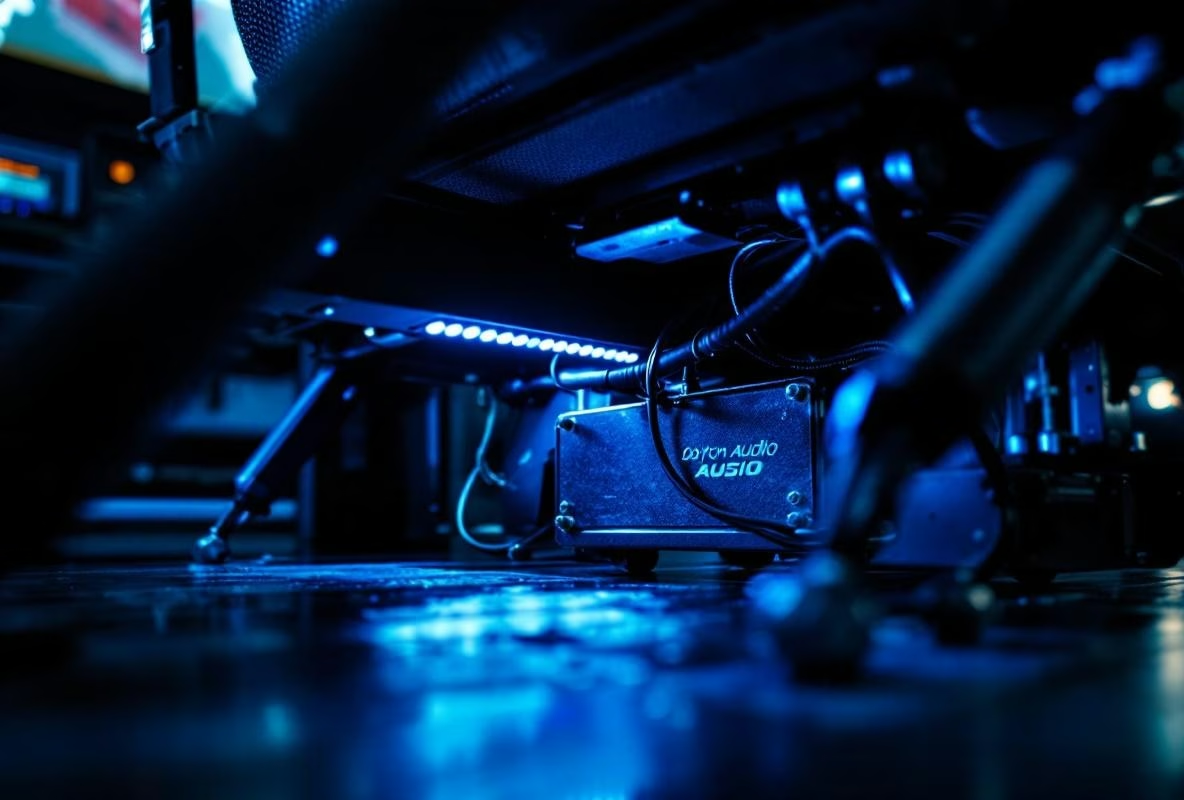
My floor is shaking. And it’s awesome.
I was racing at Spa last week. Up Eau Rouge, flat out. And then I felt it. Nothing. No vibration, no resistance, no sense the car was even touching the ground. It was like driving on a cloud. A disappointing, expensive cloud – I’d just dropped a ton on a direct drive wheel. Why did it still feel so… flat?
That was the moment. I went hunting for feeling. Without taking out a second mortgage. What I found? A whole underground scene of DIY enthusiasts making their rigs shake, rattle, and roll for prices you won’t believe. Let’s talk about how you can too.
Skip the expensive motion rigs. Seriously.
Let’s be real. A Next Level Racing Motion Platform V3? Fantastic. Also fantastic: the €2999+ price tag. For that money, you could buy a used car. An actual one.
Here’s the truth nobody wants to hear: you don’t need to spend thousands for a big upgrade. The magic isn’t in 6DOF or fancy hydraulics. It’s in vibration. In feedback. In the simple sensation that something is happening under your butt. That’s where you start.
And you can do it for under €200.
The bass shaker: your new best friend (for €40)
This is where it starts. A bass shaker is basically just a speaker. But instead of sound, it makes vibrations. You mount it under your seat or to your pedal plate, hook it up to an amp, and let SimHub do the rest.
SimHub reads data from your game – wheel slip, RPM, gear shifts, curbs – and translates it into rumble signals. Suddenly, you feel the engine roar against your back. You feel the kerbs rattle through your pedals. It’s stupid cheap. And stupid effective.
My go-to? The Dayton Audio BST-1. Around €55-€60. A beast. For an even cheaper start: the Dayton Audio TT25-8 puck-style shakers at about €40 each. Buy two. One for the seat, one for the pedals. Game over.
You’ll need an amplifier. A Nobsound Mini Bluetooth amp for €35 works perfectly. Connect SimHub to your PC via a USB sound card (€10), and you’re in business.
Don’t want to source individual parts? The Trak Racer Haptic Bass Shaker Kit comes with shaker, amp, and mount in one package. Pricier, but you’re up and running in five minutes.
Installing loose shakers? Easier than you think. Bolt the shaker on with some M6 screws. Use isolating rubber between the shaker and your profile rig. Otherwise, your whole house shakes. Don’t ask how I know.
Pedal reactors: why your pedals need to talk
Your brake pedal. It feels like wood. In a real car, you feel the ABS pump, the pads bite, the slip. In the sim? Nada.
That’s where pedal reactors – or ‘tactile feedback actuators’ – come in. They’re small, powerful linear motors you mount directly to your pedals. They deliver a sharp, precise tap. Perfect for ABS, traction control, or the click of a sequential shift.
DIY options exist. But honestly? For the ease and plug-and-play compatibility, look at the Simagic Haptic Reactor. Around €79-€95 each. They’re tiny, powerful, and pair well with SimHub. Mount one to your brake. You’ll never want to drive without it again.
It’s the difference between thinking you’re braking and knowing you’re braking.
The big misconception: your whole rig needs to move
You see them on Reddit. Those epic DIY 3DOF motion rigs built from car shock absorbers and Arduinos. They’re beautiful. Ingenious. And for 99% of people: total overkill.
Here’s my hot take: full motion is great for the show. For the actual feel of driving? It’s secondary. The real immersion comes from haptic feedback. From the vibrations traveling through your seat and pedals into your body. Giving you information your screen and wheel can’t.
Are you building a motion platform because it’s cool? Go for it. On a limited budget and want the biggest impact? Pour all your money and effort into bass shakers and pedal reactors. First.
You can always add motion later.
The DIY motion challenge: if you must move
Alright. You’re not listening. You want movement. You have a drill and an unrealistic confidence in your skills. This is for you.
The budget king of DIY motion is the ‘SFX-100’ principle. It’s basically three or four electric linear actuators – think advanced screw jacks – that push the corners of your rig up and down. The blueprints are free on GitHub. The parts you order from AliExpress.
Cost? Between €1800 and €2200 for a 3DOF or 4DOF setup. That’s still half the price of a commercial one.
But. And this is a big but.
You need to know how to solder. You need to 3D print parts or order them. You need to configure software. You need to be okay with it sometimes not working and spending hours debugging. This isn’t an IKEA shelf. This is a university mechatronics course you pay for yourself.
If that doesn’t scare you off, the community is very helpful. Subreddits and Discord channels are full of guides. It can be done. It’s just not for everyone.
SimHub: the real hero of this story
All this hardware is dumb. Literally. Without software, it does nothing.
Thankfully, there’s SimHub. This brilliant, almost-free program (a donation is polite) is the brain of your entire haptic feedback system. It takes data from iRacing, Assetto Corsa, rFactor 2 – whatever you’re playing – and sends specific signals to specific shakers.
Configuring it is an art. And a science. My advice? Start simple.
- Engine RPM: Make a shaker under your seat rumble with revs. Slow pulse at low RPM, fast vibration at the limiter.
- Wheel Slip: Send a sharp signal to your pedal shaker when the rear breaks loose. You’ll learn to feel oversteer before you see it.
- Road Impacts: Let both shakers react to kerbs and off-track excursions. It feels like you’re actually driving over rough stuff.
The key is subtlety. You want an informative layer, not an electric massage chair that shakes you off the track. It takes time. You’ll tweak a lot. It’s worth it.
My setup: what works for me
For the curious. Here’s what’s hanging under my rig right now:
- Seat: 1x Dayton Audio BST-1 for general vibrations (engine, curbs, crashes).
- Pedals: 1x Dayton Audio TT25-8 under the pedal plate for wheel slip and ABS.
- Brake Pedal: 1x Simagic Haptic Reactor for ABS pulses.
- Amp: A Nobsound NS-10G Pro for the Daytons.
- Software: SimHub, with separate channels for each shaker.
Total cost? About €250. The impact on my driving enjoyment? Priceless. I can’t race without it now. It feels empty and dead when I turn them off.
So, where do you start?
Easy.
- Buy two Dayton TT25-8 shakers and a Nobsound amp. That’s your starter kit. Under €100.
- Download SimHub. Play with it. Hook them up to your games.
- Feel the difference.
From there, you can look at a more powerful BST-1 for your seat, or a haptic reactor for your pedals. Or, if you’re insane, start collecting parts for an SFX-100.
The point is: you don’t have to do it all at once. Start small. Start smart. The sensation of that first vibration through your rig? You won’t forget it. It’s the moment your sim racing stops being something you just see or hear. But something you feel.
And that’s where the real magic begins.
Good luck. And don’t turn your headphones up too loud. You won’t need them.