I mounted my first direct drive wheelbase to an IKEA table. Dumb. After the first full-force slide into Monza’s gravel, the whole thing shook like a busted washing machine. The monitor danced, my coffee went flying, and my downstairs neighbour thought I was doing construction. Lesson learned: a powerful wheelbase demands a serious foundation. And no, it doesn’t have to cost a fortune.
Your budget cockpit is shaking. Here’s how to stop it.
Let’s be real. You just dropped €550-€600+ on a nice 12 or 18Nm wheelbase from Fanatec, Moza, or Asetek. You want to feel that force. Those details. But clamp that thing to a wobbly playseat or a wooden desk? You’re wasting your money. The feedback turns into a muddy, messy soup. You miss the subtle signals, the front tire slip, the edge of grip. It becomes noise. Not information.
So the question isn’t if you need a solid cockpit. You do. The real question is: how solid does it need to be for 18Nm, and can you get it for under €500? Spoiler: yes. But you need to know what you’re looking at.
The big misconception: ‘it looks sturdy’
A lot of beginners look at a cockpit, give it a shake, and think ‘feels good’. Wrong. The real test is torsion. That’s the twisting, wrenching force your wheelbase puts out. A simple four-corner frame isn’t enough. You need diagonals. Triangular bracing. Something to absorb that energy before it turns your whole setup into a jellyfish.
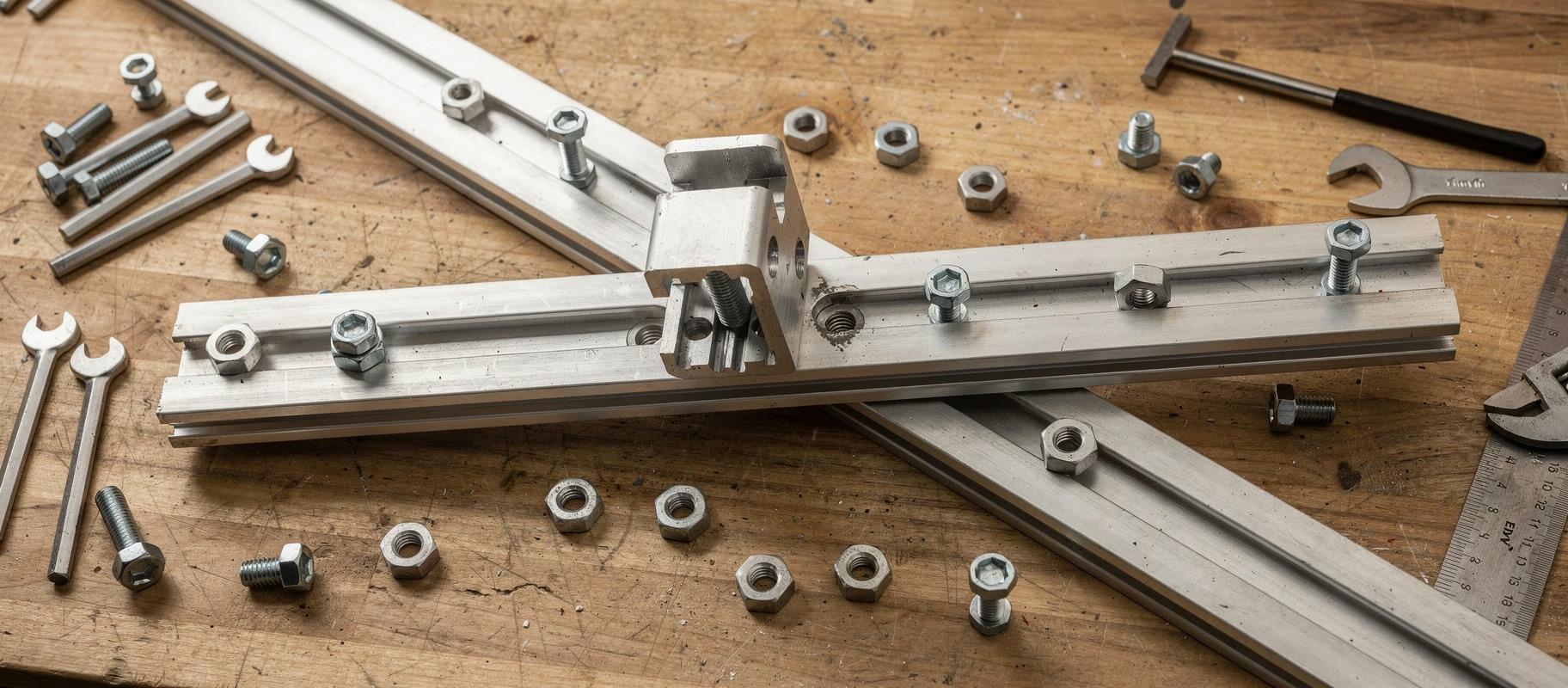
Aluminium profile (80/20) is the gold standard. For a reason. But on our budget? You have to shop smart. Sometimes ‘cockpit’ means just the frame. No seat, no monitor mount. Factor that in.
What actually works (and what doesn’t)
Let’s run through the options you see in every forum.
Next Level Racing GT-Lite & Playseat Challenge: forget it
These foldable cockpits are great for space and a Logitech G29. Seriously. But put a 15Nm wheelbase on there and it becomes a dangerous seesaw. They’re designed for flex, not stiffness. Recipe for frustration. Skip.
Starter 80/20 kits: the obvious choice?
Brands like Sim-Lab, Trak Racer (their entry-level models), and Advanced Sim Racing (the ASR 3 or 4) have kits starting around €400-€500+. Sometimes just over, sometimes just under if you find a sale.
The upside? Infinite adjustability. Is the frame still good in five years? Absolutely. The downside? That €500 is often just the frame. A bucket seat from a scrapyard or a second-hand car seat becomes your next hunt. Add that up and you’re over budget fast. Still, if you want to build for the future, this is the path.
Hot take: For pure stiffness on a budget, look at the Trak Racer TR80 Lite or the Sim-Lab GT1 Evo. They’re minimalist, but the profiles are thick enough. No frills, all function.
The surprising contender: reinforced tube frames
There’s a middle ground. Cockpits like the Next Level Racing F-GT or the GT Omega ART. They’re steel tube, not aluminium profile. And for 12-15Nm? With the proper reinforcement kit, they can often just about handle it. They’ll shimmy a bit, but not distractingly. They often do include a seat within the €300-€550 mark.
Always check if a ‘DD reinforcement kit’ exists for the model you’re eyeing. That €30 extra kit can be the difference between ‘acceptable’ and ‘unusable’.
Your shopping checklist
- Material & thickness: Aluminium profile? 40-series is the bare minimum. 80-series or 40-series with double walls is better. Steel tube? Look for thick, square tubing, not round.
- Joints: Are they just L-brackets? Or are there solid, triangular gusset plates at critical points? Those plates are your best friend.
- Wheel deck design: This is the heart. Is it a large, solid piece of metal? Or a small plate hanging off two thin arms? Bigger and more massive is better.
- Pedal plate: Does it lift under heavy braking? Look for a design bolted directly to the horizontal beams, not just a vertical piece.
The second-hand market: your secret weapon
This is where you can really win. People upgrade constantly. A two-year-old Sim-Lab or Trak Racer cockpit, often with a seat, regularly goes for €300-€400. Marktplaats and Facebook groups are goldmines. You just need patience, speed, and a van.
My advice? It depends on your future.
- You never want to upgrade again: Save for another month or two and go for a basic 80/20 kit. Buy a seat separately. It’s the last cockpit you’ll ever buy. Period.
- You want to race now and €500 is a hard limit: Find a reinforced tube frame like the F-GT with a DD kit. Or dive into the second-hand market for a profile cockpit. Be prepared to accept some imperfection.
- You’re unsure about 18Nm: Don’t buy a cockpit that’s ‘just enough’ for 15Nm. Give yourself headroom. Those extra 3Nm break more things than you think.
It boils down to this. You invested in a wheelbase that can bite. Give it a cage that’s strong enough. Otherwise, you’re fighting your own hardware. And that’s a waste of all those beautiful Nm.