Budget load cell pedals: which one’s actually worth your money?
You know the feeling. You’re braking for turn 1 at Spa, you know you should brake later, but your foot just can’t find that sweet spot where the tyres are right on the edge. With potentiometer pedals, you’re braking by distance. Push further, more brake. That’s like turning a tap by counting rotations instead of feeling the water flow.
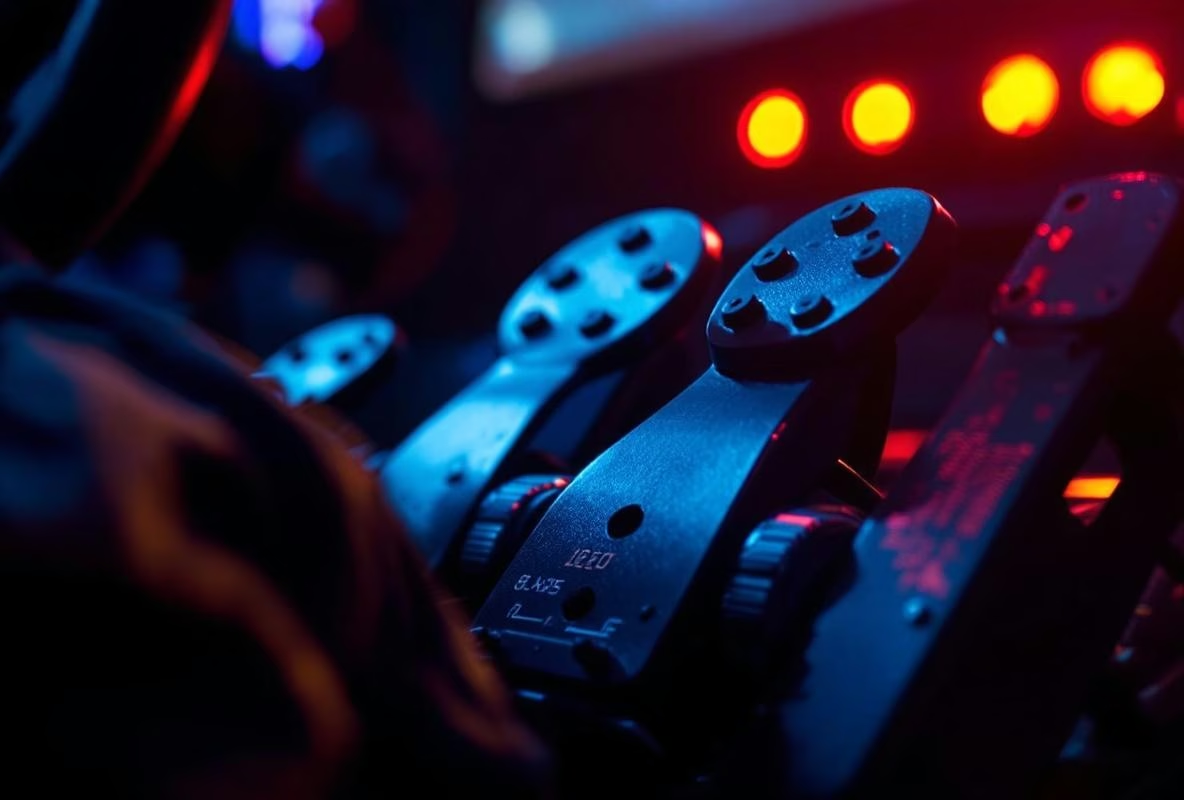
Load cell pedals measure force instead of distance. Like a real brake pedal. And honestly? It’s the single best upgrade you can make after a decent wheel. Better than a pricier wheel. Better than a fancier rig. I mean it.
But load cell doesn’t have to be expensive. I’ve put three sets under €300 side by side: the Simsonn S-RP2, the Moza SR-P, and the Fanatec CSL with Load Cell Kit. There’s a surprising winner in here. Depending on what you’re after.
Why your current pedals are making you slower
Quick technical bit. Conventional pedals use a potentiometer that measures distance. The further you press, the more brake force. Sounds logical, but the problem is your muscles aren’t great at remembering distances. They are great at remembering force.
With a load cell, you learn: “this much pressure = 80% brake.” That’s in your muscle memory after a few sessions. The result? You brake the same way every lap. Trail braking goes from “hope it works” to something you can actually practise.
What to watch for in a budget set
Cheap doesn’t mean bad, but know what you’re looking at:
- Materials: Metal or plastic? Plastic isn’t necessarily terrible, but it feels less solid under your foot.
- Adjustability: Can you physically swap springs for different stiffness, or is it software-only?
- Connection: USB works with anything. RJ12 only with a compatible wheelbase.
- Software: Some brands have excellent calibration tools. Others… don’t.
Simsonn S-RP2: the surprise package
The Simsonn S-RP2 costs around €130-€150. For that money you get three pedals (throttle, brake, and clutch) with a 90kg load cell on the brake. That’s kind of ridiculous value.
The frame is steel and aluminium, the pedal faces are plastic. Connection is USB or RJ12, both cables included. Plug it in and it works. No fuss.
The catch? You can’t mechanically adjust the brake stiffness. Software only. And that software is… functional. Let me put it this way: it does what it needs to do, but don’t expect a pretty interface.
For someone wanting to try load cell for the first time without immediately spending €250+? This is it.
Moza SR-P: when you’re getting serious
The Moza SR-P starts around €199 for two pedals (throttle and brake). Want a clutch? You’re looking at €250+.
But you get what you pay for. The frame is full aluminium, the pedal faces are metal, and the build quality is a step above everything else at this price. The 100kg load cell on the brake feels substantial. You can adjust stiffness by swapping the included springs (there are multiple options in the box).
Moza Pit House (the companion software) is surprisingly good. Calibration, dead zones, response curves. It’s all there. And if you already have a Moza wheel, everything talks to each other seamlessly.
The downside: a complete three-pedal set with clutch costs more than Simsonn’s full package. And Moza is a relatively young brand, so there’s less long-term community experience to draw from.
Fanatec CSL + Load Cell Kit: the modular approach
Fanatec does it differently. You buy the CSL Pedals as a base (throttle and clutch, around €100) and bolt on the Load Cell Kit later (another €139). Total for three pedals with load cell: €240-€260.
The construction is mostly plastic, which puts some people off. But it feels sturdier than you’d expect. The load cell itself is fully software-adjustable. No springs to swap.
The real advantage is the ecosystem. Got a Fanatec wheelbase? Plug in the RJ12 cable and you’re done. No USB adapter needed. And Fanatec’s software has had years of refinement.
But (and this matters) if you don’t have a Fanatec wheelbase, you’ll need the CSL Pedals USB Adapter (another ~€20). Suddenly the total price looks a lot less attractive compared to the Simsonn.
The honest comparison
| Simsonn S-RP2 | Moza SR-P | Fanatec CSL LC | |
|---|---|---|---|
| Price (3 pedals) | €130-€150 | >€250 | €240-€260 (+adapter) |
| Materials | Steel/alu frame, plastic faces | All metal | Plastic (sturdy) |
| Brake stiffness | Software only | Spring swap + software | Software only |
| Software | Basic | Moza Pit House (good) | Fanatec (comprehensive) |
| Connection | USB or RJ12 | USB | RJ12 (USB adapter separate) |
So which one should you buy?
Here’s my honest take.
Got less than €150 and just want to try load cell? Simsonn S-RP2. It’s remarkable how much you get for the money. No, it’s not the prettiest set. But it works, you get three pedals, and the difference from potentiometer pedals is night and day.
Got around €250 and want something that’ll last? Moza SR-P. The build quality is the best in this segment. Being able to swap springs makes a bigger difference than you’d think. You can really dial in the feel.
Already in the Fanatec ecosystem? Fanatec CSL LC. But only if you already have a Fanatec wheelbase. Otherwise you’re paying more for less.
Whichever you pick: the jump from potentiometer to load cell is huge. You’ll get faster. Not a little. Noticeably faster. It’s the smartest €150-€250 you can spend on your sim rig.