George Russell isn’t just a Mercedes F1 driver – he’s also a serious sim racer. During the 2020 lockdown, he dove into the world of sim racing and built an impressive rig piece by piece. In this article, we break down George Russell’s sim racing setup – from the hardware he uses to the games he plays and his approach to virtual racing. Beginner sim racers can learn a lot from his journey, even if your budget and space are much more modest.
Hub: See every F1 driver rig we cover: Complete F1 Driver Sim Racing Setups (2025).
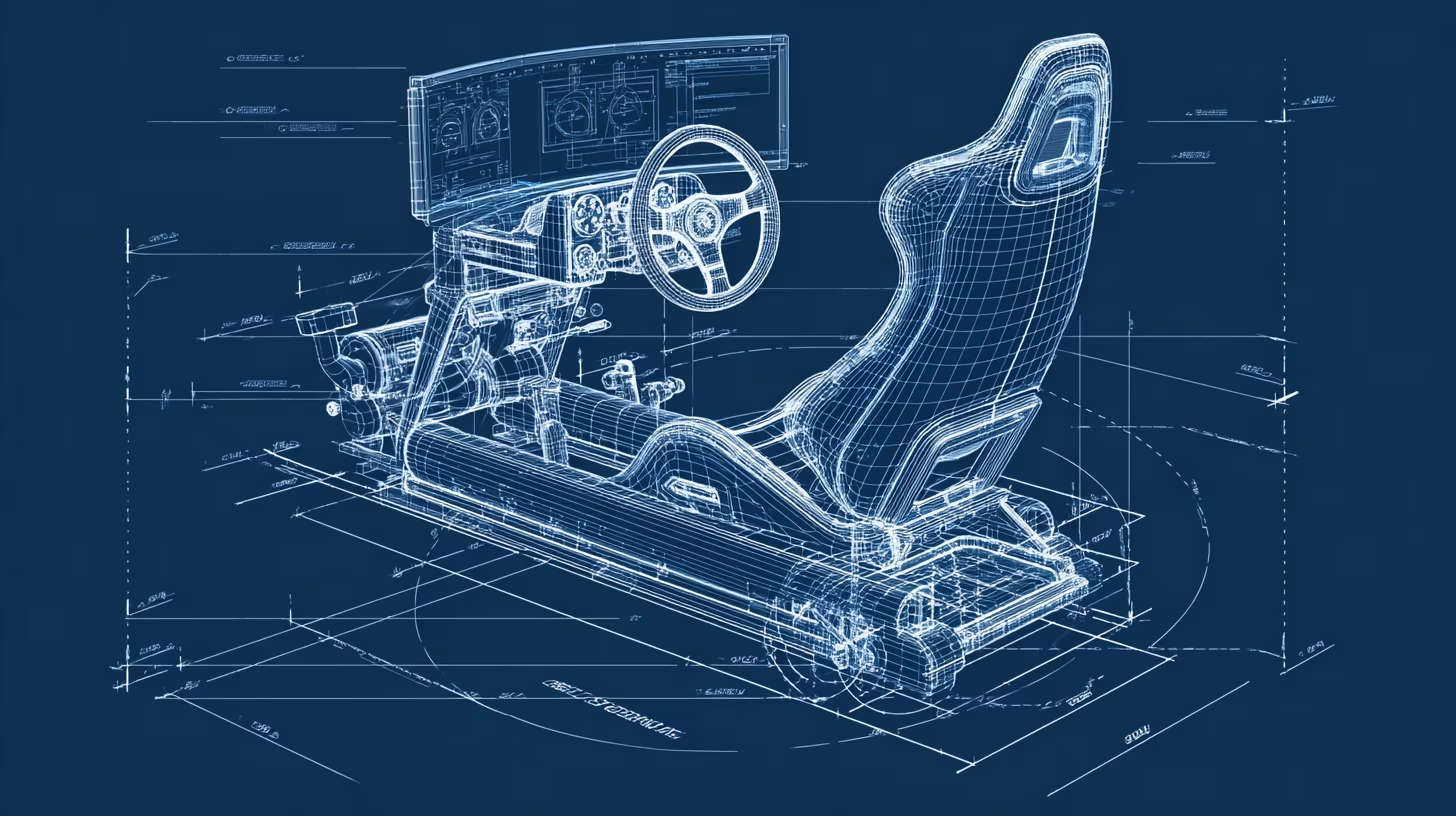
Quick Specs: George Russell’s Rig at a Glance
| Component | Hardware | Estimated Price |
|---|---|---|
| Wheelbases | Fanatec Podium F1 DD + Simucube 2 Ultimate | $1,800 + $3,000 |
| Steering Wheel | Ascher Racing F28-SC | around $700 |
| Pedals | Heusinkveld Sim Pedals Ultimate | around $1,200 |
| Cockpit | Sim-Lab P1-X | around $900 |
| Seat | Sparco Circuit | around $500 |
| Displays | Triple 27” curved or 49” ultrawide | $800-1,500 |
| Accessories | Logitech G PRO X headset, Elgato Stream Deck | around $300 |
Total Estimated Value: around $10,000
Direct-Drive Wheelbases: Two Top Performers
Russell doesn’t use just one, but two high-end wheelbases – a Fanatec Podium F1 Direct Drive and a Simucube 2 Ultimate. He switches between them depending on the game and desired feel. The Fanatec Podium F1 (around $1,800) is an elite wheelbase with powerful force feedback, while the Simucube 2 Ultimate (around $3,000) is known for its ultra-realistic feedback.
For beginners: Direct-drive bases are expensive, but they offer incredible realism. Start with a more affordable belt or gear-driven wheel and upgrade later as you get more serious.
Steering Wheel: Ascher Racing F28-SC
Attached to his wheelbase, Russell uses an Ascher Racing F28-SC – a formula-style wheel rim with advanced controls. This high-quality wheel (~$700) provides an ergonomic grip and plenty of buttons/paddles for complex race car controls.
Beginner tip: You don’t need a $700 wheel rim to start. Many entry-level wheels come included with the base. Focus on one with paddle shifters and a comfortable grip – you can always customize the rim later.
Pedals: Heusinkveld Sim Pedals Ultimate
For precise braking and throttle control, Russell drives with the Heusinkveld Sim Pedals Ultimate – professional-grade load-cell pedals that offer a very realistic brake feel. Earlier, he used Fanatec ClubSport V3 pedals, a solid mid-range load-cell pedal set.
For beginners: A load-cell brake pedal (which measures how hard you press, not just how far) is one of the best upgrades for consistency. You can start with a simpler set and move up to load-cell pedals when possible.
Cockpit: Sim-Lab P1-X
All this heavy gear is mounted on a Sim-Lab P1-X cockpit – a rock-solid aluminum profile racing chassis (~$900). The P1-X provides a rigid platform, meaning no flex even under strong force feedback.
Russell started with a simpler Playseat cockpit, which he eventually replaced for better stability and comfort.
Beginner tip: A full aluminum rig is fantastic but not necessary when starting. What’s important is that your wheel and pedals are mounted firmly. Even a sturdy desk or a budget cockpit can work initially – just avoid anything that wobbles when you steer or brake.
Racing Seat: Sparco Circuit
Sitting in the cockpit, Russell uses a Sparco Circuit racing seat – a professional motorsport bucket seat that offers great support for long sessions.
For you: Any car racing seat or even a repurposed car seat can add realism, but you can start with an office chair or the seat that comes with an entry-level rig. Just ensure you’re seated in a stable position relative to your pedals and wheel.
Displays: Triple or Ultrawide
Russell’s visual setup is interesting – he alternates between triple 27-inch curved monitors and a 49-inch Samsung Odyssey G9 ultrawide, depending on the game’s support. Triple screens give a wide field of view (useful in iRacing or rFactor 2), while a 49-inch curved screen can mimic that wraparound view with one device.
He doesn’t typically use VR, sticking to high-refresh screens for clarity and ease.
Beginner tip: You can start with a single decent monitor (or even a TV). If your budget allows, dual or triple monitors can greatly enhance immersion by expanding your peripheral vision.
PC and Accessories
Russell’s rig is powered by a high-end gaming PC with an Intel 11th-gen i5 CPU and an NVIDIA RTX 3060 Ti GPU – enough to run racing sims at high graphics settings and framerates.
He also uses:
- Logitech G PRO X gaming headset for clear audio and communication
- Elgato Stream Deck for managing livestreams and controls
For beginners: You don’t need a $2,000+ PC to start sim racing – many racing games run on modest PCs or even consoles with compatible wheel sets.
Evolution of Russell’s Setup
George Russell’s sim gear wasn’t always this elaborate. Here’s a brief timeline:
Early 2020 (Lockdown Begins)
With F1 races on hold due to COVID-19, Russell went back home and set up a sim racing rig. He started with a basic Playseat cockpit and the Fanatec Podium wheelbase with ClubSport pedals.
Mid 2020
As he got more serious, he upgraded to the Simucube 2 Ultimate wheelbase and an Ascher Racing F28-SC wheel rim for a more realistic steering feel.
Late 2020 to 2021
Russell replaced his cockpit with the sturdier Sim-Lab P1-X and upgraded to a Sparco racing seat and Heusinkveld Ultimate pedals.
2022 and Beyond
Now as a Mercedes driver, George’s sim rig is fully top-tier, with an estimated total value of $9,000-$10,000.
Key lesson: Russell’s journey shows that you can start with a functional setup and upgrade gradually. Begin with the best you can afford now and replace components as you progress.
Games and Platforms
Russell has tried a variety of racing games and simulation platforms:
F1 Series (Codemasters/EA)
As a Formula 1 driver, Russell naturally plays the official F1 game. He participated in and won multiple races in the official F1 Virtual Grand Prix series in 2020.
rFactor 2
Russell competed in rFactor 2 events and was part of the winning team in the 24 Hours of Le Mans Virtual race.
iRacing
While not explicitly listed, many of his F1 peers (Lando Norris, Max Verstappen) are avid iRacing users, and Russell has raced online with them in various sessions.
Assetto Corsa / ACC
Russell has expressed interest in trying different titles for varied experiences.
Platforms: All games run on PC. Russell streamed his races on Twitch under the username “GR63” in 2020.
Russell’s Approach: Training and Preparation
Serious Practice Routine
When Russell started sim racing, he quickly realized it wasn’t “easy” just because he’s an F1 driver. Professional sim racers were beating him regularly. Instead of giving up: “he practised like hell, spent a lot of time and effort with some people helping me, and suddenly I became good at it.”
He set up a daily routine: fitness training in the morning, then every day at 3 PM he would hop on his sim rig to practice with pro sim gamers.
Competitive Mindset
Russell admitted that “professional gamers were making me look like an idiot” on track, which fueled him to work harder. He didn’t dismiss sim racing as “just a game.” He ended up winning the Virtual F1 Championship (with four wins in the series).
Training Tool for F1
Sim racing “helps F1 drivers drive and adapt to newer tracks even before going to the actual site.” Russell can practice the layout, braking points, and racing lines of circuits he hasn’t been to.
Social Aspects
Russell also discovered a social side to sim racing. During lockdown, racing online brought him closer to fellow drivers. He spent countless hours on voice chat with Lando Norris, Charles Leclerc, Alex Albon and others.
What Beginners Can Learn
Start with What You Have
Russell didn’t have a $10k rig overnight. He started with a reasonable setup and upgraded gradually. As a beginner, you can start with an entry-level wheel/pedal combo and a comfortable chair.
Focus on Fundamentals
Russell’s improvement was largely due to practice and training, not just equipment. A solid mid-range setup in skilled hands beats an expensive setup in untrained hands.
Use Sim Racing as a Learning Tool
Emulate Russell’s approach by using sims to learn tracks and improve racecraft. The mental aspects – concentration, strategy, muscle memory – benefit greatly from sim practice.
Join the Community
Russell practiced with pro sim racers and competed with friends online, which accelerated his learning. Join online races or a league suitable for beginners.
Keep it Fun
Perhaps the biggest lesson: Russell rediscovered fun and camaraderie in racing. He enjoyed close battles, even if virtual. Set personal goals, but also relish the sheer fun of driving different cars and the thrill of competition.
Sources & Further Reading
- BoxThisLap: George Russell Sim Racing Setup
- The SportsRush: Cost of George Russell’s Sim Setup
- British GQ: George Russell on Virtual Racing
- ESPN: George Russell Lockdown Gaming
Some links on MySimRig are affiliate links. You pay nothing extra and we can continue to invest in independent sim racing content.